
The Weight of Motherhood in Gaza
 by Anera
Posted in: Days of Observance, Video, peopleofanera
Stories from mothers in Gaza, In honor of Mother’s Day 2026
Being a mother, shaping and nurturing another life, isn’t easy even under the best and most fortunate circumstances. For mothers like those in Gaza, often without reliable access to food, clean water, and medical care, it can be unimaginable. In Gaza, motherhood is endurance under conditions few can imagine. To bring a child into the world is to do so amid persistent uncertainty, where food, water, and medicine are scarce, and safety can vanish without warning.
Women and girls, especially mothers, are frequently the ones holding families together. In the face of displacement and ongoing crisis, these conditions are exacerbated. According to UN Women, pregnant women and mothers are becoming increasingly at risk as famine, displacement, and violence continues in Gaza. 1 in 7 families are now led by women who have lost their husbands in conflict, and over 500,000 women lack access to reproductive health care completely.
Malnutrition among young children is rising, while shortages of food, clean water, and medical supplies leave many mothers unable to safely feed or care for their infants. At the same time, overwhelming stress, trauma, and physical exhaustion are compounding the challenges of pregnancy and breastfeeding, making even basic maternal and child health needs increasingly difficult to meet in an already collapsed system of care.
These are just some of the many obstacles Gaza’s mothers are up against. Today, we share the stories from mothers in Gaza, to honor their strength, but also to bear witness to their realities, their love, and their enduring hope for their children’s futures.
Tahani: A Mother’s Dream
Tahani married her fiance soon after October 7, 2023. After fleeing with her family to a displacement camp in the south, she and her fiance soon tired of the constant fear and worry they felt being separated, and decided they needed to face life side-by-side. Not long after, Tahani had her son, Omar.
Despite the joy she felt, Omar was born at an incredibly dangerous time in Gaza. “When my son was born, and they placed him on my chest for the first time, I wished I could return him to the safety of my womb,” she says.
As a mother, it is her wish today to watch Omar grow to be strong and kind, and to live joyful moments with her family. Tahani wishes to raise her son in safety and to focus on his growth without needing to protect him from endless conflict and displacement like so many others in Gaza.
Between Loss and Life

At just 27, Nada was in labor while she learned that she had lost 13 members of her family in a bombing. “The pain came all at once,” she says. “I was giving life while losing everyone I loved.”
After giving birth to her daughter, Zaina, Nada endured severe postpartum depression amidst displacement and lack of food, all while having other small children to care for. Through ongoing visits to Anera’s mother and child
clinic, supported by Americares, she received medical and psychological support. With this additional support, Nada slowly began to recover and regain her strength, which allowed her to build a connection with her daughter that she could not during grief.
Though her grief remains, she has found moments of relief. “When I look at Zaina now,” she says softly, “I still remember that day. I still remember the emptiness I felt. But now, I feel her breathing, her small hands, her presence. It doesn’t erase the loss, but it reminds me that life continues, even in the hardest moments.”
A Childhood Under Siege


Reem gave birth to her son Osama days before October 7, 2023. She had travelled from her home and husband in Egypt to be with her family in Gaza, like many expectant mothers looking for the support of their communities. Instead, Reem’s world erupted into airstrikes.
“I had left my husband and home in Egypt and returned to Gaza to be with my family for the birth,” she says. “It was the hardest decision I’ve ever made. But after a complicated pregnancy, we had no choice. I needed care, and I thought I could deliver him safely at home with my family around to help. Four days after I gave birth, the sky over Gaza turned to fire.”
With no food, little water, and no access to medicine, she spent months searching desperately for formula, shielding her baby from bombs, smoke, and sickness, and sacrificing her own health to keep him alive.
Unwillingly separated from her husband, Reem became her son’s main source of care. Now a young toddler and facing ongoing health challenges, Osama still has yet to meet his father. “I go to sleep crying, praying,” says Reem. “After two years of war, separation, and hunger, I ask only one thing of God: Let this child see his father. Let us be a family again.”
The Mothers Rebuilding Gaza
Islam has spent over a decade working to help other women build livelihoods through small, home-based projects under Anera’s WeCan project, helping provide women with the tools to support their own livelihoods. Islam is a single mother to her daughter, Huda. “My daughter is my motivation,” she says. “Everything I do, in my work and in my life, is driven by the hope of building a better future for her.”
What begins as a modest effort to support a family can grow into something far greater with the right training and resources. Through her work, Islam has seen how empowering women not only strengthens individual families, but also helps communities recover and rebuild, especially in the aftermath of war, where women so often carry the weight of stability and hope.
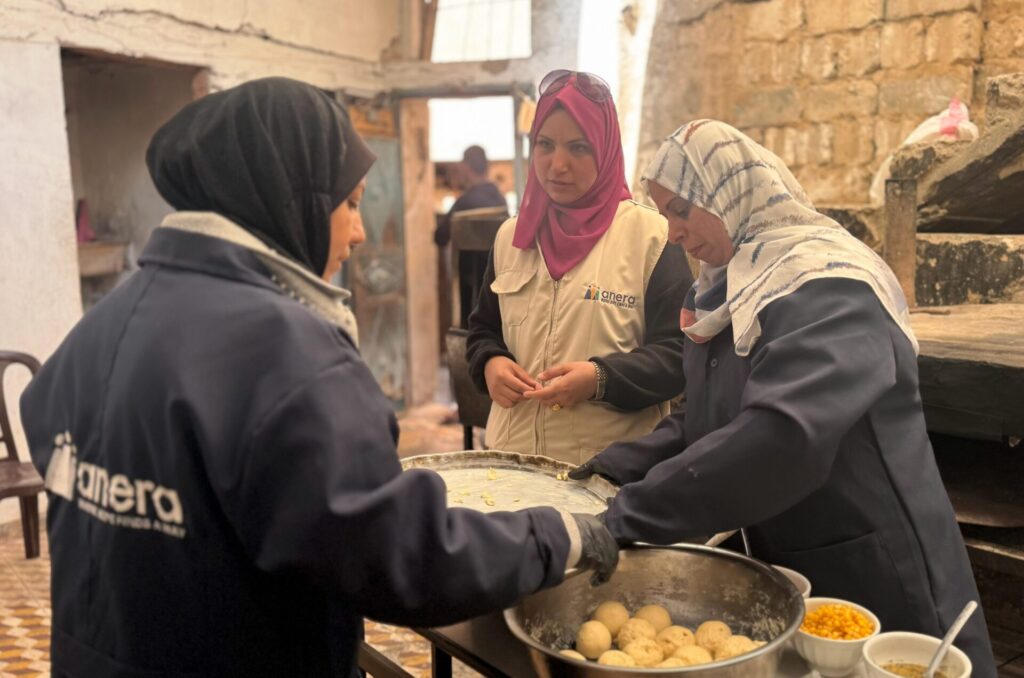
Islam is not just working to build a future for her daughter, she is helping to open pathways for other women in her community to build their own.
How Breastfeeding Support Saved Ahmad’s Life
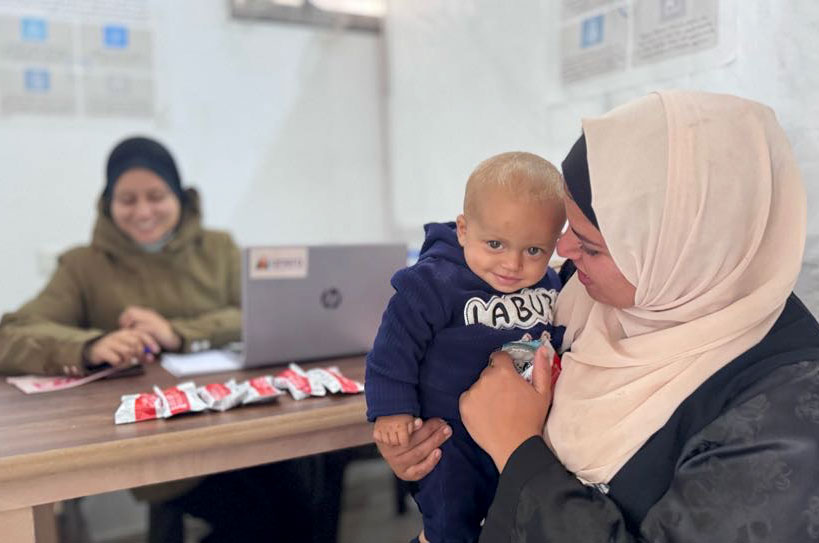
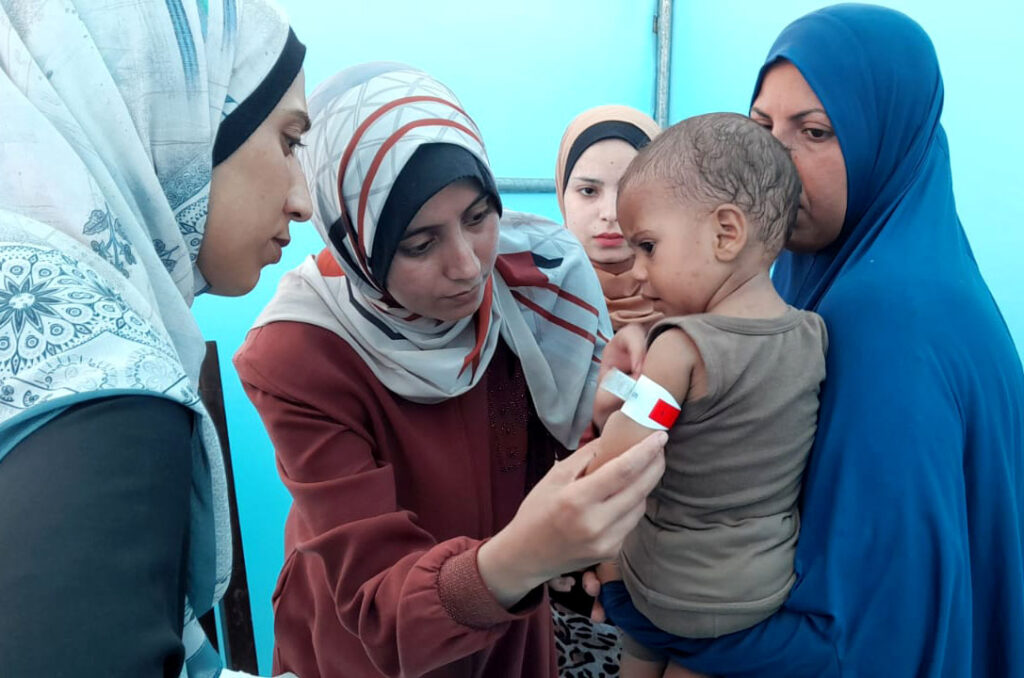
Israa, a 28-year-old mother in Gaza, brought her 11-month-old son Ahmad to Anera’s mother and child clinic, severely malnourished and barely able to move, weighing only half the normal weight for his age. Unable to afford infant formula and unsure how to feed him, she felt helpless as his condition worsened and others told her he would not survive.

Through Anera’s clinic, Israa received care on two fronts: treatment for her own malnutrition, including supplements, high-energy biscuits, and therapeutic feeding, and hands-on breastfeeding and nutrition support to help her better care for her son. Staff guided her step by step, on breastfeeding positioning, feeding techniques, and maternal nutrition, while also monitoring Ahmad’s growth and progress through regular check-ups.
Over time, both mother and child began to recover. Israa regained strength and her ability to nourish her son, while Ahmad steadily improved—gaining weight, growing stronger, and reaching milestones like sitting and crawling. What once felt like a hopeless situation became, slowly, a story of survival and recovery.

These stories are only a glimpse into the realities faced by mothers in Gaza—women who are giving birth, raising children, and holding families together in conditions no parent should ever have to endure. And yet, even in the most difficult circumstances, they continue to care, to fight for their children’s survival, and to hold onto hope for a different future.
On Mother’s Day, we honor these women not only with words, but with action. You can help support mothers like those featured here by supporting Anera’s programs, so that more families have access to the care, dignity, and hope they deserve.

OUR BLOG
Related
 by Abby White
As a Jewish teen growing up in Newton, Massachusetts, a trip to Israel after high school felt like a rite of passage. In 1977, I spent seven weeks on a kibbutz in the Galilee, waking at four in the morning…