
The Year Our Olive Trees Gave Us Everything
 by Karl Osta
Posted in: Life in the Middle East, Voices from the field
I’m picking olives this year. And I keep thinking about the people who can’t.
This is probably the best olive harvest I have ever seen.
I’ve grown up around olive trees, and I honestly don’t remember seeing them this full. The branches are heavy with olives. Everywhere I look, there are more. It feels almost excessive this year, in the best possible way.
So, naturally, I’ve been spending a lot of time picking olives.
And the strange thing is that the more I do it, the more I keep thinking about people who can’t.
Not because harvesting is easy. It really isn’t.
There are the workers to pay. There is the fuel to get the olives from the grove to the press. There is the cost of pressing them, which has become painfully expensive with fuel and electricity prices. Every part of turning an olive into a bottle of oil seems to cost way more than it used to.
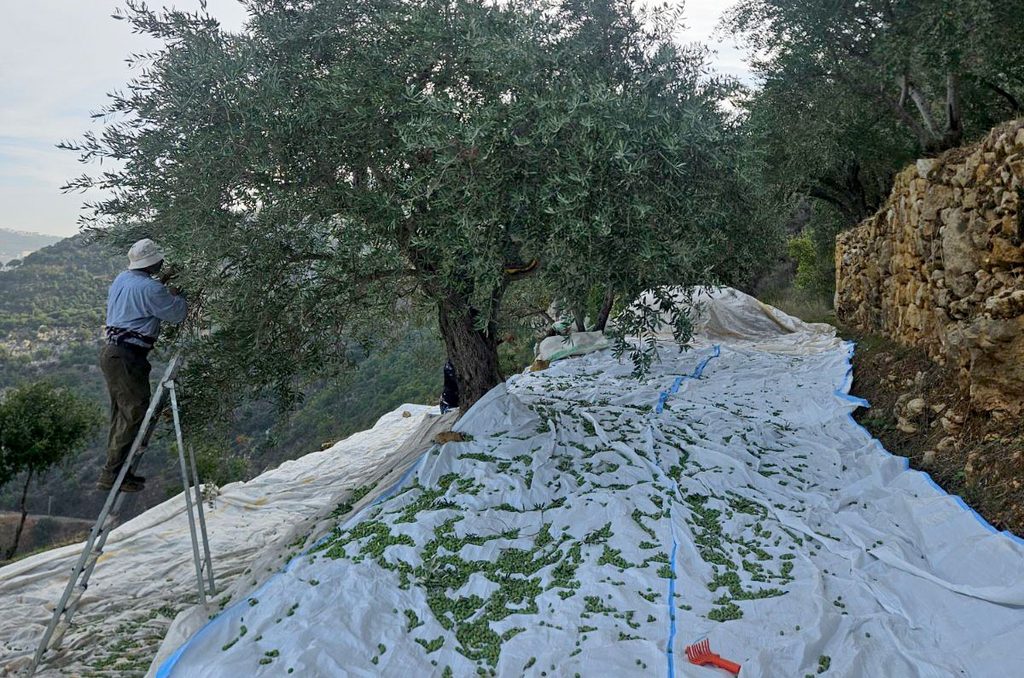
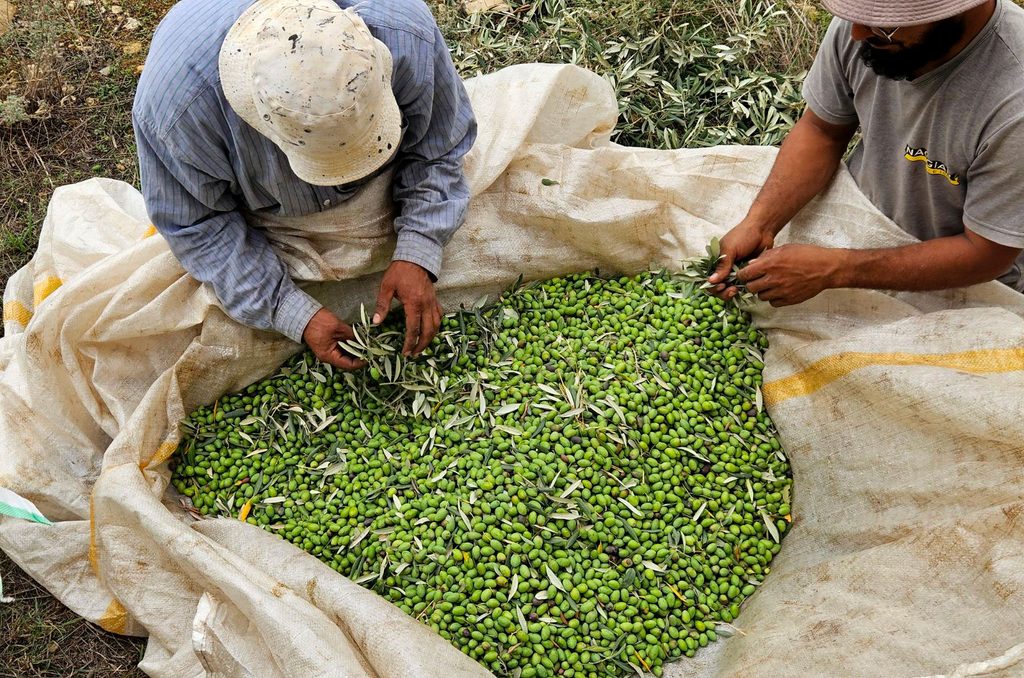
But those are still problems I can have because I can get to my trees.
I can walk into the grove.
I can pick the olives.
I can fill the bags.
I can put them in the car and take them to the press.
And then I can wait and watch the oil come out.
This year, I keep finding myself thinking about how ordinary all of that feels to me. It is just the olive season. It is what we do every autumn.
But it isn’t ordinary for everyone here anymore.
In southern Lebanon, there are farmers who cannot simply go to their land and harvest their olives. Some have had their land damaged, trees uprooted, stolen or burned, while others have faced restrictions on reaching their fields and groves.
And in the West Bank, harvesting olives has become increasingly complicated by restrictions on access to agricultural land, as well as settlers’ attacks, land grabs and damage to olive trees. For some farmers, the question is not how much their trees will produce this year, but whether they will be able to reach the trees at all when the olives are ready.
And then there is Gaza.
There, the scale of what has happened to agriculture is difficult to comprehend. Farmland has been completely destroyed, damaged or made inaccessible, and olive trees have been among the crops most affected. For many farmers, this is no longer simply a question of missing one harvest. Some have lost the trees themselves.
That is the part I keep coming back to. Because an olive tree is not something you plant today and harvest tomorrow.
Some of the trees I am picking from now have been here for generations. They were here before I was born. They will, hopefully, still be here long after I am gone.
When I stand under them with a bag in my hand, I am not really thinking about any of that. I am thinking about whether we have enough people picking. Whether we should go to the press today or tomorrow. How much the fuel is going to cost. Whether we can fit another few bags in the car. Very ordinary things.
But this year, those ordinary things feel like a privilege.
I can complain about how expensive it is to harvest the olives and still harvest them.
I can complain about the price of fuel and still drive them to the press.
I can complain about the cost of electricity and still watch my olives become oil.
And, perhaps most importantly, I can walk into my grove whenever I want.
I don’t take that for granted anymore.
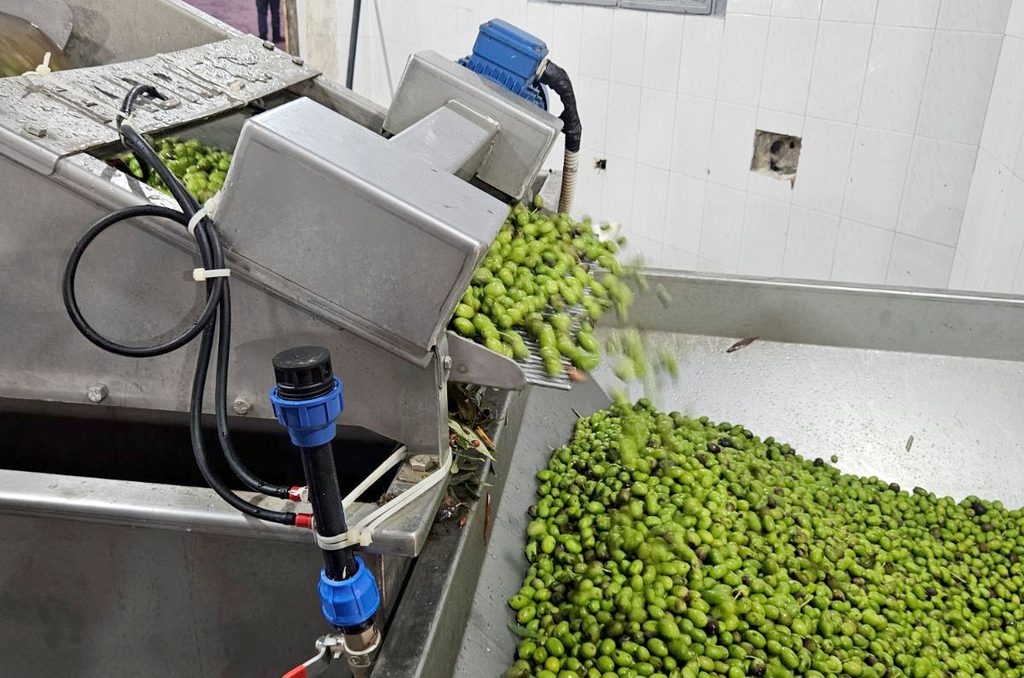
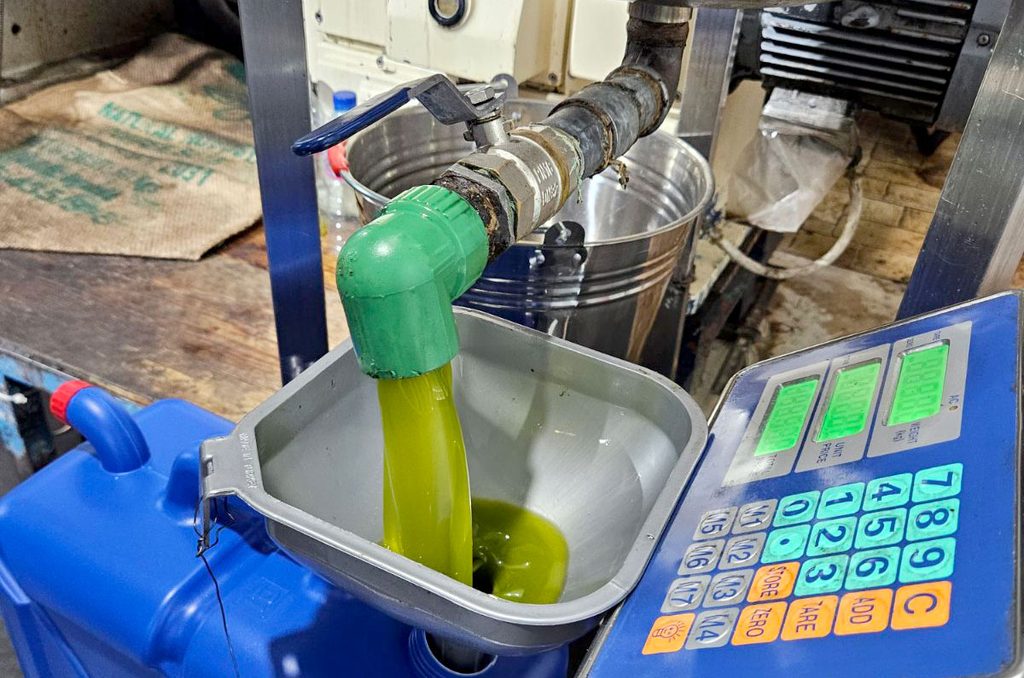
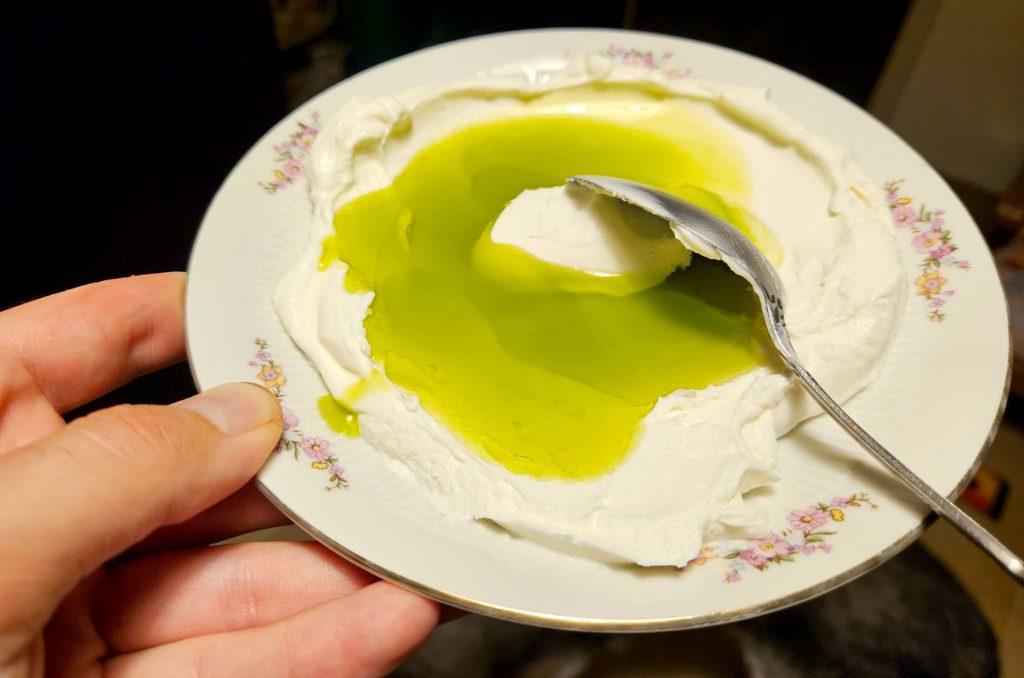
The strange thing is that this year’s abundance is what made me think about all of this. If the harvest had been poor, maybe I would have simply been disappointed. Instead, I am looking at the fullest trees I have ever seen, and thinking about people who are looking at their own trees from behind a fence, from the other side of a restricted area, from land they can no longer safely reach, or who no longer have their trees at all.
I don’t know what to do with that feeling. I suppose I can only hope that the people who cannot reach their trees this year will one day be able to return to them. That those who have lost their trees will have the chance to plant again, and that their children will know the experience of harvesting olives from their own land.
And I keep coming back to how unfair that is. That something as ordinary as harvesting your own olives, something families have done for generations, is something so many people cannot do this year.
 by