Aug, 2026
In a camp for displaced families in Gaza, a mother finds community and purpose while cleaning up the camp

"My daughter squints at everything. People, colors, my own face. She is four years old and the world is still a blur to her. I am working to change that."
At 34, Fatima has five children and no husband. In 2023, she lost him to the war in Gaza. Since that day, she has provided for her family on her own.
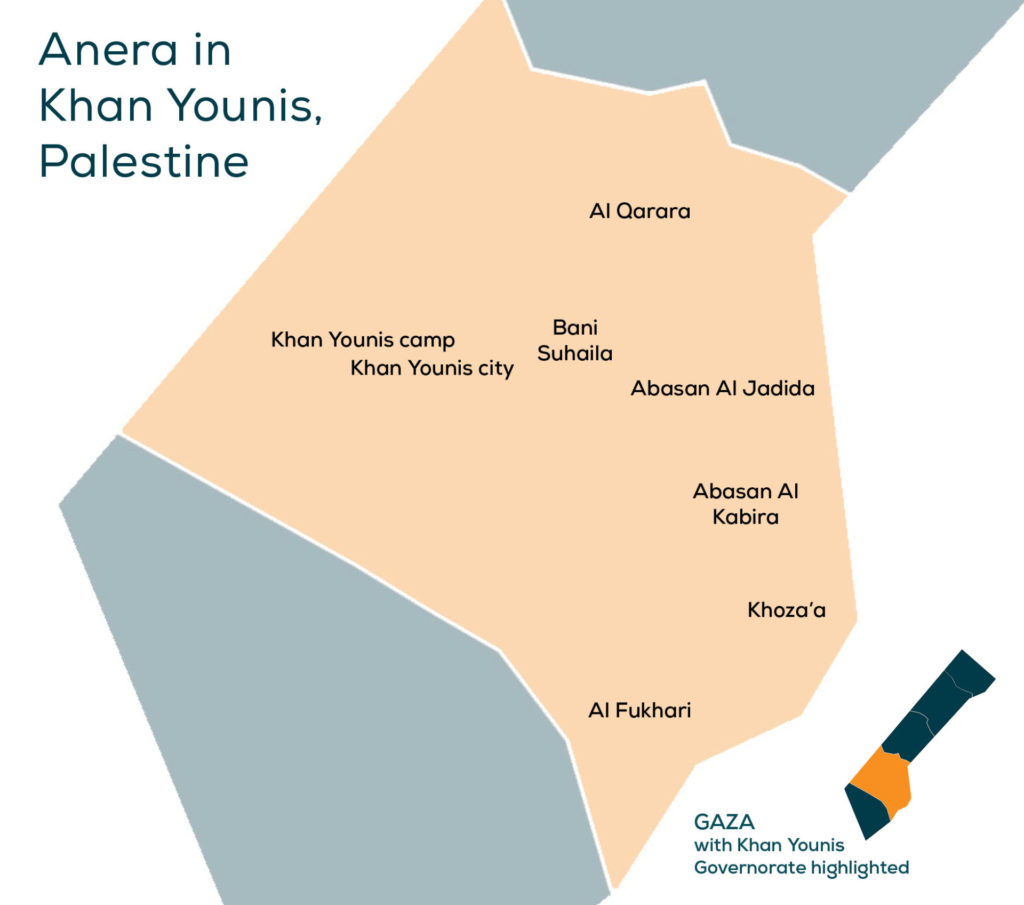
Fatima lives in Al Baraka Camp for Orphans in Mawasi, Khan Younis. The displacement camp is home to hundreds of families who lost someone, lost something, or lost everything. Fatima lost all three. She arrived at the camp with her children, set up a tent, and looked around at a place she had never been, surrounded by people she had never met. She had no income, no plan, and five children looking up at her waiting to be told that things were going to be okay.
She told them they were. And then she got to work figuring out how to make that true.
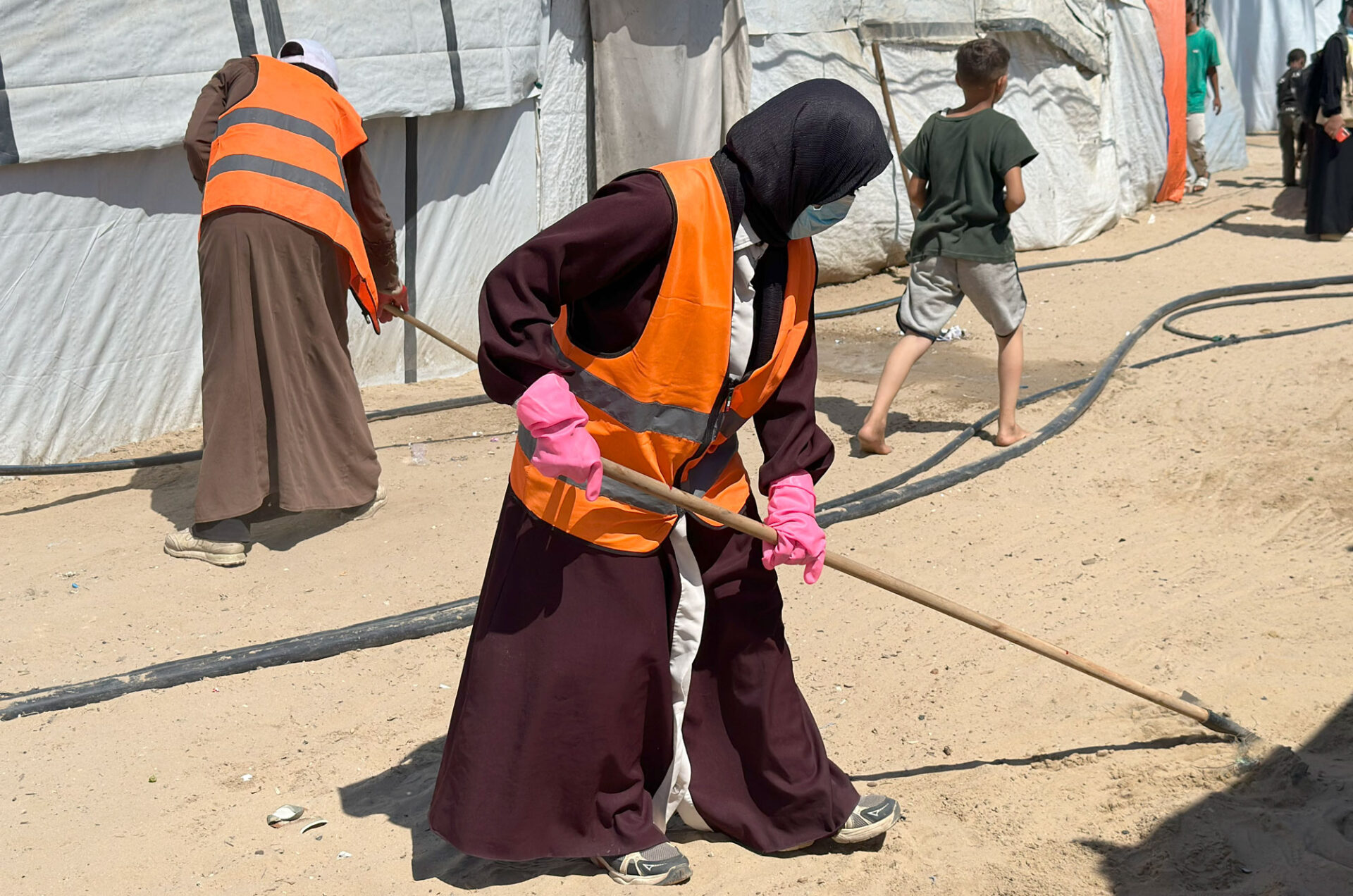
When Anera opened recruitment for a sanitation and waste management project in the camp, under a program funded by the Center for Disaster Philanthropy, Fatima was one of the first to sign up. Along with 225 others, she was put to work cleaning and sanitizing shelters, communal spaces, pathways, and collecting waste that had been piling up with no system to manage it. She was given a uniform, a set of tools, and a team. For the first time in a long time, she had somewhere to be.
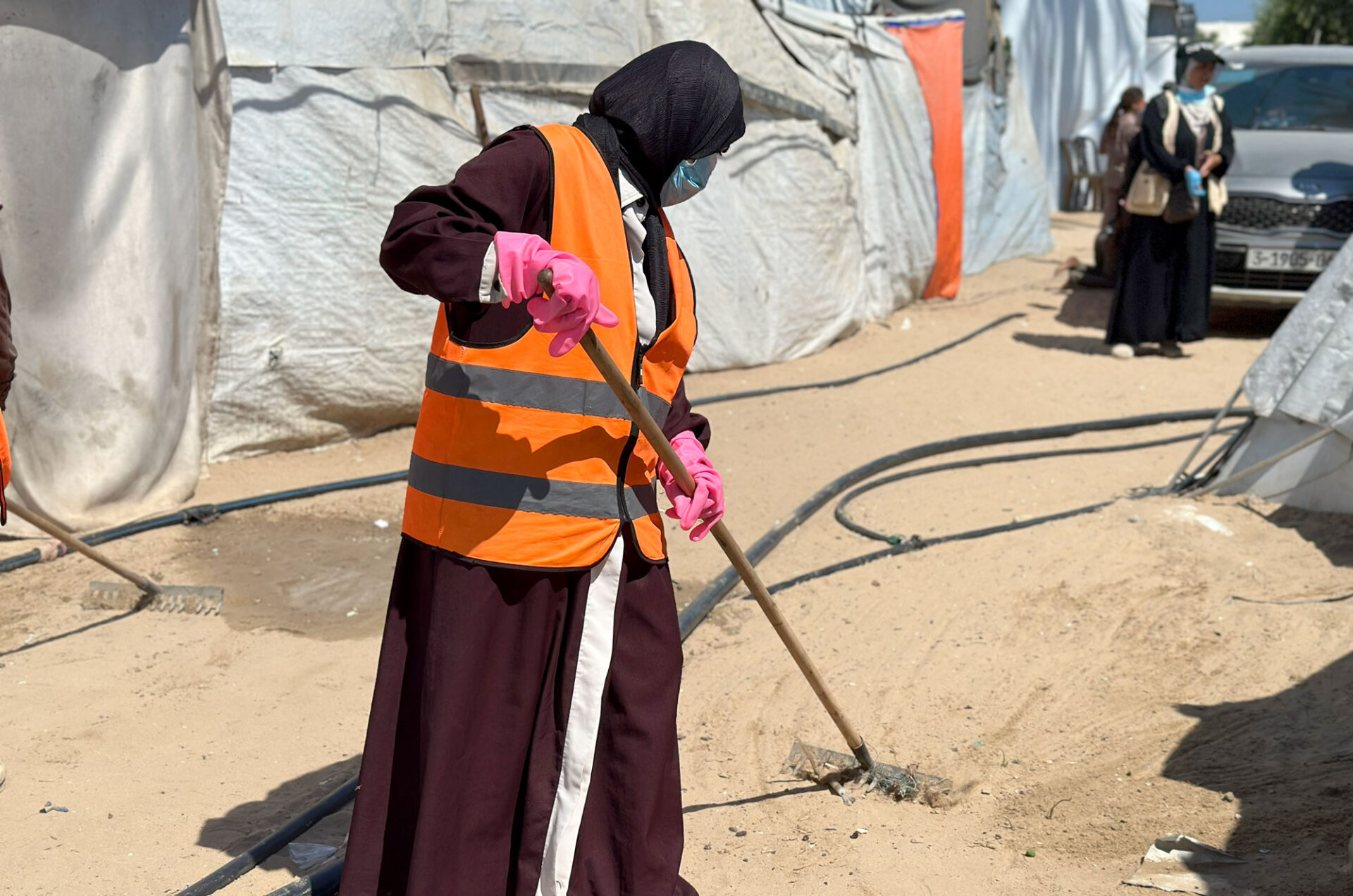
The work was physical. Fatima would wake up at 7 every morning, pull on her pink latex gloves, and head out with her team. Every day they collected a minimum of 36 bags of solid waste, moving through the camp in the heat, through dust and debris, clearing what others had stopped seeing.
"I expected it to be hard. I didn't expect it to feel good."
"I expected it to be hard," Fatima says. "I didn't expect it to feel good."
Every morning she found herself looking forward to seeing the same faces. Moving through the camp together, they built something that hadn't been planned — a community. They shared food during breaks, looked out for each other's children, and, on the harder days, simply walked beside each other without saying a word.
"We became like sisters," she says. "I didn't realize how much I needed that."
Something else changed too. People in the camp began to notice.
When Fatima and her colleagues walked through Al Baraka Camp in their uniforms, carrying their tools, residents stopped to greet them. Adults thanked them. And the children, the children were watching.
"The little ones started picking up rubbish off the ground," Fatima says, smiling. "They see us do it every day and now they do it too. Nobody told them to. They just started."
In a camp where so much had been stripped away, something quiet and important was being rebuilt — a sense of shared responsibility, modeled by a group of women who simply showed up and did the work.
Fatima's youngest, Sama’, is four years old. She was born with ocular deviation, her eyes do not align properly, and without corrective glasses, her vision will continue to suffer. The glasses Sama’ needs are expensive. Before this project, they were financially out of reach.
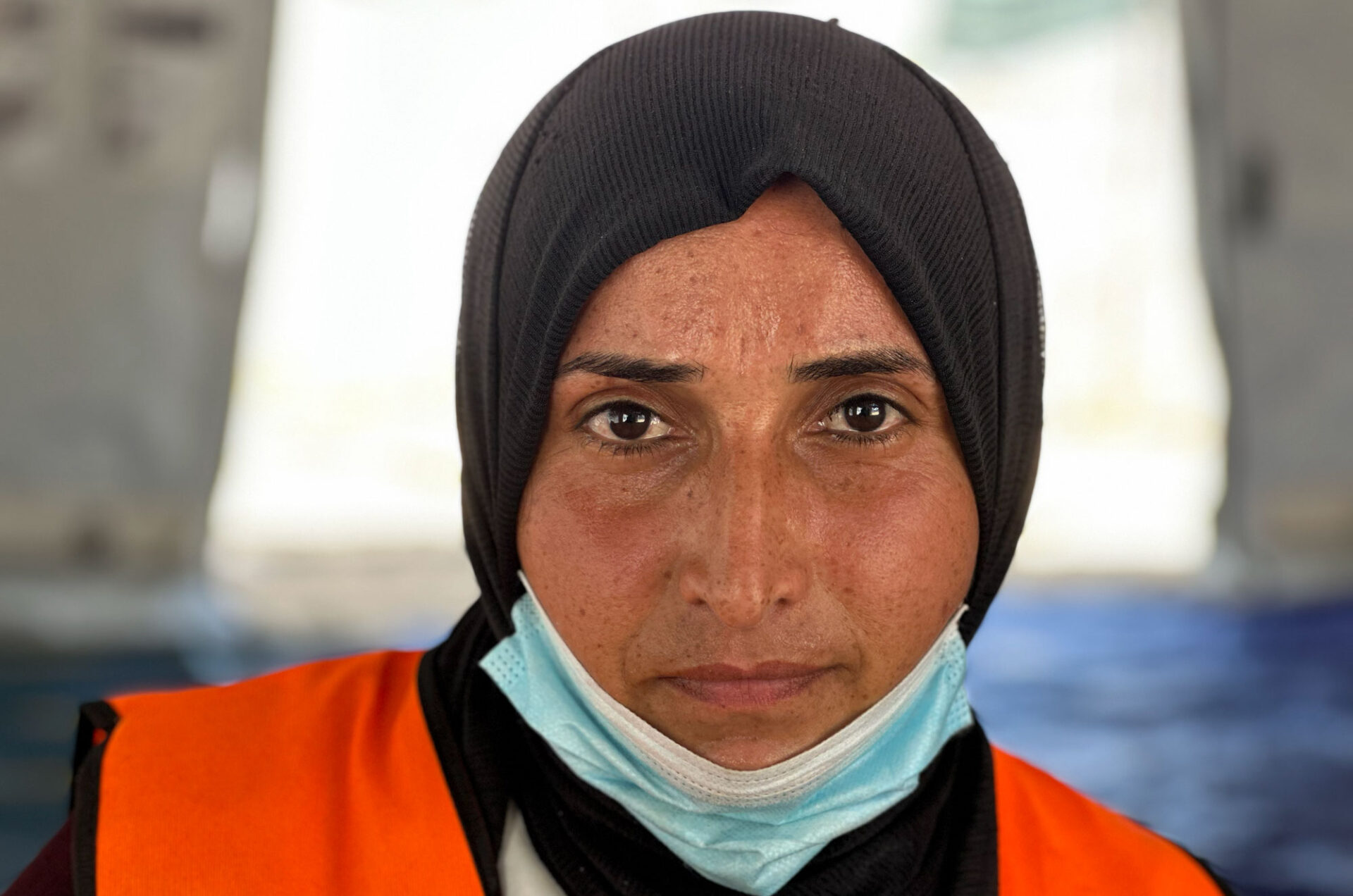
"This job did not just give me money. It gave me a purpose. And when Sama’ can finally see clearly, that will be because of this."
"Every time I look at her, I think about those glasses," Fatima says quietly. "She deserves to see the world clearly."
The wages Fatima earned brought her closer to making that possible. There was now a number she was working toward. Something concrete. Something within reach.
She has not bought them yet. But she will.
"This job did not just give me money. It gave me a purpose. And when Sama’ can finally see clearly, that will be because of this."