Teaching in Gaza in 2026: Saja’s Story
 by Anera
Posted in: Voices from the field
Every learning space depends on a teacher. Saja Abu Seheeban is an English teacher in Gaza at one of Anera’s temporary learning spaces. She recently shared these reflections with Anera.
I am an English teacher in Gaza. For me, being a teacher means much more than delivering lessons. It means being a person that children can feel comfortable with: someone who listens to them, encourages them and reminds them that they are capable of learning and achieving their dreams.
Especially at this time in Gaza, I feel that the role of a teacher has become more important. Children have experienced so much disruption in their education and their daily lives. They have lost their normal routines, their schools and many of the things that used to make them feel safe and comfortable.
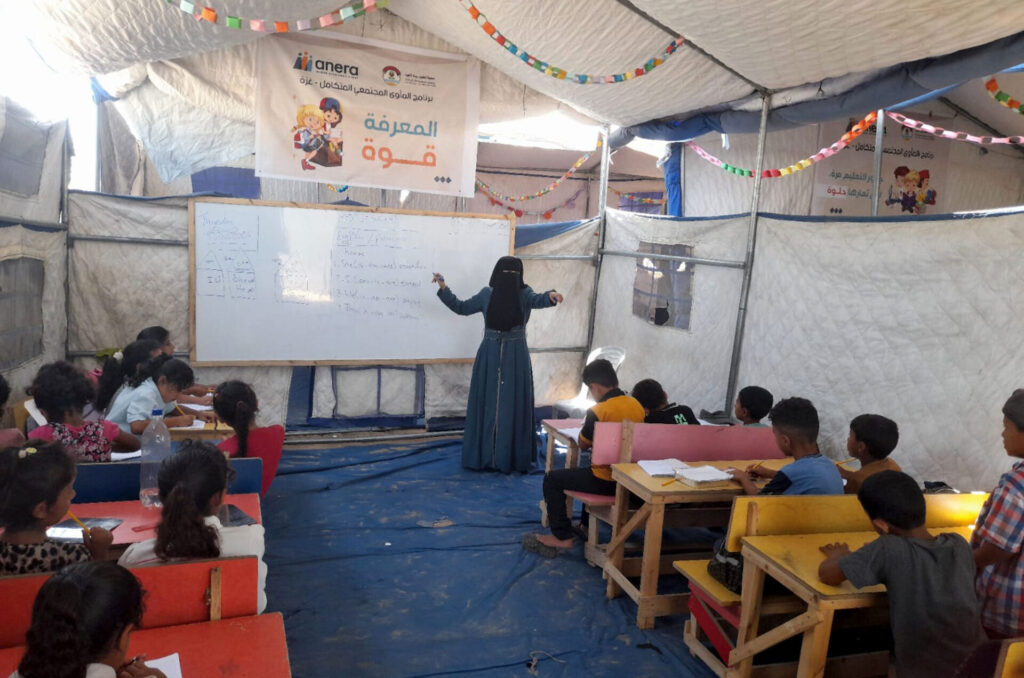
The hardest part for me is seeing the challenges my students are facing and knowing that I cannot solve all of them. Many children have missed a significant amount of education, so we see differences in their learning levels. Some students need more time and support to understand things that they might have learned more easily under normal circumstances. Another challenge is concentration. Some students find it difficult to focus for a whole class. And we also have to understand that there are many things affecting them beyond the classroom.
We face limited educational materials and resources, too, so as teachers we have to be creative and find different ways to make learning possible. I try to use simple and interactive activities, games, questions, group work and speaking activities to keep students involved. I can support them inside the learning space, and I try to make that space as positive as I can.
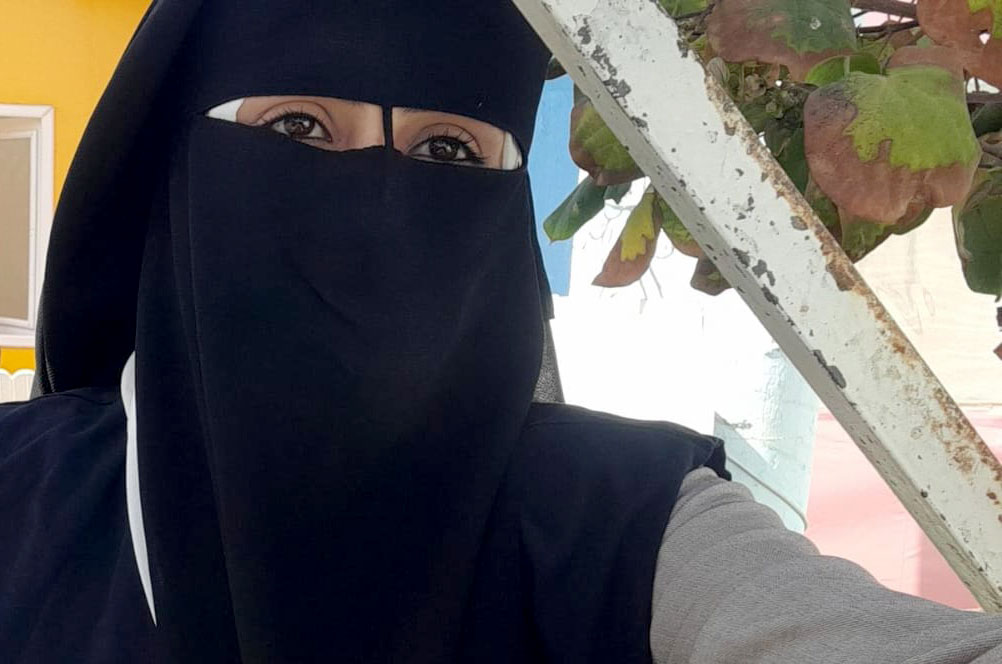
What keeps me coming back is my students themselves. There are many difficult days, and sometimes teaching can feel exhausting. But when I see a student smiling, practicing, participating, or becoming excited because they understood something new, I remember why teaching is important to me.
I especially love those small moments that might seem simple to someone else. For example, when a student who is usually quiet raises their hand and answers a question, or when a student who struggled with something finally understands it. These moments give me a strong feeling that my work has a purpose. If I can help one student learn something, feel confident, smile or feel that someone believes in them, then I feel that coming back to teach is worth it. That is what keeps me going.
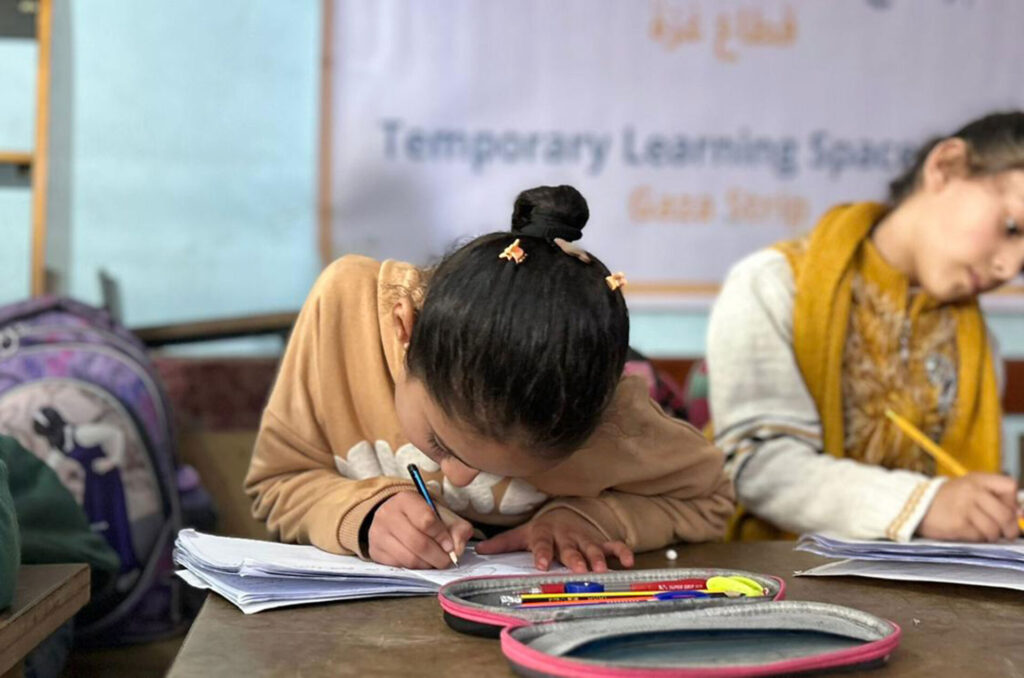
I hope my students remember that their teachers were there for them during one of the most difficult periods of their lives. I hope they remember that we did not only come to our classroom to finish a lesson or complete a worksheet. We tried to create moments where they could learn, love, play, and feel like children again.
I want them to know that even during a very difficult time, there were teachers who kept telling them: keep learning, keep dreaming, and don’t give up on yourselves. If they remember that, then I think we have done something meaningful as teachers.
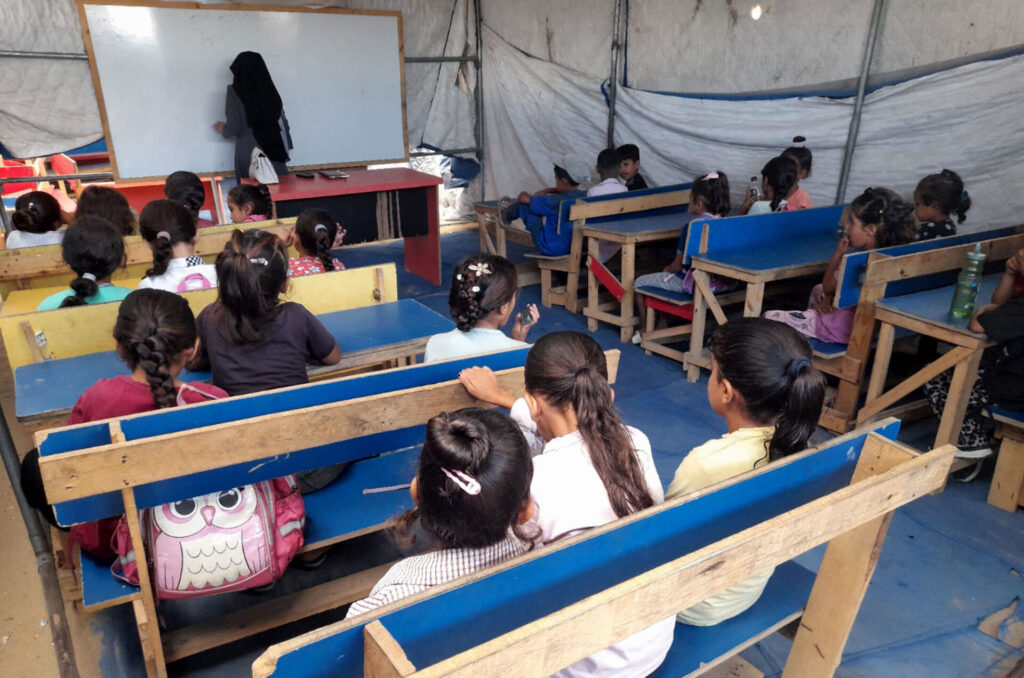
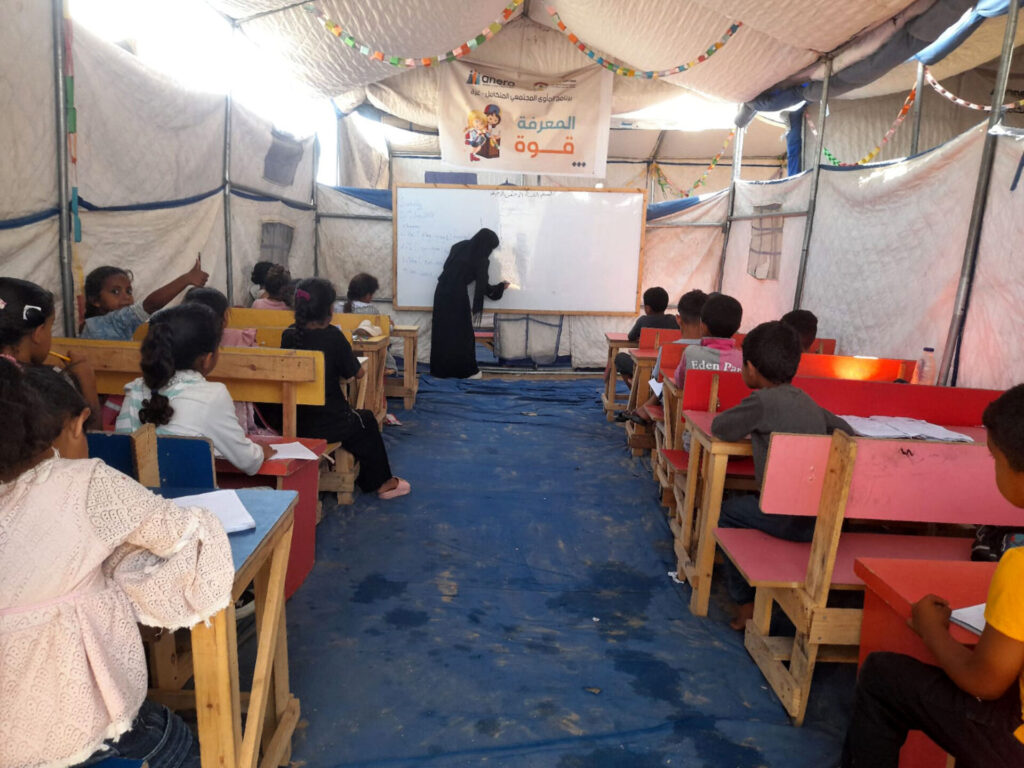
If I can help one student learn something, feel confident, smile or feel that someone believes in them, then I feel that coming back to teach is worth it.
Before the war, Gaza’s schools and universities served more than 750,000 learners. Today, nearly every school has been damaged, destroyed or turned into a shelter for displaced families, and 93% of school buildings (526 of 564) would need major repairs or full reconstruction before they could function again.
After years of disruption, more children are finally returning to class, but in temporary learning spaces. Of the roughly 700,000 school-age children in Gaza, more than 500,000 are attending these spaces this fall. An estimated 200,000 are still not accessing any structured learning. The spaces, set up in tents and available rooms in buildings still standing, can’t replace a school system, but they give children routine, friendship and a place to be children again. Since January, Anera has set up 118 of them, serving 14,883 children. For more information, read Anera’s new On-the-Ground report.