
Endurance Amid Destruction in Gaza
 by Anera
Posted in: News, Voices from the field
Today, two of Anera’s staff in Gaza, Sami Matar and Ahmad El-Najjar, described some impressions of conditions there now.
It took Sami, our program manager, three hours today to travel from the Anera office in Gaza City to Mawasi, Khan Younis. Pre-war, the journey took about 30 minutes.
Salah Al Din Road, the primary artery linking the north and south, is now a two-lane, unpaved road prone to stoppages and chaos when vehicles break down. The bottlenecks become especially acute when approaching the checkpoint crossing between the north and south. Now that permissions to travel have eased, people and vehicles are moving in large numbers through a small space. Humanitarian agencies like the International Committee of the Red Cross, the World Food Programme and Anera navigate the same road with their freight trucks as families.
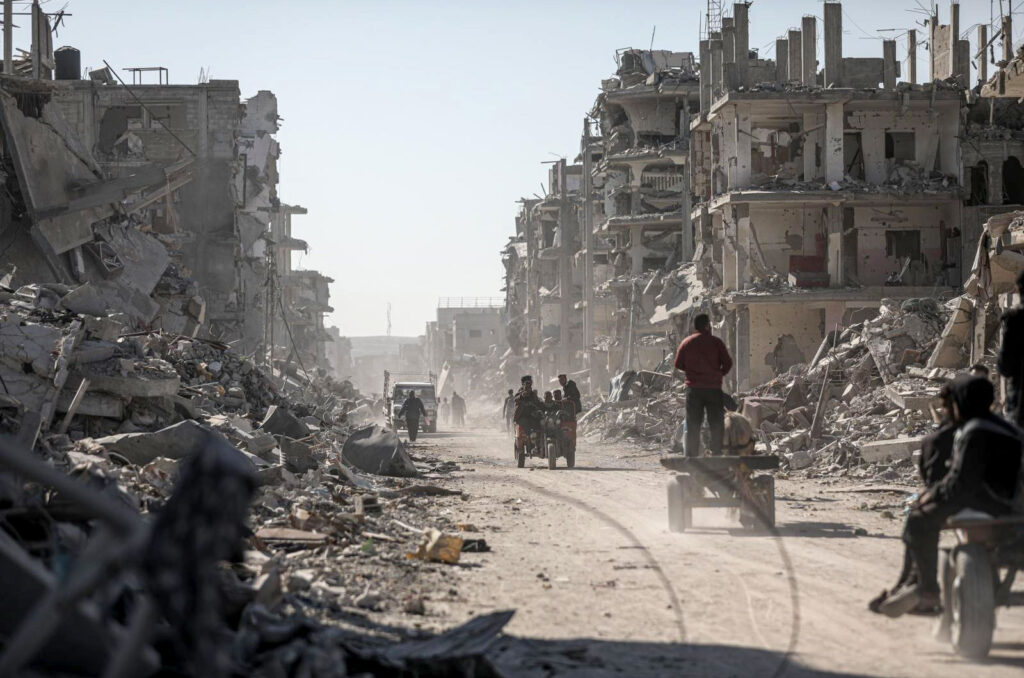
A significant recent change as a result of the ceasefire is that the crossing between the north and south is now monitored by Egyptians and American contractors, instead of Israeli Defense Forces. There is little formal scrutiny—guards look inside cars before waving them through. Pedestrians cross separately without checks or special permissions.
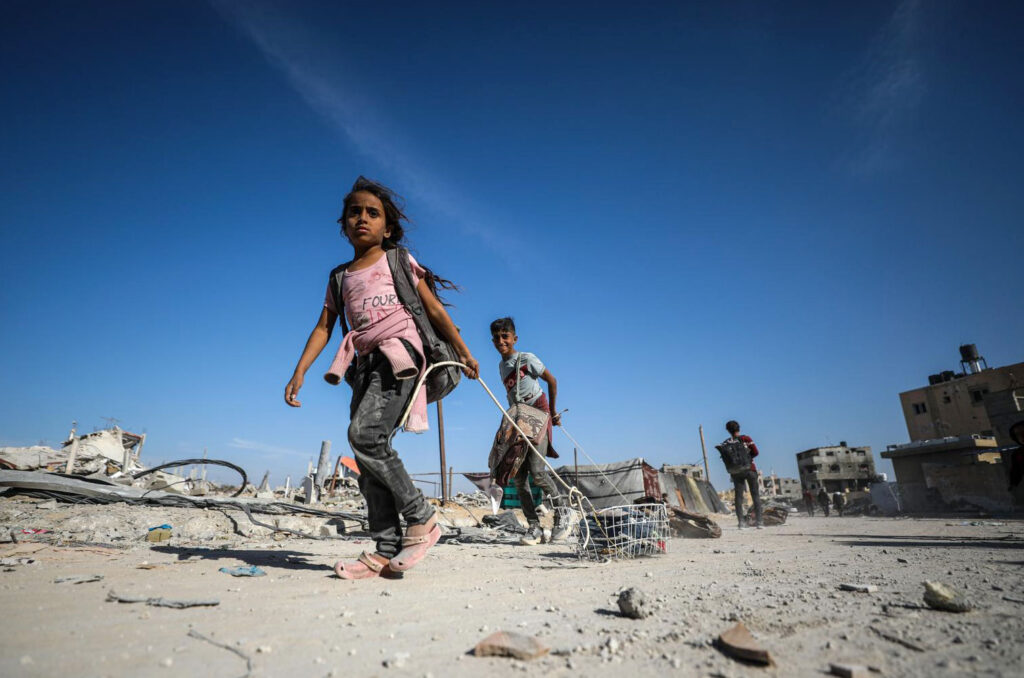
For those making their way back to the north, the sight is overwhelming. Ahmad, our product donations program officer, whose home is in Khan Younis, made it to Gaza City yesterday for the first time since the war began. He reunited with his colleagues. His wife saw her family for the first time in months. But the moment of joy was shadowed by the scale of destruction. He saw families everywhere standing in front of the rubble of what was once their houses, crying and asking where they could set up shelter. He also visited Anera’s prewar distribution center in Gaza City, a building that still stands and functions amidst a landscape where healthcare facilities remain shuttered, homes are leveled, and a single tablet of paracetamol now costs $1 — an impossible price for many.
Amid the devastation, there is also resolve. Ahmad voiced what so many seem to feel:
“I will live and die in Gaza.”
Rebuilding will take years, perhaps decades. But the will to endure remains.