May, 2026
One freezing winter night in one of the displacement camps of Deir Al Balah, 7-year-old Mohammed woke up needing to use the bathroom.
Mohammed and his family have lived in a tent after being displaced from Gaza City. The family tried to keep the tent warm by sealing every opening they could against the freezing air outside.
But the bathroom was outside, a few meters away. Little Mohammed had no choice but to step out into the freezing air.
The next morning, his mother, Islam, noticed something strange.
“His mouth looked tilted to one side,” she recalls. “At first, we thought he was joking with us or making funny faces. We never imagined it could be something serious.”
But the symptoms quickly worsened.
Mohammed could no longer drink water properly without it spilling from the side of his mouth. One eye would not close. His eyebrow stopped moving. When he spoke, the right side of his face remained frozen.
Doctors diagnosed him with facial nerve inflammation, commonly known as Bell’s palsy. It was likely triggered by exposure to the cold air that night, made worse by the weakened immunity that comes from months of displacement and poor nutrition.
For Islam, watching her only son struggle was devastating.
“He stopped living normally,” she says. “Seeing him like that broke my heart.”

“He stopped living normally. Seeing him like that broke my heart.”
The family, originally from the Shejaiya neighborhood in Gaza City, lost everything during the war.
“Before the war, we lived a decent life,” Islam says. “My husband worked in a spice shop. We bought land and built our home on it. Then the war came. The shop was destroyed. Our home and land were bombed. We lost everything.”
Today, the family survives largely on humanitarian aid and occasional support from relatives. Islam says they once considered renting an apartment after Mohammed became sick, but they simply could not afford it.
“My husband has no work because of the war,” she says. “What happened to Mohammed happened because we live in a tent.”
“Life in tents is unbearable in both summer and winter,” Islam says. For families displaced across Gaza, survival inside tents remains a daily struggle. In the summer, families endure unbearable heat, insects, skin diseases, and rodents. In winter, the flooding, freezing temperatures, and collapsing tents create another layer of suffering.

“The shop was destroyed. Our home and land were bombed. We lost everything.”
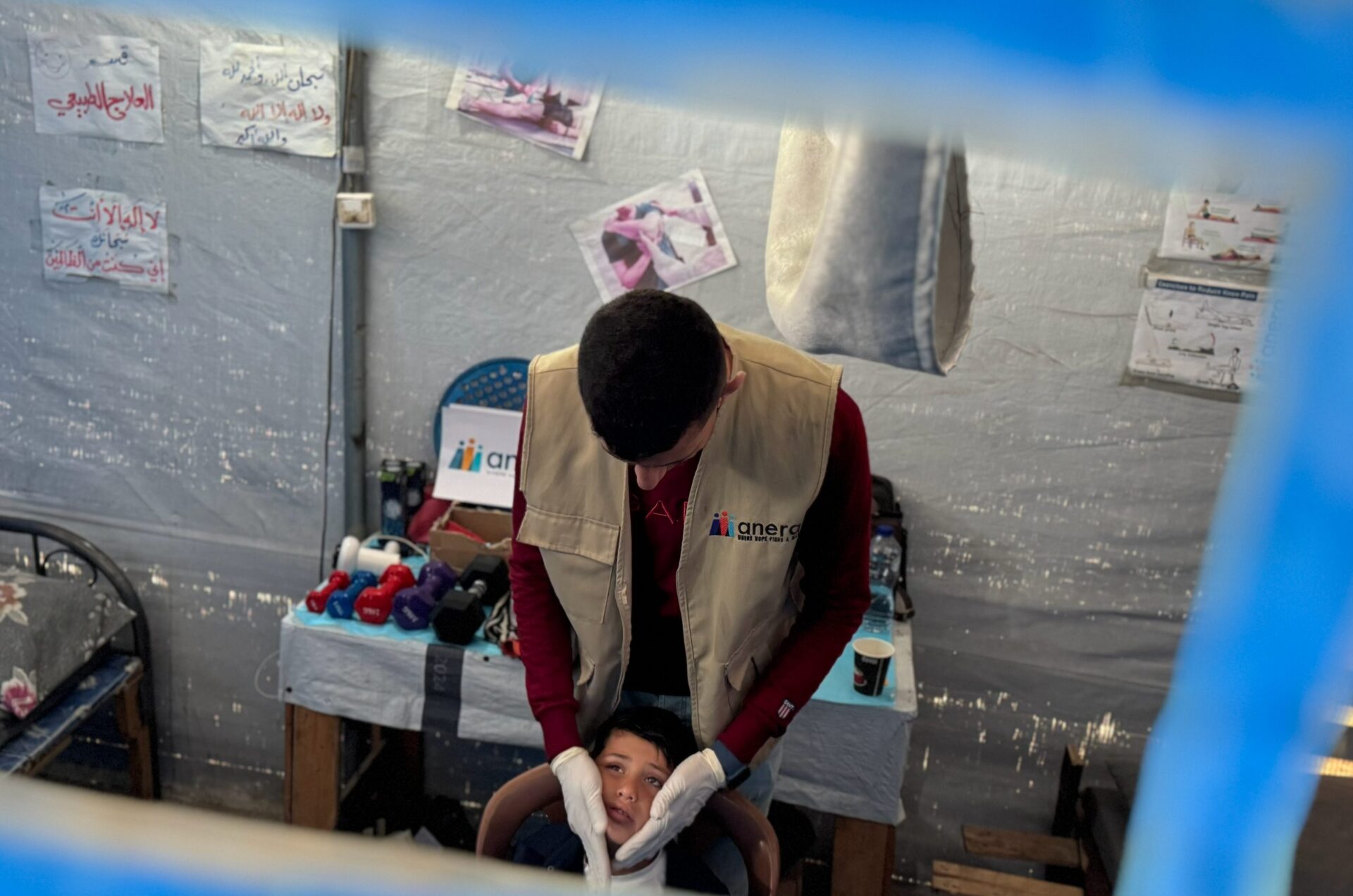
After his diagnosis, Mohammed began receiving physiotherapy treatment at an Anera health clinic. At first, Islam was consumed by fear.
“I kept thinking maybe he would never recover,” she says. “Maybe his face would stay like this forever.”
But the medical team reassured her constantly, especially Hamza Aljamal, one of the physicians who closely followed Mohammed’s condition throughout his treatment.
“They always gave me hope,” she says. “They kept telling me Mohammed would return even better than before.”
Over time, Mohammed himself began looking forward to his daily sessions at the clinic. After about six weeks of treatment, his mother finally began noticing real improvement.


“Now he is doing much better,” she says with relief.
One small moment during treatment stayed with her. Aljamal advised Mohammed to use a straw to help strengthen his jaw muscles. Islam searched for one but could not find any. The next day, the doctor arrived carrying one for Mohammed himself.
“It made me so happy,” she says, smiling. “It made me feel they were not treating us like just patients. They truly cared.”
Despite everything, Mohammed’s personality still shines through. “He’s very mischievous,” his mother says with a laugh. “But he’s also very smart.”
“Now he is doing much better.”
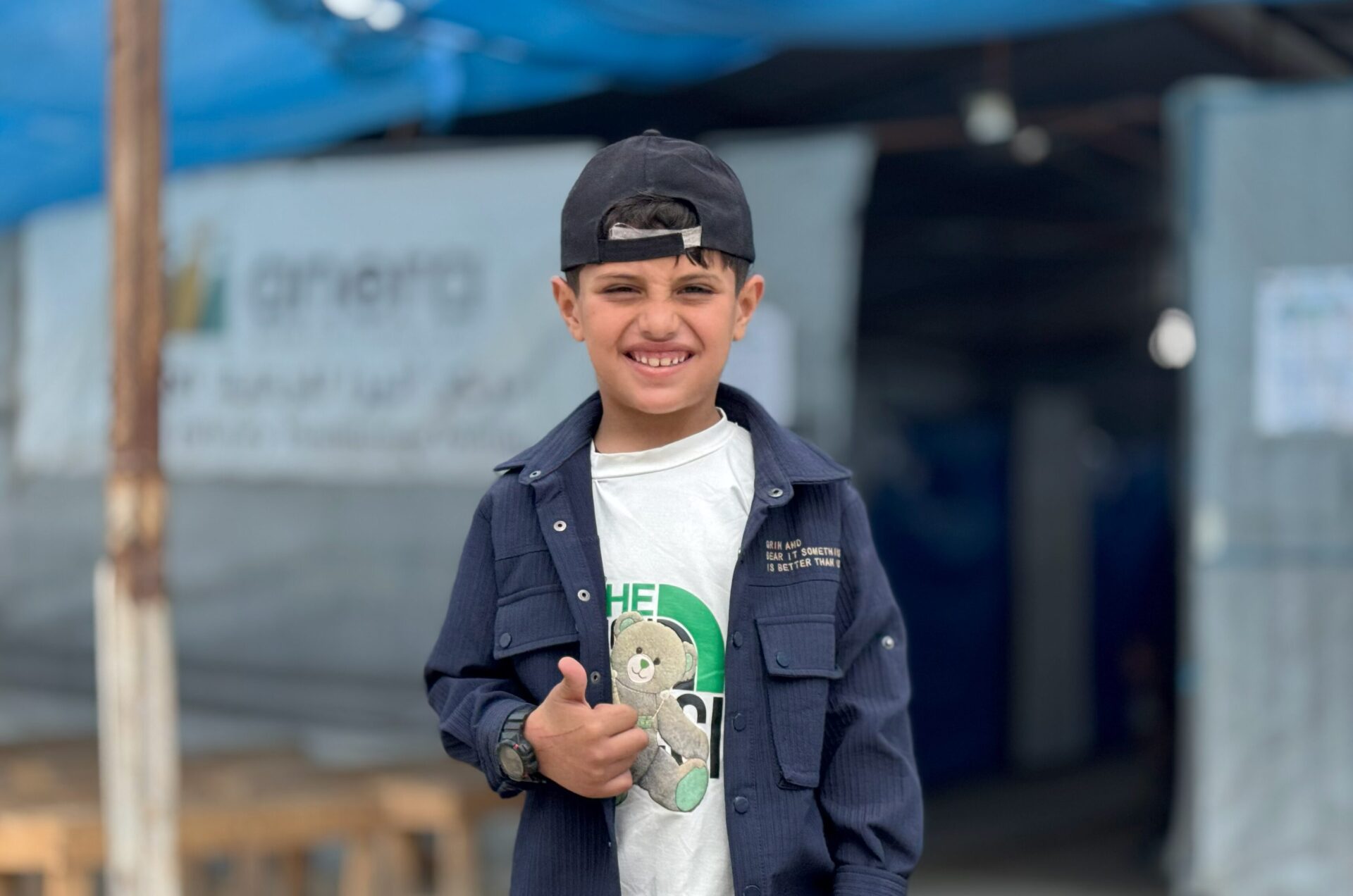
These days, Mohammed is slowly going back to being himself again, playful, energetic, and full of movement. For Islam, seeing her son smile and speak normally again feels like a huge relief after months of fear and overthinking every small detail in his condition.
Although Mohammed’s recovery is a huge relief, the family’s struggles have not ended. Like so many families in Gaza, they are still living in a tent, trying to survive each day without any stable income, safety, or the home they once had.