Mar, 2026
The weight of the sky — in a society made homeless, shelter supplies and warm clothing mean everything
The first sign of rain is not the sky, it is the sound.
A thin tapping on a metal bowl near the tent’s entrance. Then a steadier rhythm on the canvas roof. Ahmad, 13, has learned to listen closely. From the sound alone, he tries to gauge the night: will it be a passing cloud or a long, cold vigil?
He shares this small, fabric world with his mother and two younger brothers. Since their father was killed, the boys stay close to her when the air shifts. Ahmad watches her face when the wind begins. If she looks calm, he tells himself he can be calm too.
When the Ground Gives Way
One night, the tapping did not stop.
Water seeped through the dirt, soaking the thin mattresses laid over plastic sheets. Ahmad’s mother moved quickly, lifting blankets and stacking what she could above the rising damp. Ahmad followed her lead, catching smaller items before they floated away while his brothers clung to her.
Then the wind began to pull at the ropes. A corner of the fabric tore loose, exposing them to the raw night air.
But in the camp, you are never entirely alone. Neighbors rushed over through the mud. Within minutes, a dozen hands held the tent down, tightening knots and pressing the fabric back into place. Ahmad stood shoulder to shoulder with men twice his size, gripping the rough edge as the wind pushed back.
Inside, everything was wet. They borrowed mattresses from relatives and waited for the morning sun to do the work of drying.
For Ahmad, the hardest part was watching his younger brothers shiver from the cold. “I wanted them to feel warm,” he says, rubbing his hands together as if remembering the chill.
The Small Calculations
More than 80% of displaced families in northern Gaza depend on food assistance for their daily meals, according to the UN Office for the Coordination of Humanitarian Affairs. For Ahmad’s family, this reliance shapes every day.
Life in the tent is a routine of small, heavy calculations. Since his father was killed, the family’s survival has come to rely almost entirely on aid. Ahmad’s mother organizes their days with the precision of a map. She sends him out when the water truck arrives, and he returns balancing heavy containers through the thick mud. When there is food to be had, he treks to the tekia (community kitchen) to bring back their daily meal. Before the sun sets, she carefully checks the boys' sleeves and socks for any lingering dampness, trying to keep the cold at bay for one more night.
“She makes everything work,” Ahmad says with a small shrug, “even when I feel tired.”
At night, the cold settles quietly. The canvas blocks the heaviest of the wind, but a chill draft still circulates inside. Stray dogs howl in the distance. Sometimes his youngest brother wakes and shifts closer to their mother, seeking the only heat available.
A New Kind of Armor
When Ahmad first heard his father had been killed, he struggled to believe it. “I thought he would come back,” he recalls. Seeing his face one last time, lifeless, made the loss heavy and real. Even now, he still sometimes expects to see him in a kitchen, making tea.
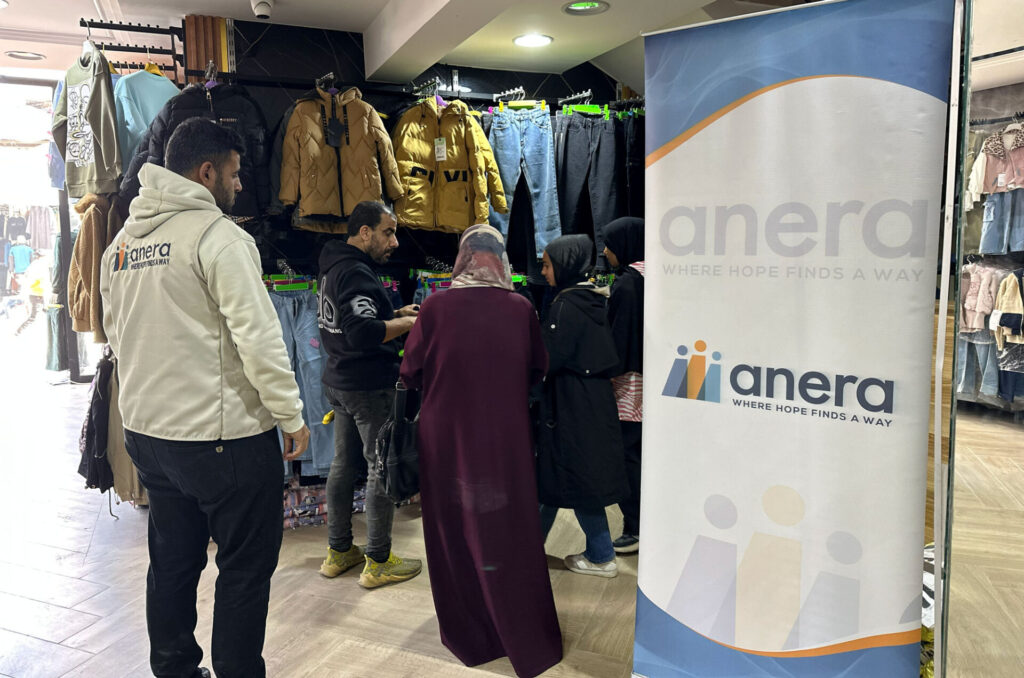
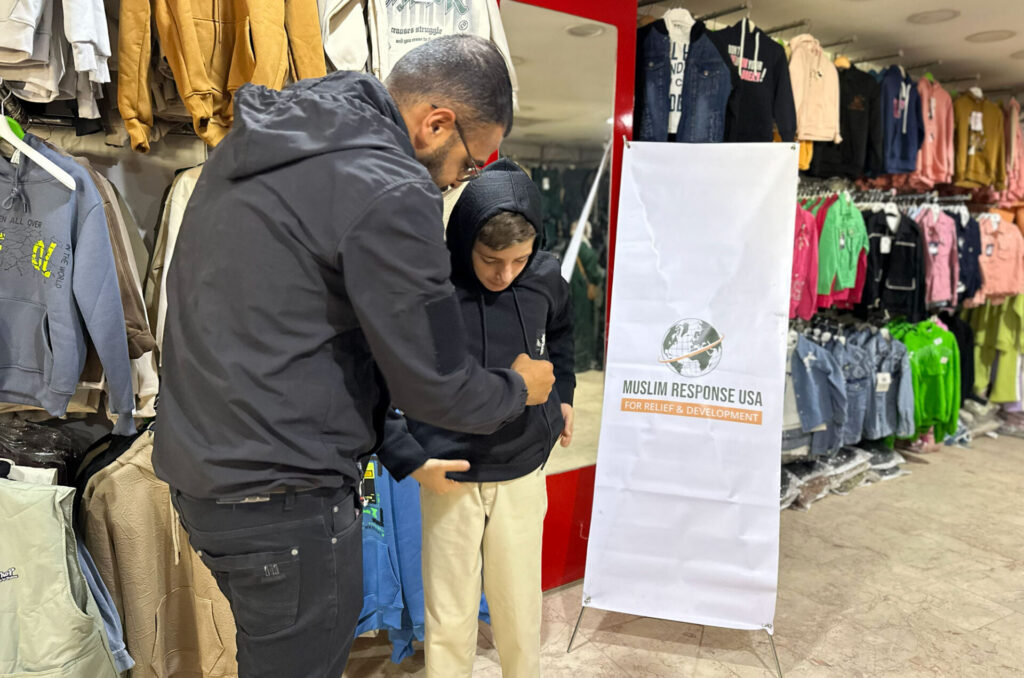
Recently, the family received a voucher from Anera to buy winter clothes, supported by Muslim Response USA. Ahmad was thrilled to choose his own jacket and pants, but he stood back, insisting his mother pick for his younger brothers first. “She made sure we all had something,” he says.


“She makes everything work, even when I feel tired,” Ahmad says of his mother.
For Ahmad, the new clothes mean mornings without the bone-deep shivers. For his mother, they mean one less worry when the clouds gather.
Ahmad still listens carefully when the tapping begins on the metal bowl. But now, when the wind rises, warm jackets are folded within reach. Inside the tent they hold down together, there is a little more than just fabric between them and the storm.

Gaza
Gaza City Governorate
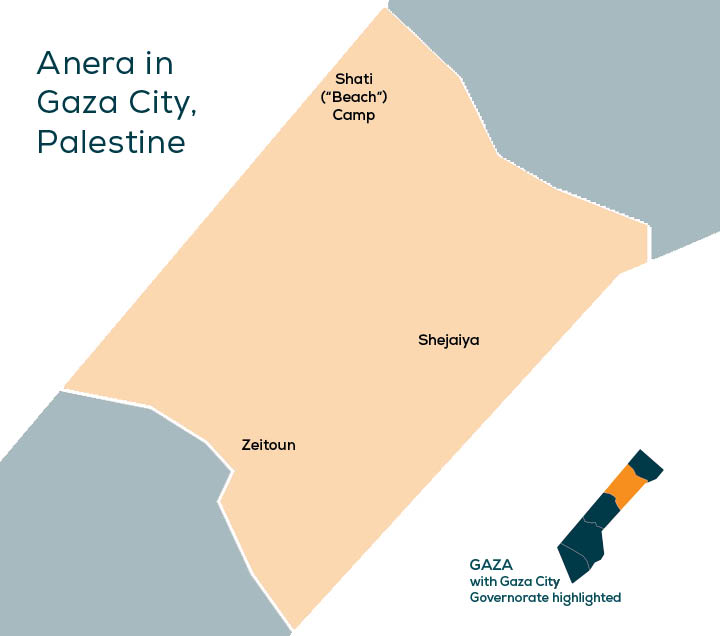
In 1984, Anera’s Gaza City office opened with three staff members. It is still at the same location today, but with 17 staff members. From that location, the team manages water and sanitation, education, healthcare, economic development, and humanitarian relief projects throughout Gaza.