
Palestinian Refugees in Jordan
 by Anera
Posted in: Report
One Population, Many Realities
Jordan has been a refuge for Palestinians for more than 75 years. For most, it has become a permanent home. The country hosts around 40% of the world’s registered Palestinian refugees. The great majority hold Jordanian citizenship and are deeply integrated into the country’s social and economic life. Yet permanence has not meant equality or security for all. Living conditions vary widely, with some refugee communities continuing to face entrenched poverty, aging infrastructure, limited economic opportunity and gaps in access to essential services.
What is changing is the ability of families and communities to cope with these long-standing challenges. Across Jordan’s 10 Palestinian refugee camps, families are facing growing pressure from poverty, unemployment, aging infrastructure and gaps in essential services. At the same time, international humanitarian funding is shrinking, placing additional strain on UNRWA and the organizations that have long helped fill critical gaps.
The result is a slow-moving crisis: families have fewer resources to fall back on, essential services are stretched thinner, and the local organizations closest to communities are being asked to do more with less.
A closer look at life in the camps
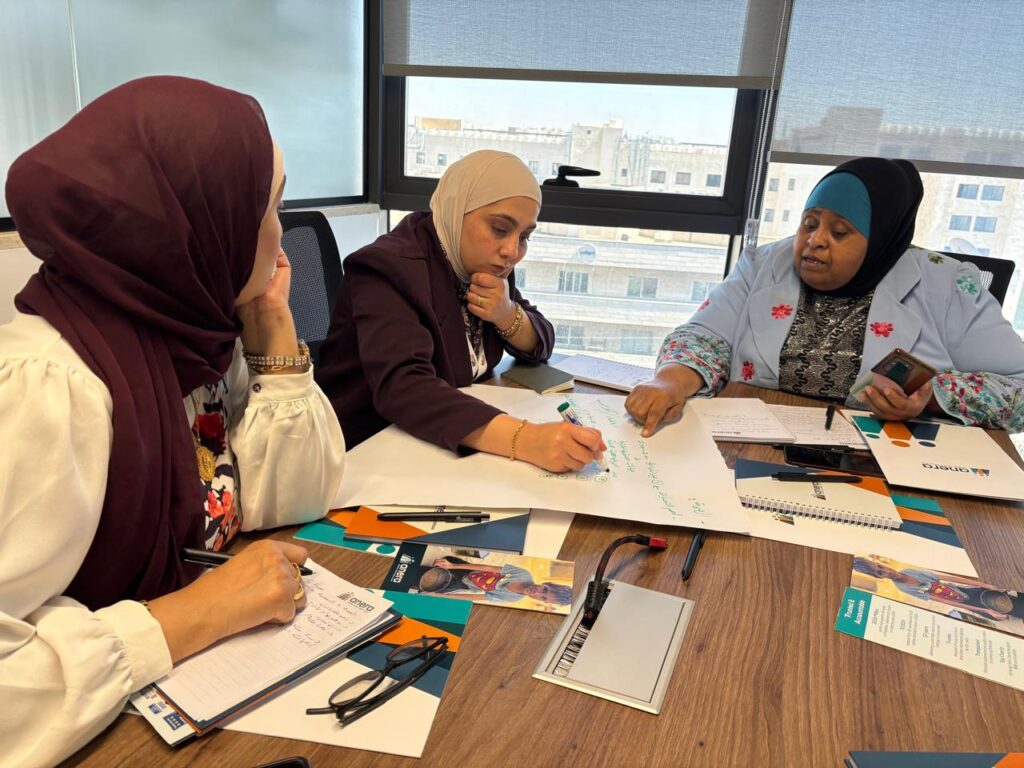
Anera’s latest on-the-ground report explores what these pressures mean for Palestinian refugees across Jordan. Our team consulted with community organizations serving all 10 camps, held roundtable discussions in Amman, and spoke with camp residents to understand how families are experiencing these changes firsthand.
The findings reveal stark differences from one camp to another. In Jerash, more than half of residents live below the national poverty line. In Irbid, chronic illness and limited health insurance make reduced access to healthcare especially difficult. In Husn, geographic isolation can mean traveling nearly 80 kilometers for specialist care. In Baqa’a, overcrowded classrooms and dense living conditions compound existing pressures. Smaller camps such as Talbieh can face an entirely different challenge: losing even one teacher may mean losing an entire subject.
What happens when support systems weaken?
The report looks across health, education, livelihoods, protection, women and girls and camp infrastructure. It also highlights that Palestinian refugee communities are not simply recipients of assistance. Local organizations in camps are often the first to recognize emerging needs and the most trusted source of support. But many are operating with limited funding, staffing and institutional capacity.
Strengthening these organizations can help communities withstand growing pressures, particularly as traditional humanitarian funding declines.
The path forward
Anera’s on-the-ground report identifies six practical areas where targeted investment can make a difference: strengthening community organizations, keeping healthcare accessible, integrating mental health and protection into everyday services, creating livelihood opportunities for young people, supporting women and girls, and improving coordination across all 10 camps.
The goal is not to replace UNRWA or existing systems. It is to reinforce what remains, fill critical gaps and invest in the local organizations that are already there.
Read Anera’s latest on-the-ground report to understand how Palestinian refugee communities in Jordan are being affected by shrinking support, and where targeted investment can help families and communities build greater resilience.
About Anera’s Assessments
Findings are based primarily on consultations Anera had with community-based organizations serving all 10 UNRWA-recognized Palestinian refugee camps in Jordan. Anera convened two roundtable discussions in Amman in 2026, bringing together representatives from organizations working with Palestinian refugees to identify emerging needs and trends. These consultations were complemented by interviews with camp residents, personal testimonies and a review of secondary data, providing both statistical context and first-hand perspectives on daily life in Jordan’s camps.

OUR BLOG
Related
 by by Anera
August 19 commemorates the annual World Humanitarian Day, a global observance of the violence, challenges, changes and hazards millions of civilians and volunteers in conflict-affected countries face every day with bravery, resilience, selflessness and sacrifice. World Humanitarian Day 2026 Today,…