Jan, 2026
“I learned to stitch my life together by taking my kids’ worn-out clothes apart.”
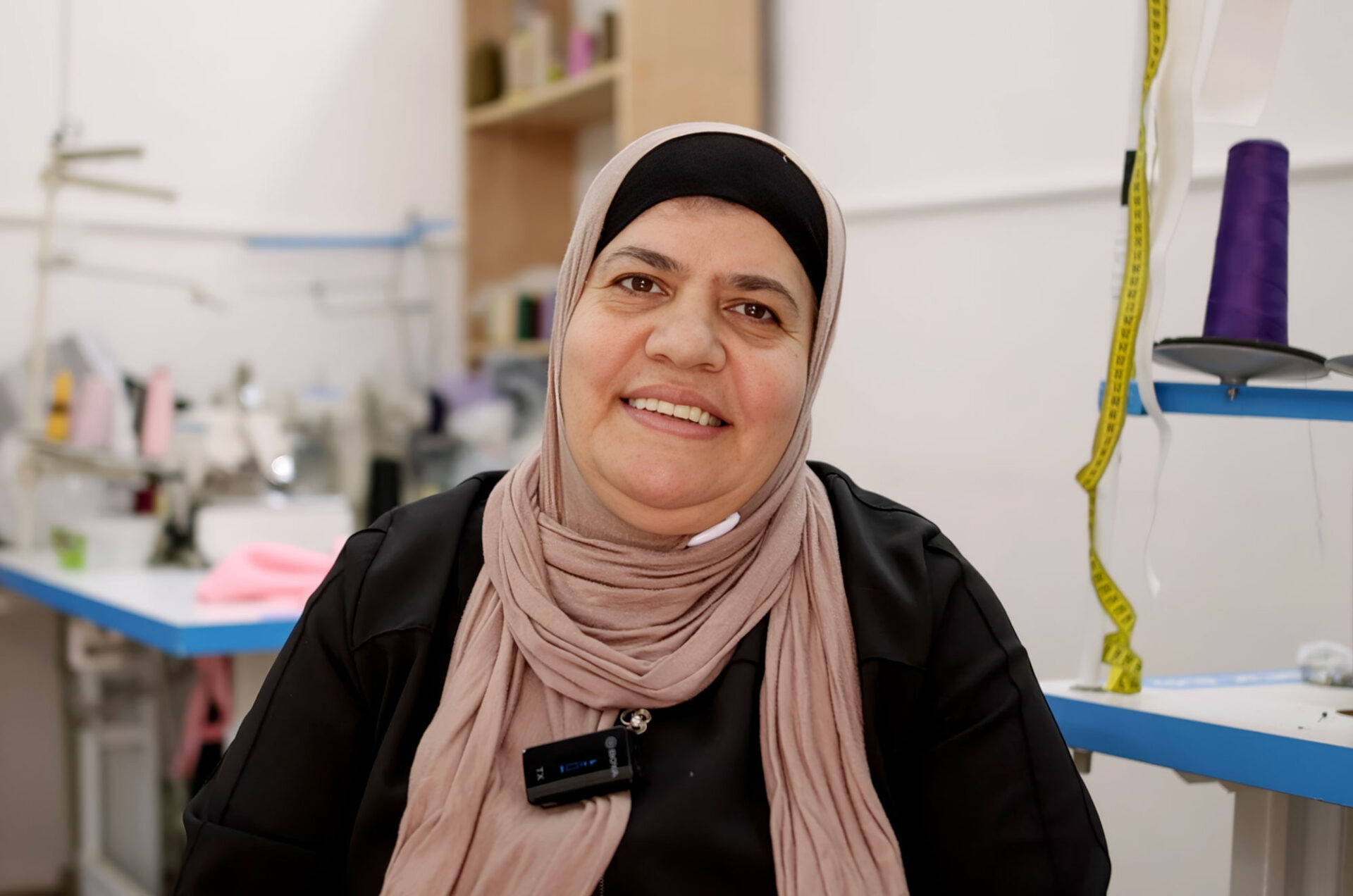
For Nida, 52, from Nablus, sewing wasn’t a hobby. It was a necessity. When her husband was injured in a work accident and could no longer provide for the family, she found herself responsible for supporting their six children.
“I had to act quickly,” she says. “We needed income, and sewing was the only thing I could start immediately.”
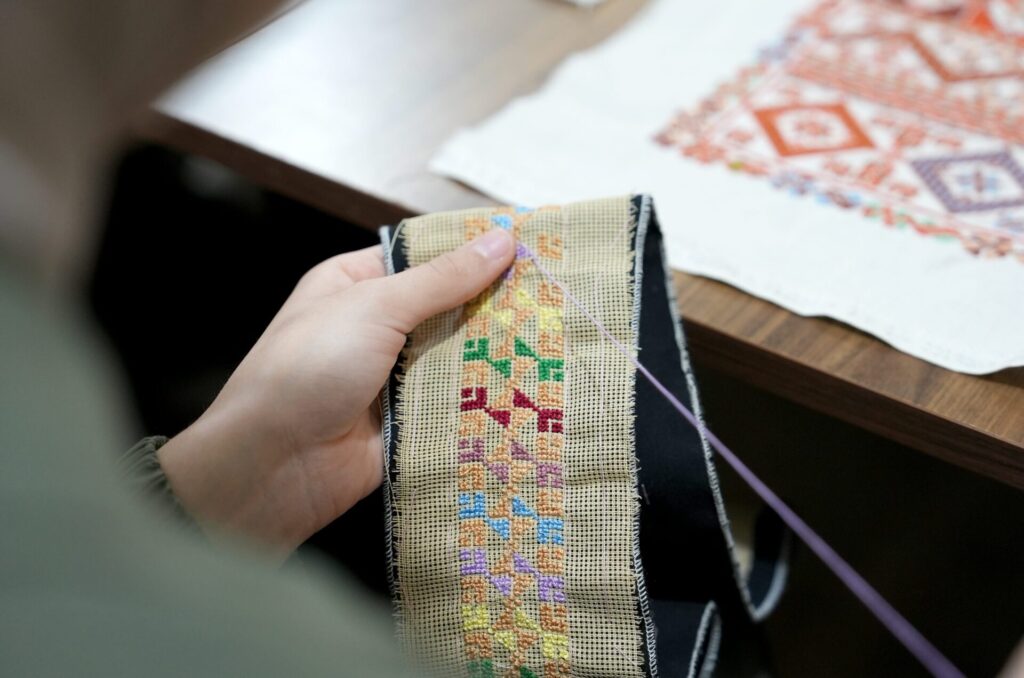
With no training, no patterns, and no mentor to guide her, Nida began teaching herself from home. She opened her children’s old clothes piece by piece, learning from every sleeve, collar, and seam. The garments became her teachers, showing her how to measure, cut, assemble, and design.
“Those old clothes were my teachers,” she says. “Every stitch I opened taught me to create my own pieces.”
“I learned to stitch my life together by taking my kids’ worn-out clothes apart. Studying their seams and measurements showed me how pieces become something useful, and that’s how I learned to create my own.”
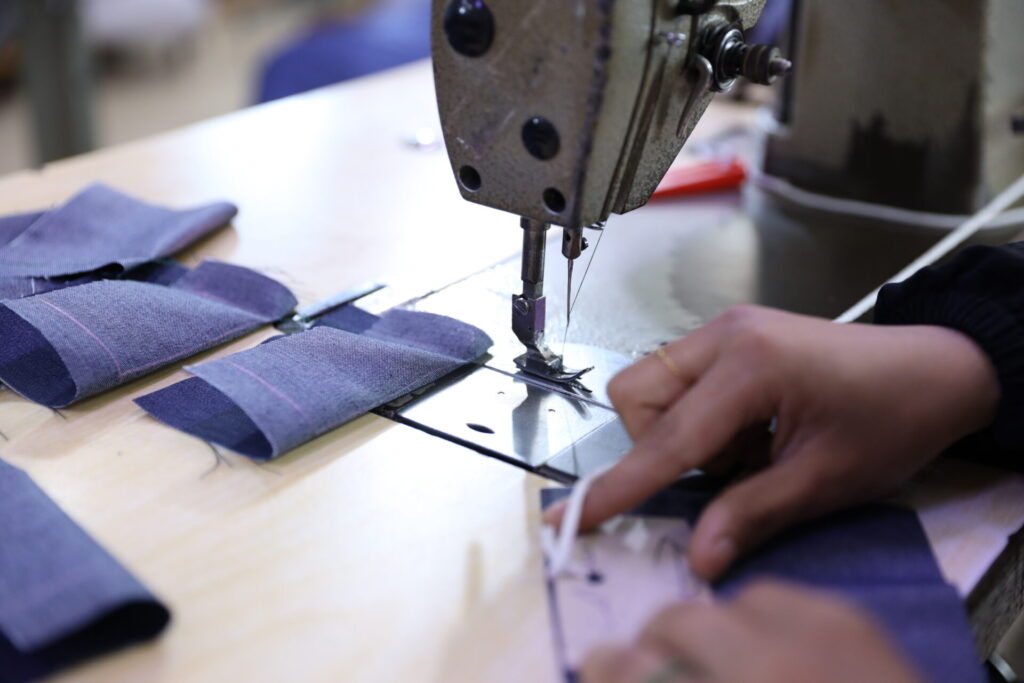
In 2019, through Anera’s support, she received two sewing machines, a stitching machine, and an ironing machine, equipment that transformed her home experiment into a viable source of income.
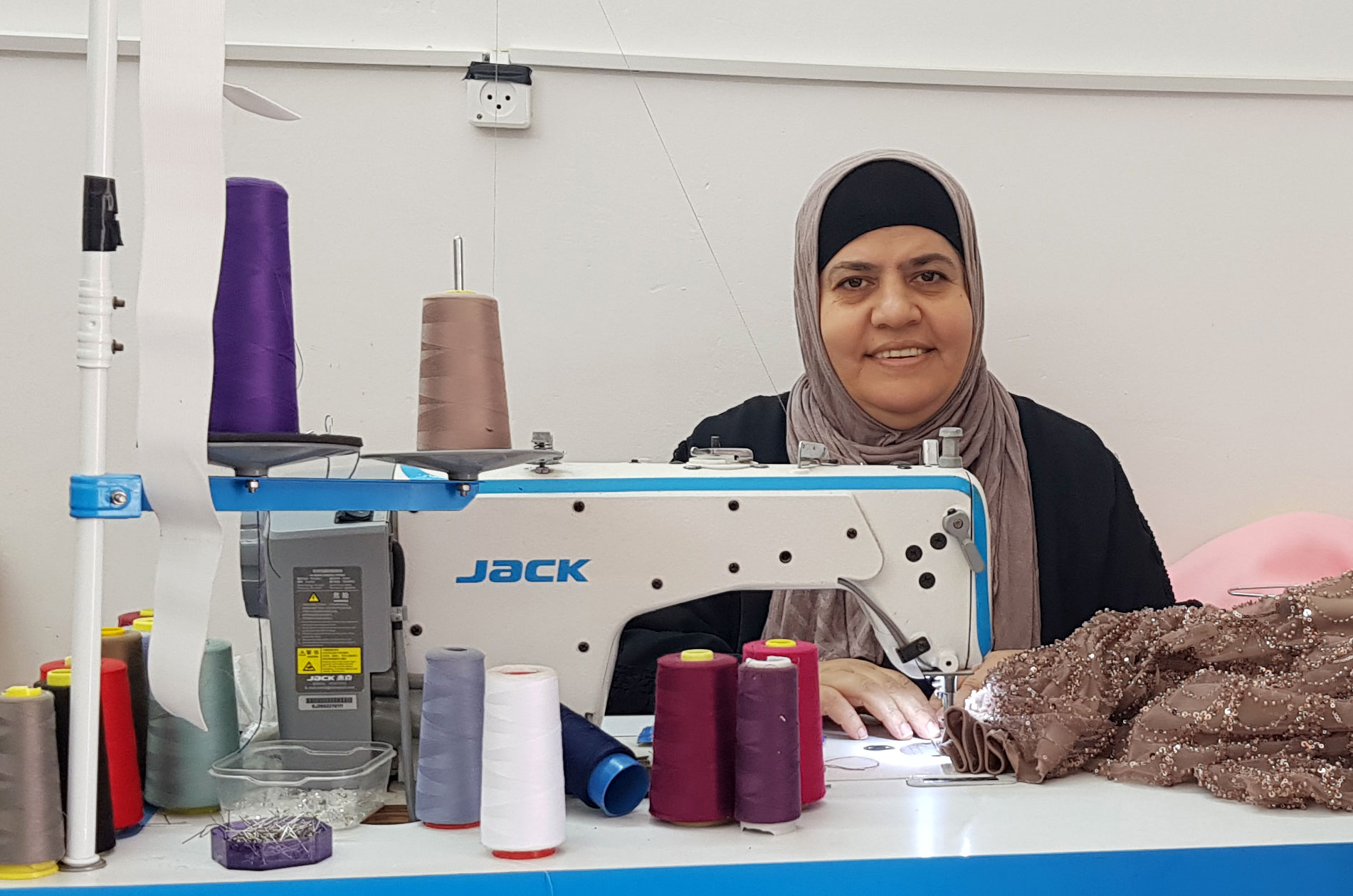

"Those old clothes were my teachers. Every stitch I opened taught me to create my own pieces."
“That support pushed me forward,” she says. “It gave me tools to work properly.”
Nida worked through some of the toughest years for Palestinian families. COVID-19 disrupted livelihoods, and the war on Gaza affected households and businesses across the West Bank. Even so, she kept her machines running, taking on every repair and custom request that came through her door.
“There were long periods with almost no work,” she admits. “But stopping was never an option.”
After five years of steady effort, she rented a small sewing workshop directly beneath her home. The move signified how her work was not just a private necessity but a visible and trusted service for her community. Production increased, her workflow became more organized, and she built a loyal base of clients. As her reputation grew, major stores in Nablus began referring customers to her.
"Opening that space made everything feel more serious," she says. "People started trusting my work even more."
From opening the seams of worn-out clothes to understand how they were made, Nida now runs a respected sewing business. “I started by opening seams to learn,” she says. “And over time, I built something of my own.”
The views expressed herein are those of Anera and shall not, in any way whatsoever, be construed to reflect the official opinion of IRUSA, its Islamic Relief affiliates, or its donors.