Feb, 2026
From Tatreez to Financial Independence, Dalal’s Journey of Skills Building, Inclusion and Employment
This program is supported by UNICEF

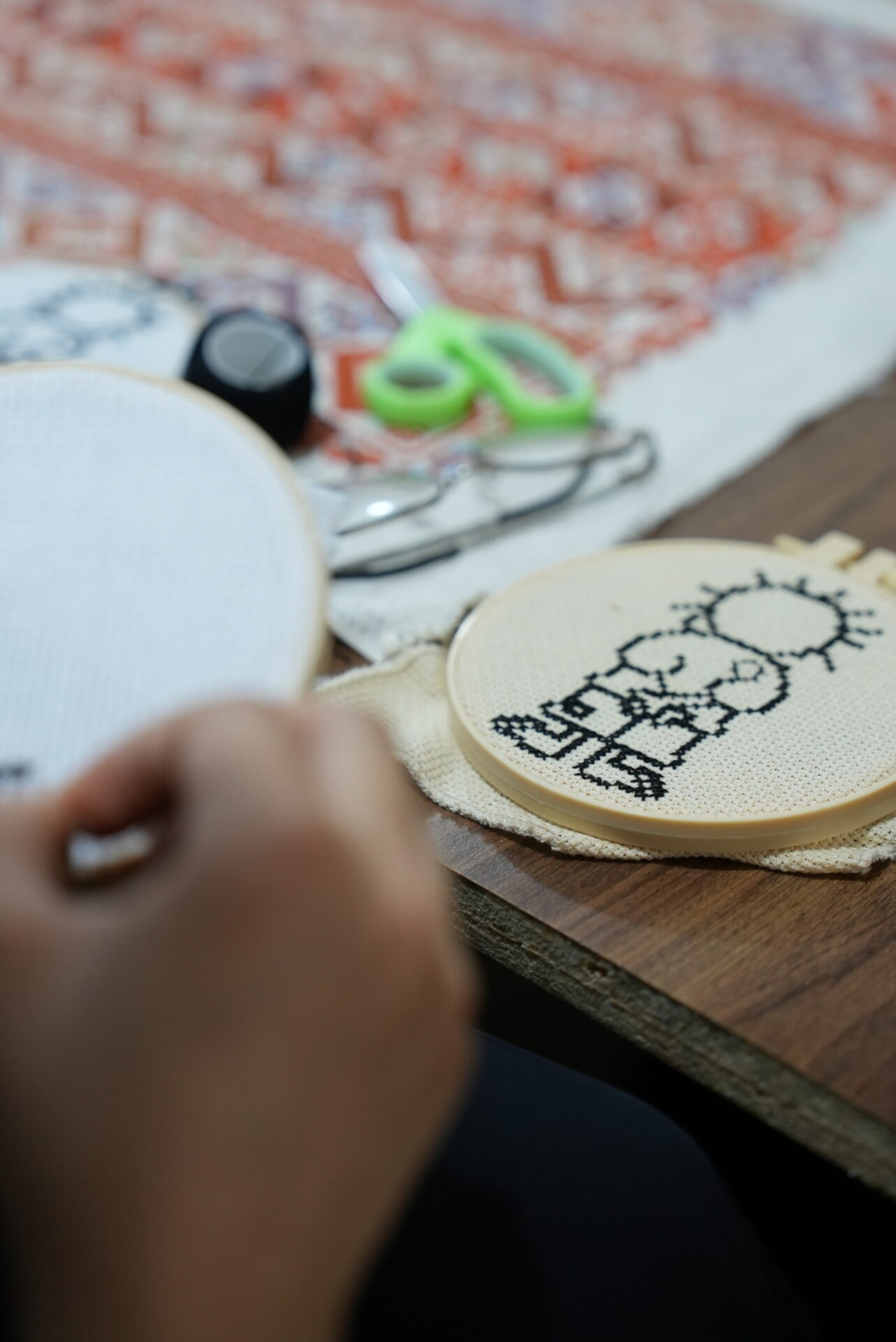
Palestinian tatreez is far more than embroidery. It is a visual language passed from one generation of women to the next, telling the stories of land, identity, community, and resilience. Traditionally hand-stitched onto dresses (thobes), shawls, and household textiles, tatreez patterns are deeply rooted in regional traditions. Each village historically carried its own motifs, colors, and symbols, reflecting geography, social status, and collective memory.
For Palestinians, tatreez has become an act of cultural preservation and quiet resistance. Teaching tatreez today is not only a heritage statement; it is about creating livelihoods, restoring dignity, and ensuring that this tradition continues to live through skilled hands, meaningful work, and economic opportunities.
As part of UNICEF’s Learning to Earning program, a traditional Palestinian tatreez course implemented by Anera is supporting young women to learn this ancestral craft while strengthening their skills, confidence, and access to employment opportunities.
A Safe Space to Begin: Dalal's First Step Forward

Dalal is a 23 years old Palestinian-Syrian woman who was displaced from Yarmouk Camp in Syria in 2013, now living in Ein El Hilweh Camp in Saida, South Lebanon. Dalal lives with multiple disabilities: she has hearing and speech impairments, 40% capacity in her right ear and no hearing in her left ear, uses a hearing aid, and has a physical disability in one leg.
Before joining the training, Dalal’s world was largely confined to her home.
“Before joining this course, I had limited knowledge of traditional Palestinian embroidery, which I had learned from my mother, who always taught me at home. My love for embroidery came from her.”
While embroidery was familiar, stepping outside her home was not.
“I registered for this course while feeling afraid of social interactions, as I usually do not leave the house.”

Like many young women with disabilities, Dalal carried not only physical challenges but also severe social anxiety; fear of being judged, excluded, or treated differently. That fear slowly began to dissolve during her first days of training.
“During my first week, I felt that this was a safe place for me. Everyone was kind and welcoming and did not treat me differently, as I had feared.”
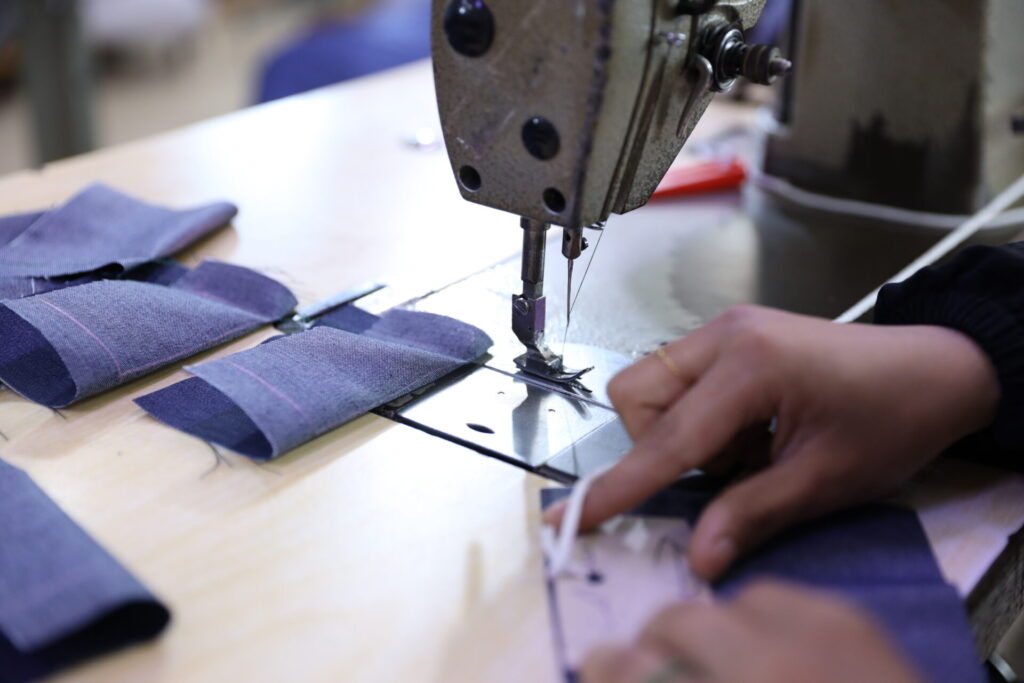
Like all activities under UNICEF’s Learning to Earning program implemented by Anera, this course extended beyond technical embroidery skills. Alongside tatreez and sewing, participants received life and functional skills training, helping Dalal build confidence and express herself.
“The life-skills training helped me communicate with my peers and taught me things I had never known before.”

“I registered for this course while feeling afraid of social interactions, as I usually do not leave the house.”
From Training to Employment
The traditional Palestinian tatreez course was implemented through the Women’s Programs Association in Ein El Hilweh Camp and enrolled 20 young women. Upon completion, 15 participants were selected to continue into paid, hands-on employment with the Embroidery Association.
Dalal never expected to be among them.
“I was selected along with 14 other girls from the course to become an employee at the Embroidery Association — something I never expected.”
For Dalal, this opportunity represented more than income; it marked a turning point in how she saw herself and her place in the world.
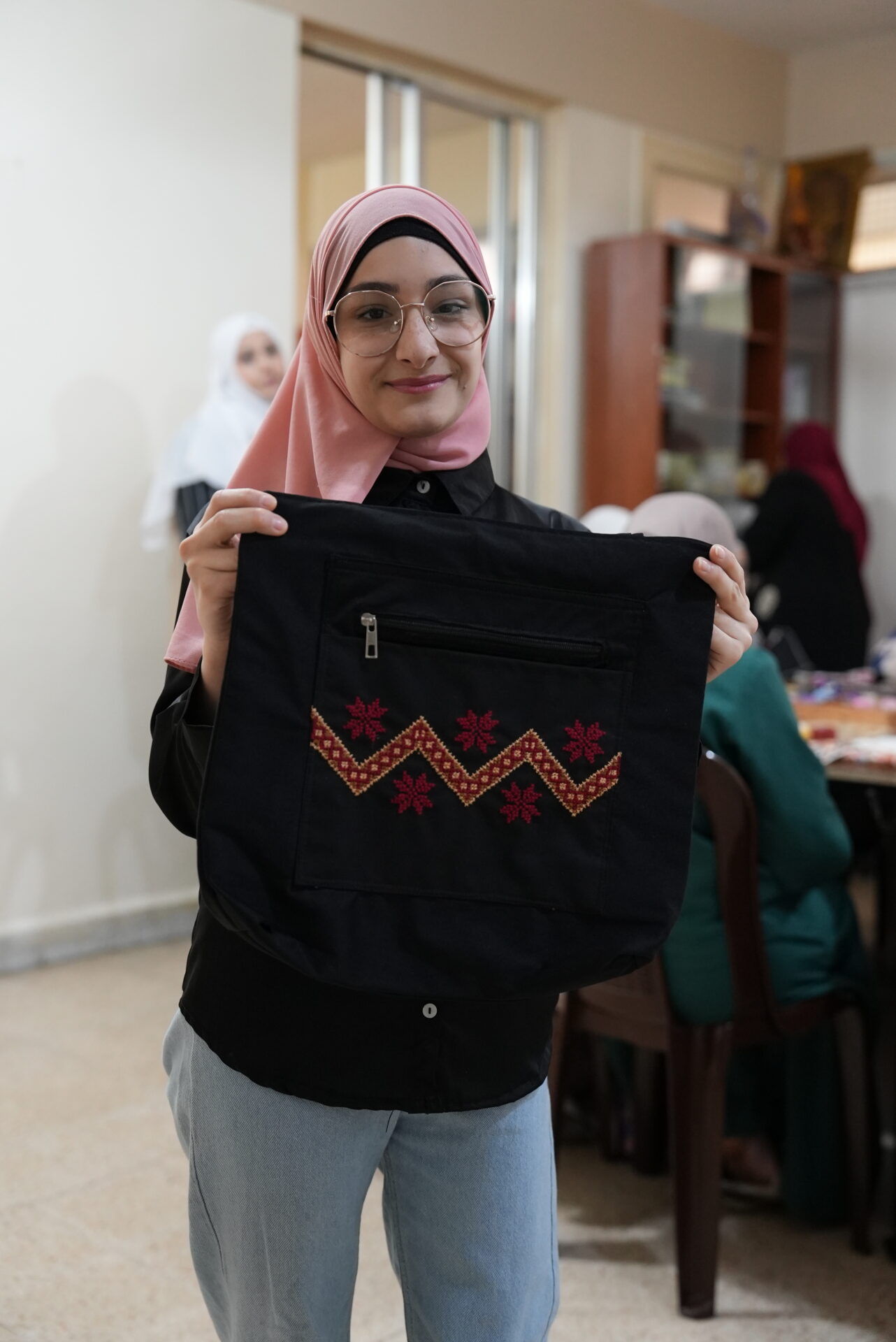
“I was extremely happy that they did not discriminate against me and chose me equally alongside the others… Today, I can work and earn money for the first time in my life.”

"Today, I can work and earn money for the first time in my life.”
Seen for Her Skill, Not Her Disability
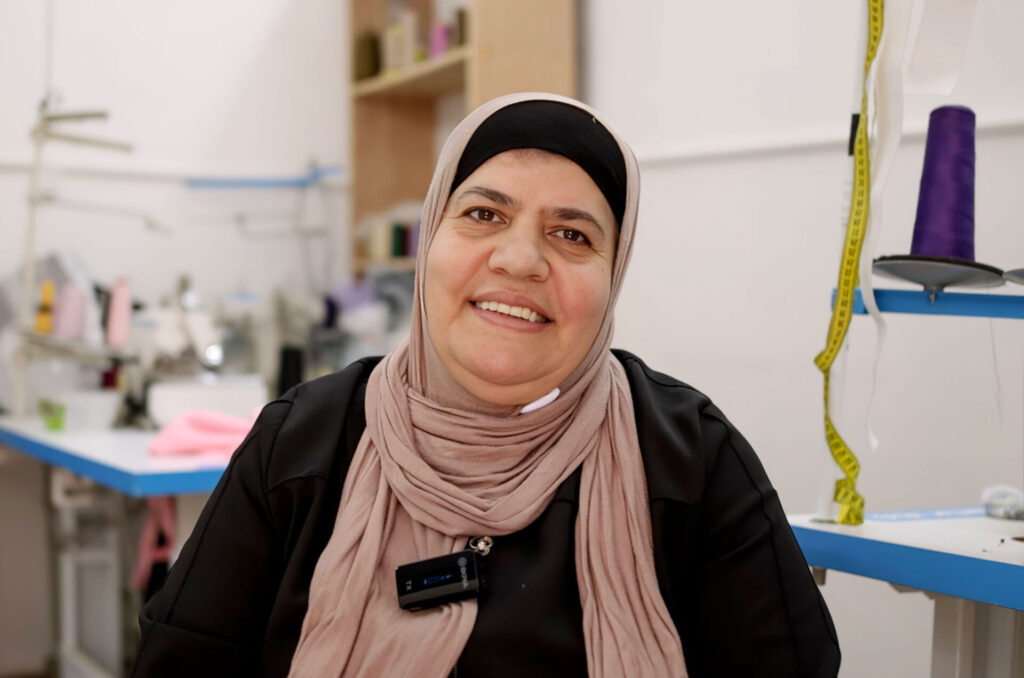
Her transformation was evident to the training team. Faten Meari, the director of the Embroidery Association and sewing trainer, recalls Dalal’s early days in the course.
“When Dalal first joined the course, she was not interactive with the other participants.”
However, Dalal soon stood out, not because of her disability, but because of her determination, embroidery and soft skills.
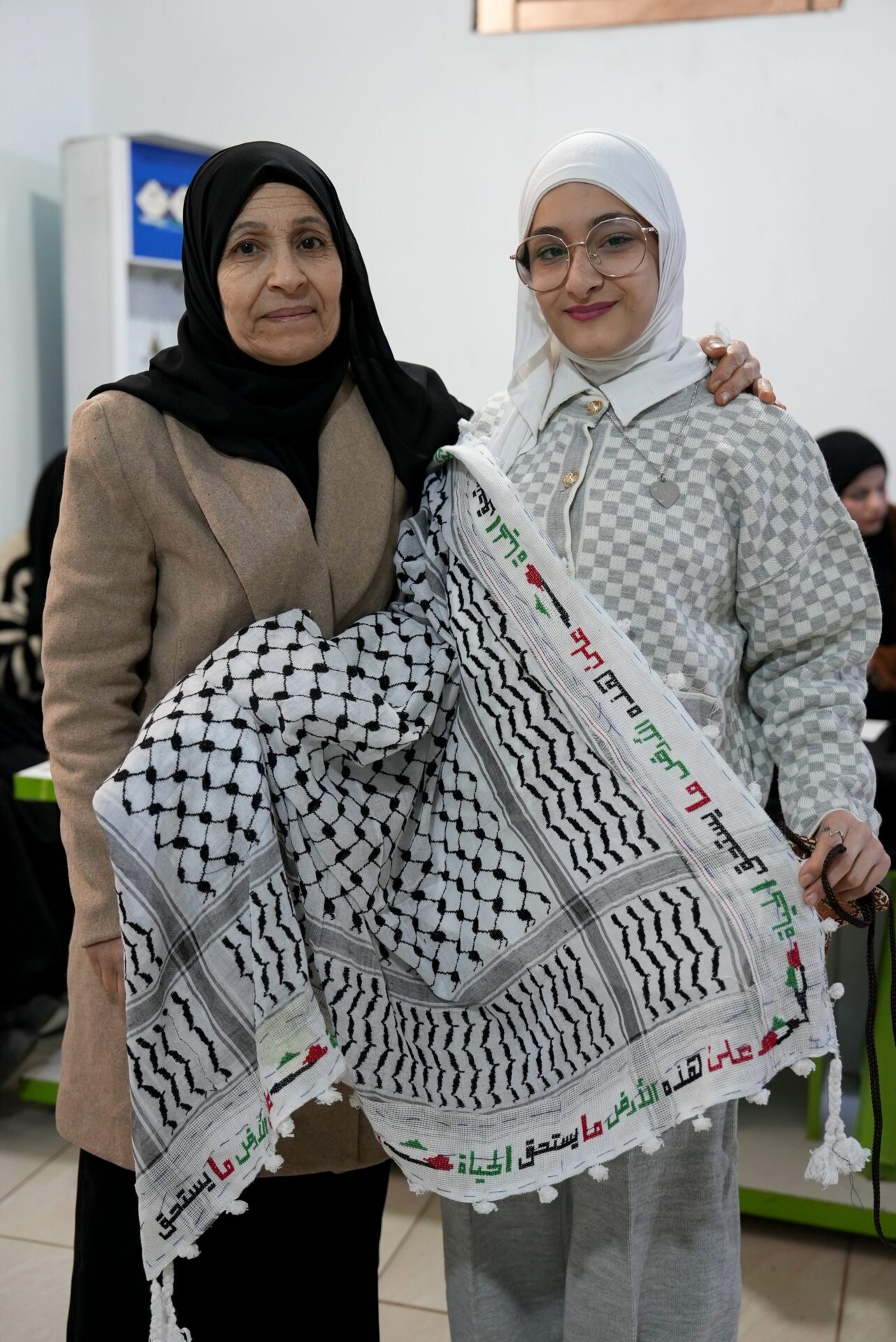
“She is a girl with disabilities who truly amazed us with her abilities, both in sewing and in her exceptional sense of color selection,” Faten says. "Today, she is fully engaged, socially active, and has built strong friendships with everyone.”
Employment at the Embroidery Association is performance-based, allowing women to earn according to their productivity and skill, income ranges from $100 to $400 each month. Dalal now comes to work confidently, applies her craft, and earns an income through her own effort, something that once felt unimaginable.
“This profession is well deserved for Dalal,” Faten adds. “She represents a remarkable achievement.”
Stitching Heritage, Inclusion, and Opportunity
Dalal's story highlights the importance of preserving Palestinian tatreez. It demonstrates the possibilities that arise when training programs are designed to be inclusive, recognizing the abilities of women with disabilities. Additionally, it shows how linking cultural heritage to viable economic opportunities can create meaningful change.
Through the UNICEF programme implemented by Anera, traditional crafts are transformed into modern opportunities, allowing young women like Dalal to step into the world with confidence, independence, and pride.
Every stitch Dalal completes today carries more than color and pattern. It carries resilience, dignity, and a future she once thought was out of reach.
Lebanon
South Governorate
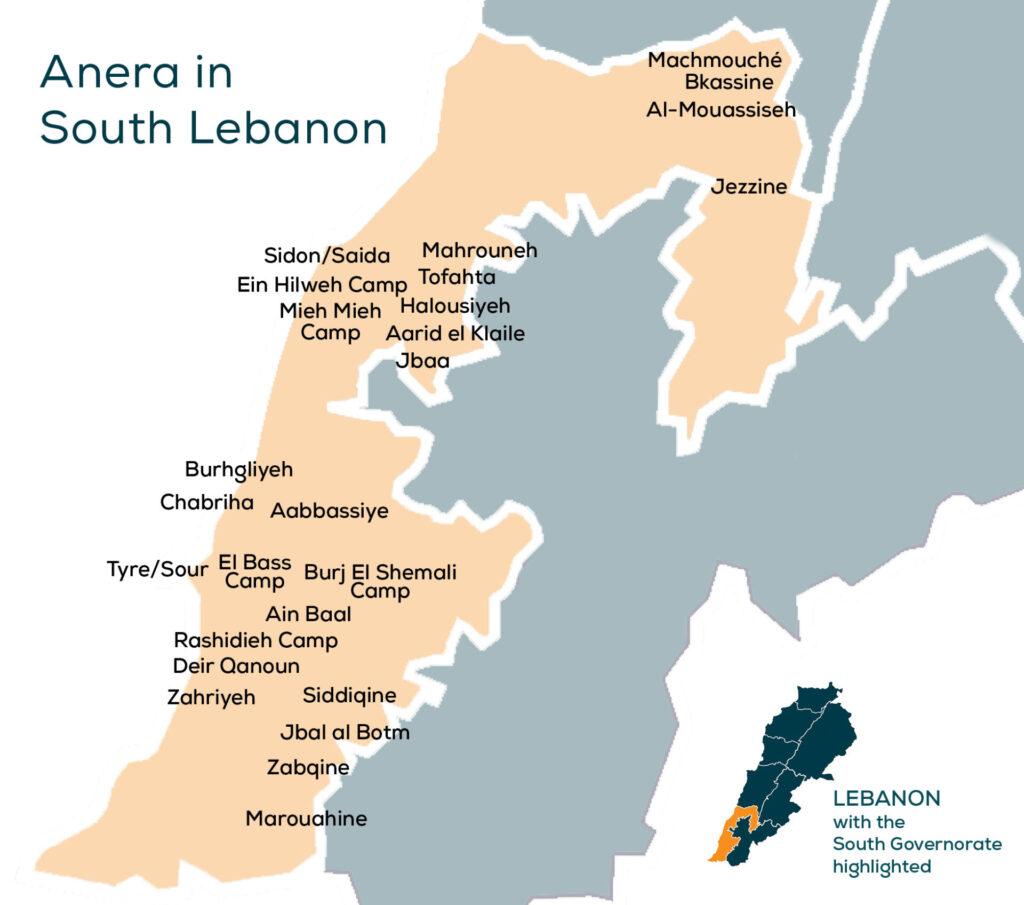
The South Governorate of Lebanon is a beautiful place with white beaches, archeological ruins, bustling old souks, fertile fields of citrus and banana trees, and a deep history. Its residents are from different religions: Shia and Sunni Muslims, Druze, Eastern Orthodox, Maronite, Protestant, and Greek Catholic Christians. Its biggest cities are also the third and fourth largest in the country, Saida and Tyre.