Mar, 2026
With support from Direct Relief, we're enabling diabetes patients like Lulu to access the medical care they need
Inside a small examination room at a medical center in Zaatari Refugee Camp, a mother and daughter sit closely together on a patient bed.
The older woman, Hawra, is 70 years old and the mother of six children. Two of her children live with her in the camp, while the rest remain in Syria. Sitting beside her is her daughter Lulu, a 39-year-old woman who has been living with diabetes since the age of five.
For Lulu, the disease has shaped nearly every chapter of her life.
Over the years, complications from diabetes gradually took most of her eyesight. The loss did not come suddenly, but slowly, as the condition continued to affect her body.
“My father passed away in Syria due to unknown causes,” Lulu says. “But I believe it was because of diabetes. He was never diagnosed and never received medication.”
A Mother’s Determination
More than a decade ago, Hawra made a difficult decision in hopes of protecting what remained of her daughter’s vision.
“Thirteen years ago, I left my family in Syria and traveled to Jordan to try to treat my daughter’s eyes,” she recalls.
The journey took nearly six days. Amid the turmoil of the Syrian war, mother and daughter traveled with limited resources and much uncertainty. During the journey, they ran out of Lulu’s diabetes medication, causing her condition to worsen.
Eventually they reached Jordan and settled in Zaatari Refugee Camp, which has become home to tens of thousands of Syrians displaced by war.
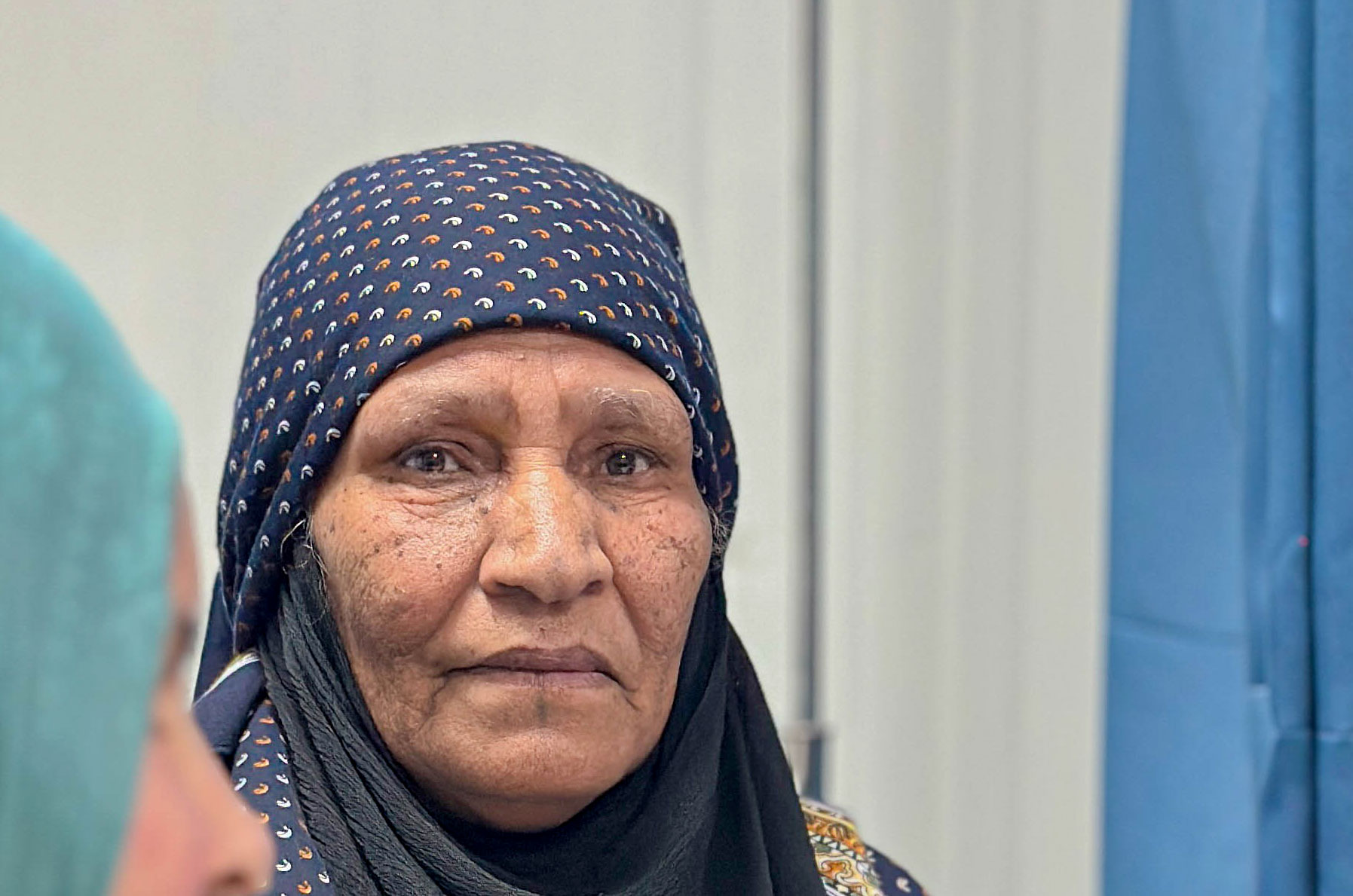

"I left my family in Syria and traveled to Jordan to try to treat my daughter’s eyes.”
But safety did not mean the end of Lulu’s medical struggles.
Her appetite declined and she began losing weight rapidly. Severe muscle tension spread through her arms and legs, while her eyesight continued to deteriorate.
Determined to save what remained of her daughter’s vision, Hawra managed to arrange an eye surgery outside the camp. However, financial constraints and transportation difficulties made it impossible for Lulu to attend the required follow up appointments. The protective lens placed during the surgery remains in her eye to this day.
Managing a Silent Threat
While Lulu struggled with her eyesight, another complication was quietly worsening.
Her blood sugar levels were rising.
Seeking help, the family were eventually referred to the Syrian American Medical Society (SAMS) medical center, supported by Anera.
At the clinic, Lulu was admitted and began receiving insulin treatment.
The insulin injection she now uses allows patients to control their dosage more easily.
“What is very helpful about this insulin injection is that you can choose the exact dosage,” Lulu explains. “You just twist the cap and it administers the insulin.”
For someone with limited vision, this feature is especially important.
“I twist the cap three times, and I know I have the right dose,” she says. “With regular injections it was very difficult because I could not clearly see how much insulin I was adding.”
Refusing to Give Up
Despite the challenges she continues to face, Lulu has not abandoned hope of improving her vision.
“Some doctors recommend against another eye surgery,” she says. “But my faith in God encourages me to at least try.”
Her determination reflects the resilience that has carried both her and her mother through years of uncertainty and displacement.
A Network of Care
Lulu’s treatment was made possible through Anera’s product donations program, which works with international partners to deliver essential medicines and healthcare supplies to vulnerable communities.
Direct Relief provided Anera’s first shipment of insulin to Jordan, including 767 insulin injections like the one Lulu uses today.
Through partnerships with organizations such as SAMS, these medications reach patients across several medical centers serving refugee populations.
In April 2025 alone, more than 3,800 diabetes treatments were provided across three medical centers.
Beyond Medicine
For patients like Lulu, access to medication is more than a clinical intervention. It represents stability in a life shaped by chronic illness and displacement.
Humanitarian partnerships help ensure that people living with conditions such as diabetes can continue receiving treatment, even in complex humanitarian settings.
For Lulu and her mother, that support has made it possible to continue navigating the challenges of illness with dignity and hope.
Our Partner

Anera and Direct Relief are members of