
Palestine Situation Report | November 2025
 by Anera
Posted in: Report
>>> Read the full situation report
Since the implementation of a fragile ceasefire in October 2025, additional humanitarian convoys have entered Gaza. However, OCHA confirms that humanitarian conditions remain catastrophic.
Humanitarian access approvals remain around 45% of requests, fuel imports meet less than 40% of operational needs, and nearly 90% of Gaza’s population, or nearly 1.9 million people, remains internally displaced. According to Gaza’s Ministry of Health, 67,938 have been killed and 170,169 injured since October 7, 2023, and thousands remain missing beneath rubble.
In the West Bank, the ceasefire has brought no relief. As of October 16, OCHA reported a 40% surge in military raids over September levels, with 48 operations in a single week. Settler violence continues at a record rate, with 150 attacks in October alone, an average of five per day.
In both Gaza and the West Bank, humanitarian actors describe a population surviving in “suspended collapse,” alive but deprived of food security, mobility, education and dignity. Despite the ceasefire, conflict drivers persist, and prospects for recovery remain slim.
Violence in Gaza and the West Bank
Hostilities in Gaza persisted throughout October 2025. Between September 24 and October 1, OCHA reported 429 killed and 1,556 injured. Between October 8 and October 15, another 68 were killed and 328 injured, including 37 women and 58 children.
Attacks on healthcare remain frequent. On October 10, an Israeli airstrike hit the courtyard of Al-Quds Hospital, killing nine staff and patients and damaging emergency wards. Surgical services were reportedly suspended for 72 hours due to power loss. More than 35 incidents were documented between September 25 and October 15, bringing the 2025 total to over 2,000. The UN Special Rapporteur condemned these attacks as “a deliberate strategy to dismantle Gaza’s medical infrastructure.”
Displacement and Shelter
Nearly 86% of Gaza’s territory remains under evacuation or militarized orders. Mass displacement persists as one of Gaza’s most defining features, even nearly two months into the ceasefire. The ceasefire of early October momentarily slowed new evacuations and prompted some to return north, often to homes found in ruins.
The Site Management Cluster’s Population Movement Update recorded 767,800 population movements since March 2025, mostly secondary displacements among families already uprooted multiple times. In Khan Younis alone, 8 out of 10 households surveyed had already moved at least twice since January, due to triggers including lack of food, destroyed shelters or renewed fighting.
Health
Gaza’s health system is collapsing under sustained damage, chronic supply shortages and staff exhaustion. WHO estimates that 45% of hospitals and 38% of primary healthcare centers are “partially functional,” with many operating without power for up to 18 hours per day.
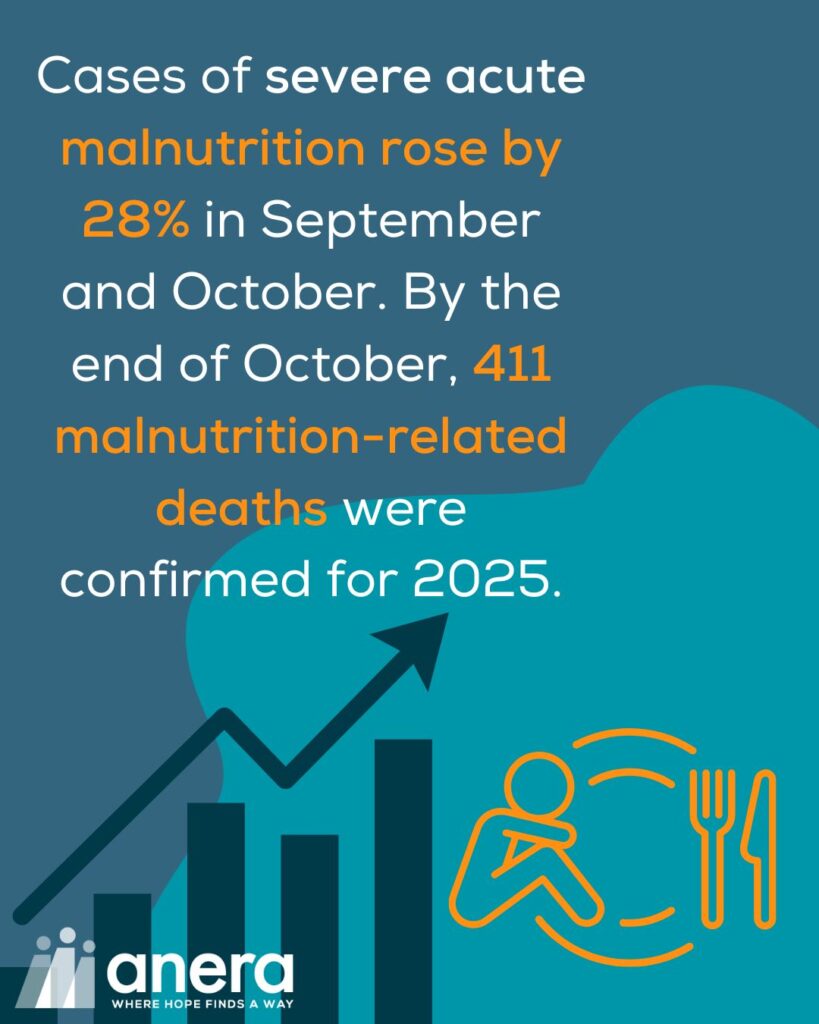
The nutrition crisis in Gaza has become a deadly public health concern. By late October, 411 malnutrition-related deaths were confirmed for 2025, including 109 children under the age of five. Cases of severe acute malnutrition rose 28% in September and October alone. Of five operational severe acute malnutrition centers, only two functioned continuously due to insecurity and stock depletion.
Health authorities also report outbreaks of meningitis and hepatitis A, driven by overcrowding, unsafe water and declining vaccination coverage. In addition, mental health needs continue to rise, with nearly 1.1 million children alone in need of psychosocial or mental health support.
Food Security and Livelihoods
Despite the ceasefire, famine conditions persist. The IPC declared famine in parts of Gaza in early October 2025. In northern regions, acute malnutrition exceeds 30% among children. Food access is constrained by inflation, liquidity collapse and import bans. Humanitarian agencies hold sufficient stocks at Rafah and Al-Arish to feed all Gazans for three months, but heavy restrictions prevent entry and distribution of aid.
Economy
Economic collapse now threatens to become long-term dependency. The WFP Market Monitor found that food prices have increased by 200-15,000% from pre-conflict levels. The average family can afford only one meal per day, often limited to bread and tea. In northern Gaza, retailers report stock depletion above 90%, while those in Khan Younis note high supply costs making paying for supplies unattainable.
Education
The education system remains paralyzed. At least 97% of educational facilities have sustained damage, and over 91% require major rehabilitation or complete reconstruction to be operational. The new school year began under the ceasefire but remains largely symbolic: most classes are suspended, and those that resumed operate outdoors or in temporary tents, with limited access to school supplies including desks or books.
In the West Bank, learning is also obstructed by conflict. As of October 2025, 84 schools face pending demolition orders, 19 have been damaged in military operations and at least 13,000 students are directly affected.
Water, Sanitation, and Hygiene (WASH)
Water and sanitation networks are in systemic collapse. Only 39% of water-production facilities remain functional, operating at reduced capacities due to fuel shortages and damage. Daily water availability averages 22 liters per person, less than half the humanitarian minimum of 50. In addition, over 70% of available water is biologically contaminated.
Additionally, 96% of households face moderate-to-severe water insecurity, and 78% experience barriers to toilet access. In crowded shelters, up to 250 people are forced to share one latrine.

Anera’s Response
Since September, in Gaza, Anera has distributed 12,093 vegetable parcels, providing more than 345,860 servings of fresh produce. Anera has also distributed more than 18,000 meals to individuals on a rotational basis.
To address the education crisis, Anera has built 20 brand new kindergartens in Gaza and the West Bank over the past ten years. In July 2025, we began construction on a new four-classroom kindergarten in Jalazone Refugee Camp, Ramallah. This new center will provide pre-primary care and education for 100 children per year.
Anera carried out extensive emergency distributions across the West Bank during the September response plan. We distributed 1,074 kitchen kits, 1,418 baby kits, 400 elderly kits, 2,388 women’s kits and 2,293 hygiene kits to families in Jericho, Hebron, Jenin and Tuklarem.
In September and October, our Gaza Emergency Response Program team delivered approximately 8035 cubic meters (8,035,000 liters) of safe drinking water daily.
Our WeCan project has supported 70 women in establishing or sustaining small businesses to date, positively impacting nearly 350 children within their households, including 147 children under the age of 18 and seven children with disabilities.
As the situation continues to unfold, Anera stands ready to respond quickly and effectively to the urgent needs of the communities we serve.
OUR BLOG
Related
 by
by “We are losing so many families in our village. The number of empty and abandoned homes is growing day by day, and people are leaving…families are trying to find somewhere safe from these attacks.” — Father Bashar Fawadleh, leader of…