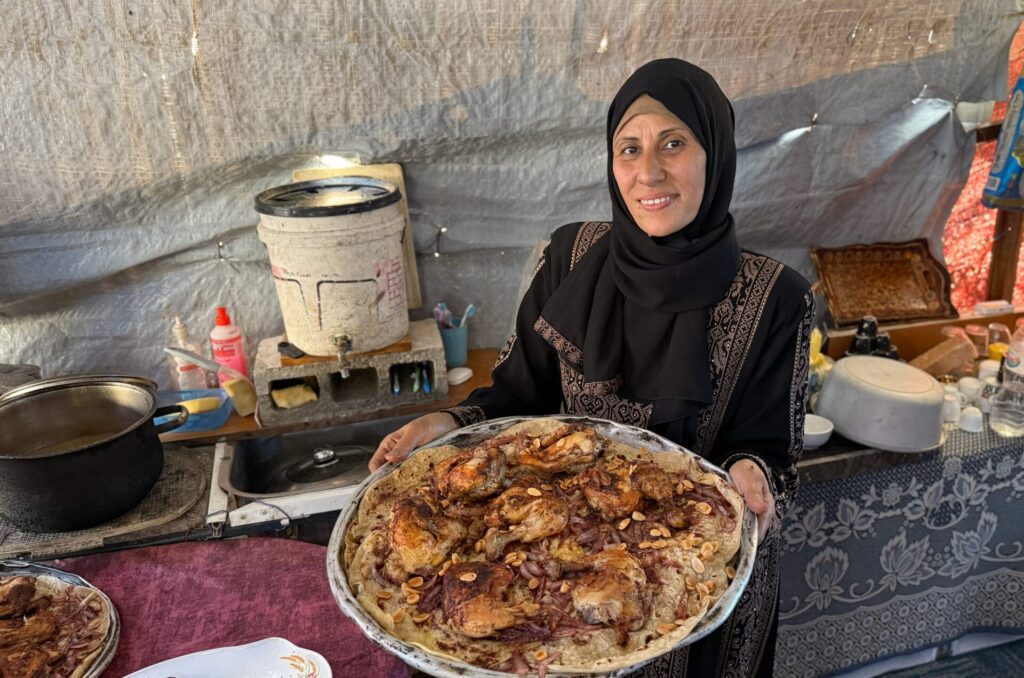
Musakhan for Ramadan
 by Anera
by Shukran Al Sayyed Al Akkawi
(Um Zaki), recipient of Anera food aid.
She shares her recipe in her own words.
I had everything once — a stove, a washing machine, a fridge, all of it chrome. I list them like inventory, not as a complaint, but because maybe if I say the words out loud, they might come back.
Musakhan is a dish that carries Palestinian culture and memory. The onions always betray me first, softening slowly as my tears arrive uninvited.
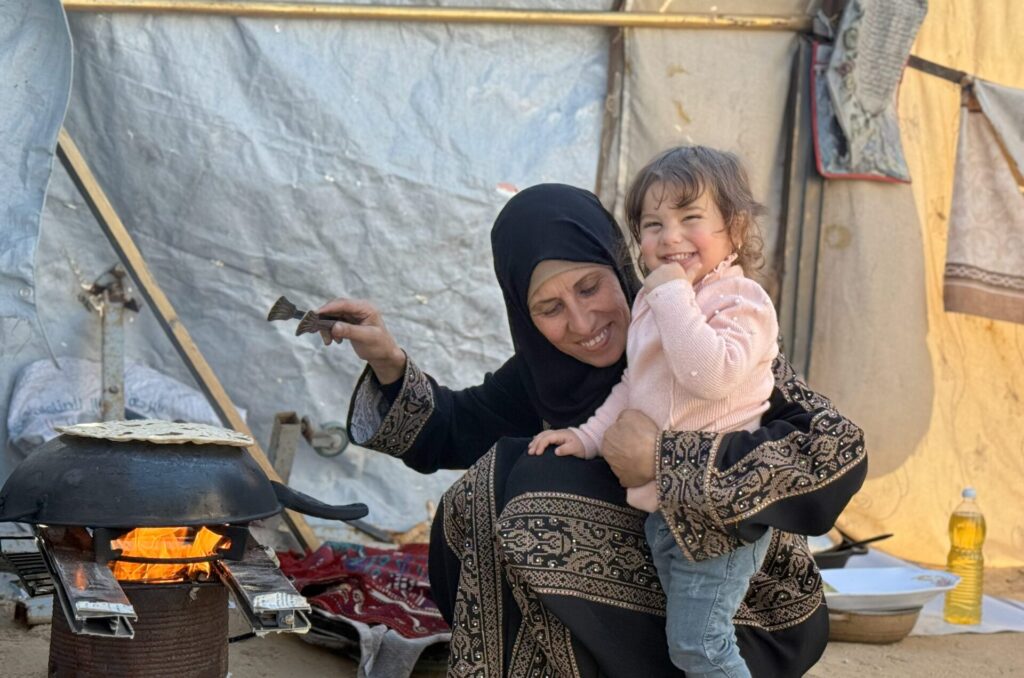
It takes four to five hours to make these days. I have to build and tend a fire, feeding it wood and cardboard. Before, musakhan took one hour, when I had a kitchen.
I am 52, a mother of eight and a grandmother of six. Now seven of us share one tent. It is cold, and I hate it, but I still try to call it home. My actual home was in Sheikh Radwan. It was big and loud, full of children and the sound of plates hitting the table. It was bombed and now it’s gone.
The last time we ate musakhan was before the war. After that there was no money, no time, no place to make it. Today, we have some flour, onions and chicken, and the fire is going strong.
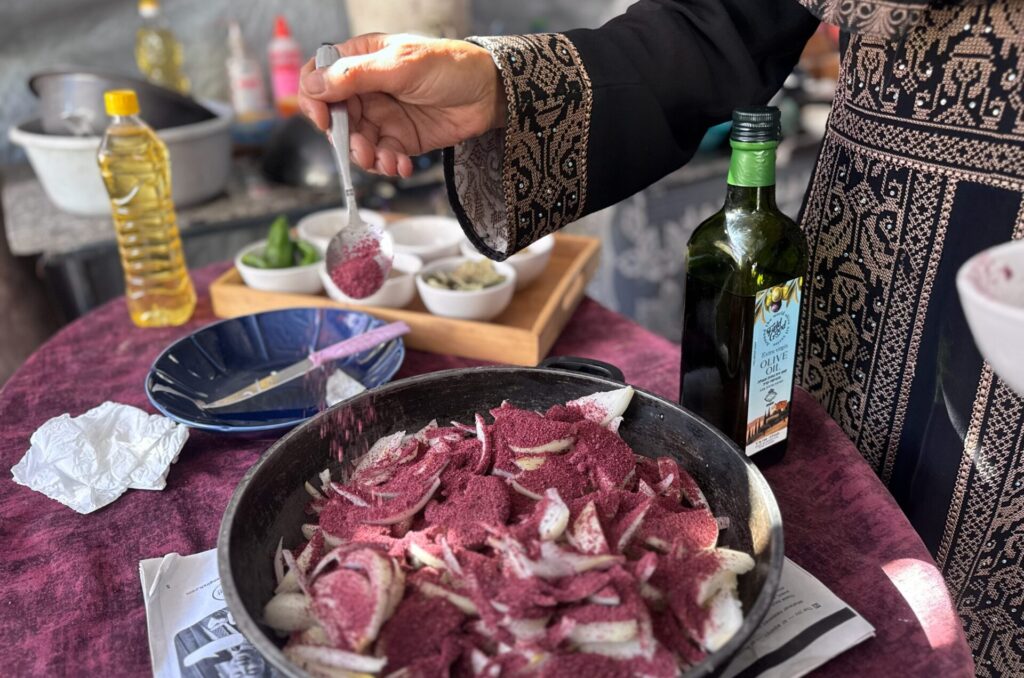
Under the tent roof, our plates move hand to hand, brushing elbows, and tearing the warm bread as we grab the chicken. Sumac stains our fingers.
We have experienced displacement too many times to count. Most faces blur, except one: my father. On November 16, 2023, he left to get water and never came back. Yet life goes on, and today I watch my grandchildren lean over the bread. The smell rises, warm and familiar, and for a moment, it feels like home — even here.
After more than two years, I have finally made musakhan again. We don’t have a table and the walls are fabric, but my family is here. We eat and sit close. We cannot reclaim what was lost. But with musakhan, we can savor what remains: each other, each moment, here in Gaza. This is what’s important.
Musakhan
Ingredients:
For the chicken & onion topping:
5 whole chickens
6½ pounds (3 kilos onions), thinly sliced
3 to 4 cups (½ kilo) sumac
8 cups (~2 liters olive oil)
1 cup (21 grams) bay leaves
1/4 cup (24 grams) ground cardamom, 1/4 cup pods (28 grams)
½ cup (58 grams) black pepper
5 green spicy peppers, sliced
1 cup (150 grams) raw almonds
For the farasheeh bread:
8 cups (1 kilo) wheat flour
5 to 5½ cups (1 kilo) coarse bulghur
Instructions
Prepare the farasheeh bread: In a large bowl, combine wheat flour and bulgur, with a pinch or two of salt. Add enough water to form a soft, pliable dough. Knead until smooth and elastic, then cover and rest for 30 minutes. Divide into balls and roll into thin, flat rounds. The bulgur will integrate into the bread, adding texture and helping it absorb the onion oil. Set aside.
Boil the chicken: Place 5 chickens in a large pot with bay leaves, cardamom, black pepper and green peppers. Add enough water to cover. Bring to a boil, then simmer 20 to 30 minutes until partially cooked.
Cook the onions: Heat 1–2 liters olive oil in a large pan over medium heat. Add onions and cook slowly, stirring occasionally, until softened and lightly golden. Add sumac and sliced green peppers and simmer 5 to 10 minutes to blend flavors.
Roast the chicken: Preheat oven to 390°F (200°C). Or, if you’re in Gaza, start the fire. Gather wood and cardboard, coax the flames and feed them patiently until the fire burns steady and hot. Remove chicken from the pot and place on a roasting pan. Brush with olive oil and some of the onion mixture, sprinkle generously with sumac and roast 20–30 minutes until golden brown.
Cook the bread: Place a large pan or flat griddle on high heat (or use a saj if available). When the pan is hot, cook the rounds of bread one at a time. Cook each round for one to two minutes, flipping once.
Roast the almonds: In a dry pan over medium heat, roast 1 cup raw almonds for 3 to 5 minutes until lightly browned and fragrant. Set aside.
Assemble and serve: Place the flatbread on a serving tray. Top with roasted chickens, spoon the onion mixture over them and finish with roasted almonds. Serve hot!