
The 2025 Levant Olive Oil Crisis
 by Anera
Posted in: News
How Conflict and Climate Change Devastate Lebanon and Palestine
Every autumn, olive trees set the rhythm of life across Lebanon and Palestine. Families gather under the silvery leaves, spreading nets and pressing olives into oil that sustains them through winter. The olive harvest is more than an agricultural season; it is an act of continuity, belonging, resilience and hope. But this year, that rhythm has faltered. Olive oil, a cornerstone of Lebanese and Palestinian cuisine and a symbol of their heritage, is facing a critical moment.
From the mountainsides of Northern Lebanon to the groves of Gaza, a combination of war, drought, and displacement has cast a long shadow over one of the most symbolic harvests in the Mediterranean. What used to be a season of abundance has become one of loss and uncertainty.
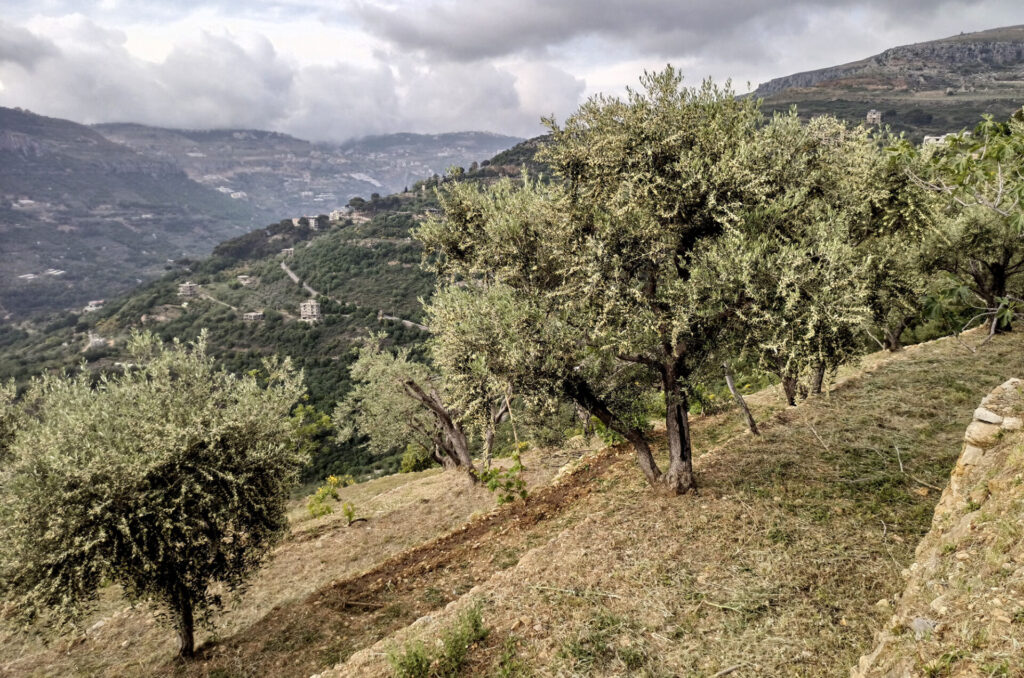
Lebanon: When the Rain Doesn’t Come
Across Lebanon, farmers are reporting the lowest olive yields in years. The reasons are painfully familiar: extreme heat, erratic rainfall, rising production costs, and the lingering effects of conflicts. Many olive trees in Lebanon are centuries old, averaging around 150 years, and rely almost entirely on natural rainfall instead of irrigation. For many families, this year’s harvest is not enough to cover their household needs, let alone to sell.
“This year the yield is the lowest ever,” said Karl Osta, a communications officer at Anera in Lebanon and an olive grower himself. “The climate sure has changed, and my family’s grove has never produced quantities this low. I think about farmers whose olive oil is their main income to save up for winter; this season is catastrophic for them.”

In Mount Lebanon and the North, areas not directly affected by war damage but still vital for olive oil production, the impact of climate change is most visible in the dryness of the soil and the early ripening of fruit. Trees that once carried thick clusters of olives now yield only sparse branches. Press operators we met report running their machines for barely half the usual days, some didn’t even open their mills this year.
“We used to sell olive oil, now I’m trying to figure out where to buy it,” said Wahid, an olive farmer we met in an olive press in Aley, Mount Lebanon. “We have more than 500 olive trees that all produced two canisters of oil, less than enough for our family. We used to give some to our brothers and kids, and sell the rest to pay for my daughter’s university. This year is a disaster.”
The acute scarcity resulting from the poor harvest and war-related losses has driven prices to a projected crisis level, with a barrel of olive oil expected to jump from $150 to nearly $200, making this national staple unaffordable for many households already struggling with the country’s economic collapse.


South Lebanon: Between Fire and Drought
The situation in southern Lebanon is even more dire. This region contributes roughly 38% of Lebanon’s olive production, yet farmers are facing both environmental and war-related devastation. Over 60,000 olive trees and hundreds of thousands of fruit and wild trees have been destroyed in the south, according to a report by the Rosa Luxemburg Foundation.
In Blida, farmers got a short window — from October 16 to 20, 2025 — to tend their groves, harvest olives, prune, and cut firewood, all under the watch of Lebanese Army and UNIFIL patrols. Authorities urged residents to bring workers and equipment to make the most of the limited time. Nearby in Meiss El Jabal, farmers in Toufa and Bayad will also be escorted daily by the Lebanese Army and UNIFIL to safely carry out the harvest from dawn to dusk.
Even with these precautions, danger persists. In Haris, Bint Jbeil district, an Israeli drone struck two civilians pruning trees on the outskirts of the village, sending them to the hospital. Combined with last year’s heavy losses from war, the 2025 season has pushed southern Lebanese farmers to the brink.
The West Bank: Access Denied, Harvest Threatened, and People Attacked
“The area experienced the hottest summer in 80 years, along with one of the driest rainy seasons on record,” says Naser Qadous, Anera’s Agricultural Programs Manager in Palestine. “This severely affected the health of olive trees and, consequently, their productivity. The impact of these harsh conditions is expected to carry over into the coming season as well.”
In the West Bank, this year’s olive harvest has been a harsher version of previous seasons, marked by even more restricted access and rising settler violence. Families in villages near Nablus and Ramallah have been attacked by settlers or prevented from reaching their land during the picking season. Many were able to harvest only a fraction of their expected yield before being forced to leave.
“A Palestinian family had spent the entire day harvesting olives from their small plot in Deir Sharaf — their whole season’s yield amounted to just two sacks. As they waited for a car to take them home, a settler rode up, snatched one sack, and sped away on his motorcycle. He didn’t leave the second out of mercy, he simply couldn’t fit both,” Naser says. This is just an example of the many daily olive picking indignities.
According to the OCHA, between October 1 and 28 alone, nearly 1,000 olive trees were burned or vandalized, and 270 settler-related incidents were documented. Of the 71 settler attacks documented by OCHA across the West Bank between 7–13 October 2025, half (36 attacks) were related to the ongoing olive-harvest season … affecting Palestinians in 27 villages. Another OCHA update states that as the 2025 olive-harvest season began, more than 60 communities in Nablus, Ramallah, Hebron, and Salfit governorates remain at high risk of settler attacks and restrictions while trying to access their agricultural land. Access to land behind the Barrier remains severely restricted, undermining productivity and livelihoods.
“When traveling along the road from Nablus to Ramallah,” Nasser adds, “one can see the stark contrast: on one side, thriving olive groves planted on confiscated Palestinian land and irrigated with Palestinian water; and on the other, vast stretches of ancient olive trees burned and destroyed.”
Entire families now depend on partial harvests completed under military escort or during the few days authorities allow. Each missing day means less oil, less income, and fewer reasons for young people to stay in farming.
“The establishment of a new settlement outpost by pastoral settlers west of Salfeet has made it nearly impossible for us to reach our land,” Naser says. “Farmers attempting to access their properties are routinely harassed and threatened. This year, we could not even harvest the small amount of olives our trees produced. The area has become increasingly unsafe, and the simple right to work our land without fear has been severely eroded. This ongoing situation is devastating our family’s livelihood and well-being. We are deeply worried about the escalating risks farmers face, and the growing impossibility of sustaining our lives and heritage on our land.”
Gaza: An Olive Sector Decimated
In Gaza, the olive harvest has almost disappeared altogether. Bombardment, displacement and collapsed irrigation and electricity systems have pushed agriculture to the brink. Reporting by Mongabay states that tens of thousands of olive trees have been destroyed or rendered inaccessible. The figure for Gaza is described as “nearly one million of Gaza’s 1.1 million olive trees … destroyed, burned or inaccessible”.
Where there were once families gathering to pick fruit and share food under the trees, now there is silence, and in many places, ash. Presses have been destroyed, farmers displaced, and agricultural land either bombed or left unreachable behind debris and unexploded ordnance. Once a moment of pride and community, the olive harvest in Gaza has become another “casualty” of war.
A Season Without Celebration
Across Lebanon and Palestine, the olive harvest of 2025 will be remembered not for its yield but for its absence. In northern Lebanon and the mountains, drought has shrunk the harvest. In southern Lebanon, fires have blackened the fields. In the West Bank, violence has severed the bond between people and their land. In Gaza, the trees themselves are gone.
The olive tree has long been a symbol of peace and steadfastness, rooted, enduring, and patient. But even the strongest roots cannot survive without care, without rain, and without peace. This year’s failed harvest is not only an agricultural loss; it is a warning.
If the olive tree, that ancient emblem of the Mediterranean, can no longer thrive, what does that say about the land, and about us?