Oct, 2025
Amid the collapse of municipal water infrastructure in Gaza, Anera’s emergency relief facilitates a lifeline for families in need
In the devastation of Gaza’s ongoing war, municipal water infrastructure has collapsed, leaving families with as little as 2–3 liters of water per day—far below the humanitarian minimum of 15–20 liters. For displaced families, especially in southern Gaza where mass movement into Khan Younis and the Middle Area has tripled demand, the lack of safe drinking water translates to a daily struggle for survival.
Huda is 52 years old and lives in a tent in Al-Zawayda camp with her husband. She arrived at the camp two years ago after fleeing from the Al-Tuffah neighborhood in Gaza City. “The conditions are unbearable,” she says. “We barely have enough food, our tent is falling apart, and the hardest of all is the water crisis.”
Amid the destruction and uncertainty of the ongoing war, Families like Huda’s have already suffered from hunger and poverty, becoming reliant on charity kitchens. “When those stopped, we nearly starved,” Huda recounts. The collapse of water infrastructure means the daily struggle for survival is made even more difficult. “If the water stops too, that means a slow death while we’re still alive,” Huda worries.
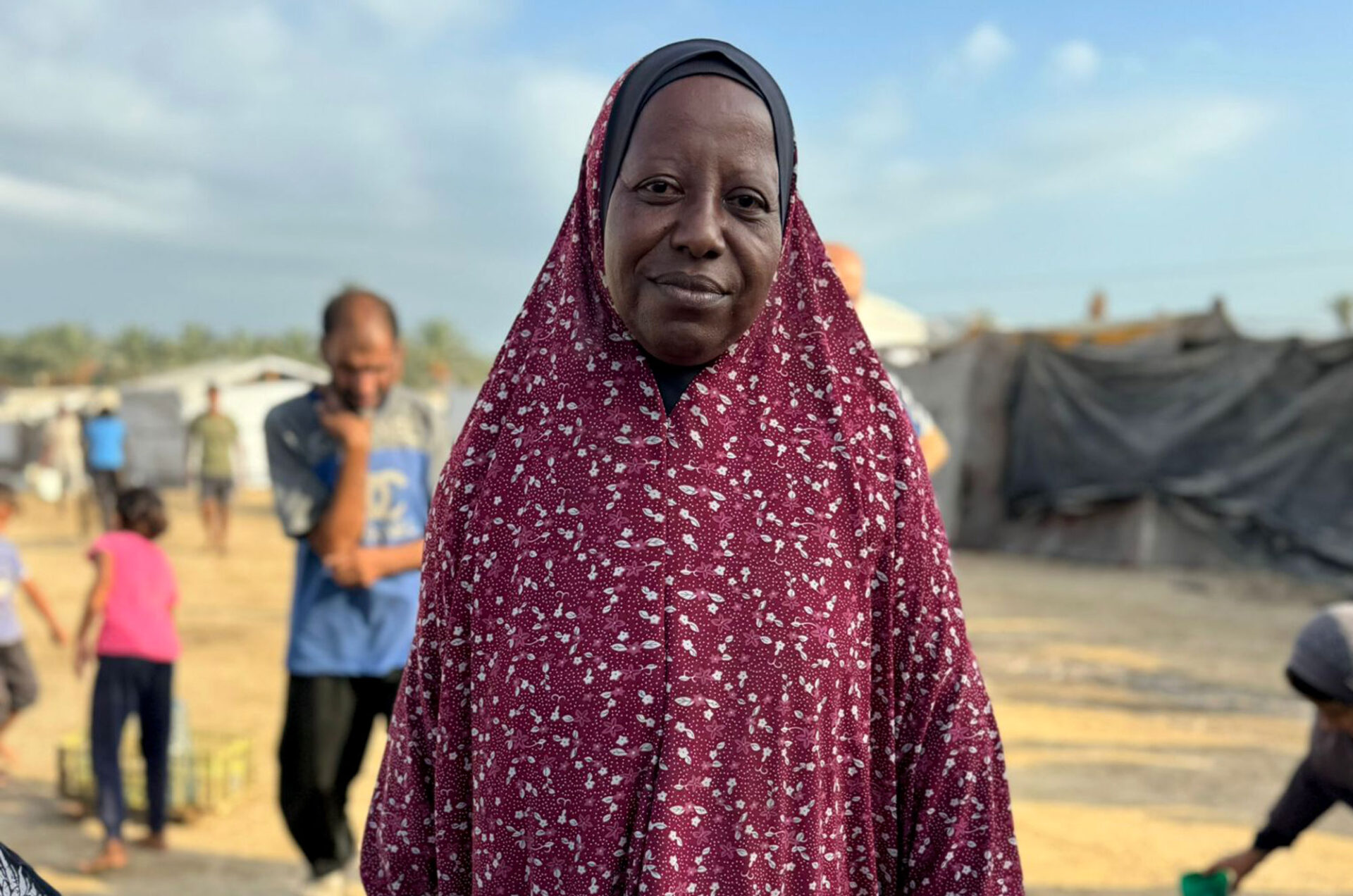
On days without readily available water, desperation takes over for many families like Huda’s that must travel long distances or pay heightened costs to receive water. “Sometimes I walk long distances to desalination plants to fetch water,” she explains. “Other times we have to buy it, but with no money, that’s nearly impossible."
The daily battle to secure water is echoed by families throughout Gaza. Islam is 32 years old and a mother of five. A year and a half ago, she fled under fire from Al-Zahra with her family. Since then, they have lived in a camp in Deir Al-Balah. “Life in tents is absolute hell,” she expresses.
Islam remembers her clean home, with safe drinking water and flowing tap water. “Now, those memories feel like dreams,” she says. “Today, my only dream is that a water truck comes every single day so I can keep my family alive."
The uncertainty of securing water compounds challenges posed by dehydration, illness and hygiene. The scarcity of water is especially challenging for families with young children, like Islam’s. Caring for children without a steady supply of water is impossible, Islam explains. “Imagine living in a tent on sand, with five young kids. My twins are still too small for toilet training, and with no diapers available, I had to endure daily accidents,” she recalls.


"I needed water constantly just to cope," Islam says.
It was in this context that Anera's donor community facilitated a lifeline, launching an emergency potable water distribution project in August 2025. Overcoming obstacles to distribution such as fuel shortages, security constraints and infrastructure damage, Anera delivered 331,008 gallons (1,253 cubic meters or 1,253,000 liters) of clean, safe drinking water to 417,667 displaced Palestinians.
For families in Gaza, water provides a glimmer of joy and relief amid a devastating environment.
“Water is life. When the drinking water trucks arrive, I feel joy. We fill our jugs and, for a moment, I breathe easier," Huda describes.
“When I hear the sound of a water truck, I feel a rush of energy,” Islam echoes. “Today, carrying my twins Yasser and Mohammad, while my oldest son helps me haul containers, I smiled for the first time in days.”
The Fight for Water is Not Over
In the middle of the devastation of the war, water distribution programs offer relief of one of the major burdens on displaced Palestinian families. Still, the crisis in Gaza is far from over. With municipal water systems inoperable, families will remain heavily dependent on water trucking for the foreseeable future.
“That’s why I am so grateful for the water distribution initiatives. They ease the crushing burdens we carry. In the middle of all this hardship, they are truly a lifeline,” Huda says.
Even with water trucking, families must conserve water to survive. “We use seven small jugs a day for everything—laundry, washing dishes, the toilet. Drinking water is rationed. Conservation is my daily motto,” Islam states.
Water conservation efforts are made harder by the fact that many of the jugs families use are breaking down, Islam explains. “After two years, many are cracked, leaking, or gone. Sometimes I carry water in broken containers that spill before I even reach the tent.”
Still, Islam expresses her gratitude for water trucking programs. “Every time the trucks arrive, I feel relief. Anera’s efforts have always been outstanding,” she says.

Huda and Islam share a powerful hope that water deliveries will be able to continue unrestricted. “I only pray these efforts continue and reach even more families like mine,” Huda notes.
“All I want is for the water deliveries to continue—and for someone to help us replace these old containers,” Islam voices.
“Because in the end, water is everything," Islam explains.
Huda’s and Islam’s are just two of the many stories unfolding in Gaza today. Both women’s stories showcase the daily struggles families face: dehydration, illness, and uncertainty about the future. They also highlight the tangible impact of emergency relief systems like water trucking. With the support of our donors and partners, Anera provides essential water services to those who need them most. But for displaced families, the struggle does not end here, and the need for ongoing support is urgent.