Dec, 2025
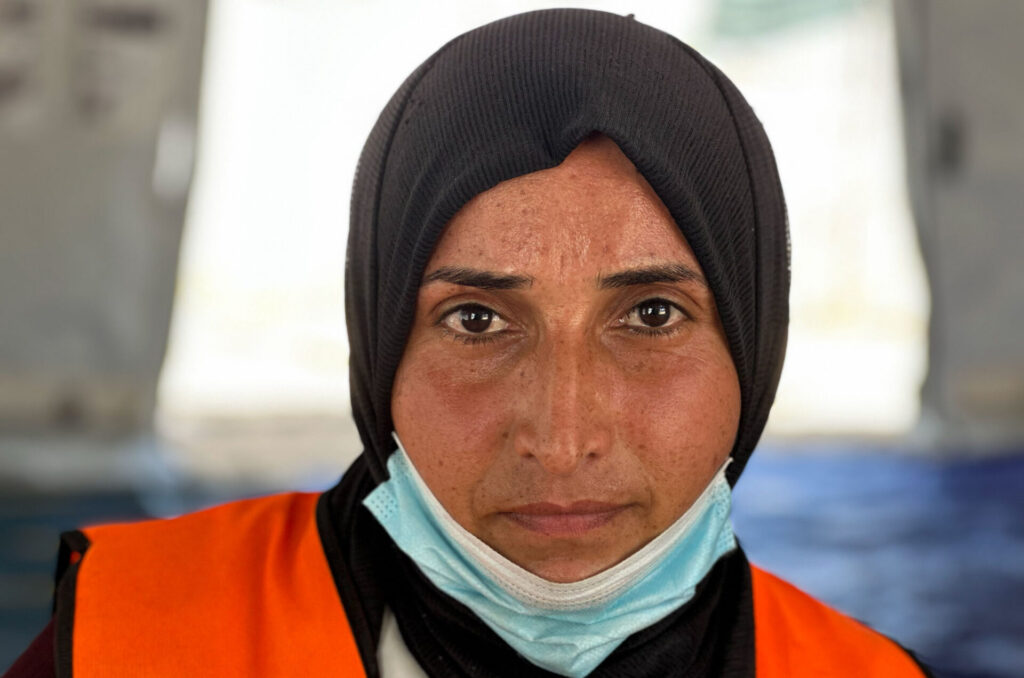
"An apple should be just an apple, but here, in Gaza, it is a forbidden fruit — desired, yet denied; longed for, yet almost never theirs," says Majida.
Majida, 53, lives in a small tent in Al Salam camp with her four grandchildren. Her husband, the family’s sole income provider, is now in Egypt receiving cancer treatment, leaving her fully responsible for the household in Gaza. With no income, she relies entirely on aid to support her family, and whenever she has a little money, she sends it to him to help him get by.
The tent is patched with rope and barely shields them from the winter cold. Rain leaks through the roof, soaking blankets and clothes, and the children huddle together for warmth. “We freeze every night,” Majida says. “I keep moving the children closer together, but it doesn’t help. The cold stays in our bones, and in our bellies.”
As the nights grow colder, hunger presses alongside the cold. Every meal depends entirely on whatever aid arrives. “You feel the cold differently when you haven’t eaten,” she says. “I still can’t tell which is harder, the cold or the hunger.”

“You feel the cold differently when you haven’t eaten ... I still can’t tell which is harder, the cold or the hunger.”

For her grandchildren, that forbidden fruit carries weight. Apples have always been their favorite, a small joy they argued over even before the war. In the cramped space of the tent, each apple now feels like a rare delight, a reminder that even the simplest pleasures can be beyond reach when food is scarce.
With the support of Anera, funded by the Muslim Response USA, a fresh produce parcel arrives at Majida’s family.
The box includes potatoes, onions, cucumbers, carrots, and tomatoes, enough for a few meals over several days. But it is the apples that stand out.
“For my grandchildren, seeing apples again feels like a glimpse of life we almost forgot,” Majida says. “They’ve always loved them, and even in the middle of winter, they can finally taste them.”
Each bite carries more than flavor; it brings a brief return of normalcy.
For a family living entirely on aid, every item in the parcel is a lifeline. But for the children, that single fruit carries rare significance. “An apple should be just an apple,” Majida says. “But for my grandchildren, it is something almost alien, a small taste that carries a glimpse of the life they deserve.”

“An apple should be just an apple ... but for my grandchildren, it is something almost alien, a small taste that carries a glimpse of the life they deserve.”
Please Note: In case you’re wondering, the apples were red with hues of yellow, bright enough to catch your eye, fleeting enough that no photos were taken. They are the first to go, the small treasures that vanish too quickly, just like a forbidden delight.