Mar, 2026
“She only wanted to sleep. She didn’t talk. She was getting smaller.”
In November 2025, five-year-old Tila witnessed an airstrike. The bombing killed a relative, and injured another. In the weeks that followed, Tila’s mother, Joud, watched helplessly as her little girl became severely withdrawn.
Tila could not understand what had happened or process the trauma.
“She only wanted to sleep. She didn’t talk. She was getting smaller,” Joud says.
For weeks, Tila refused to eat. She threw up almost every day and avoided everyone, including her three-year-old brother, Fathi.
“She stopped talking to people,” Joud says. “She would only speak to me. Nothing seemed to reach her.”
The family took her to the hospital, hoping for answers. Doctors ran tests for everything they could think of, but nothing explained her condition. After almost six weeks, Tila was diagnosed with malnutrition.
Even with treatment, she showed little improvement. “She was getting weaker every day,” Joud says.
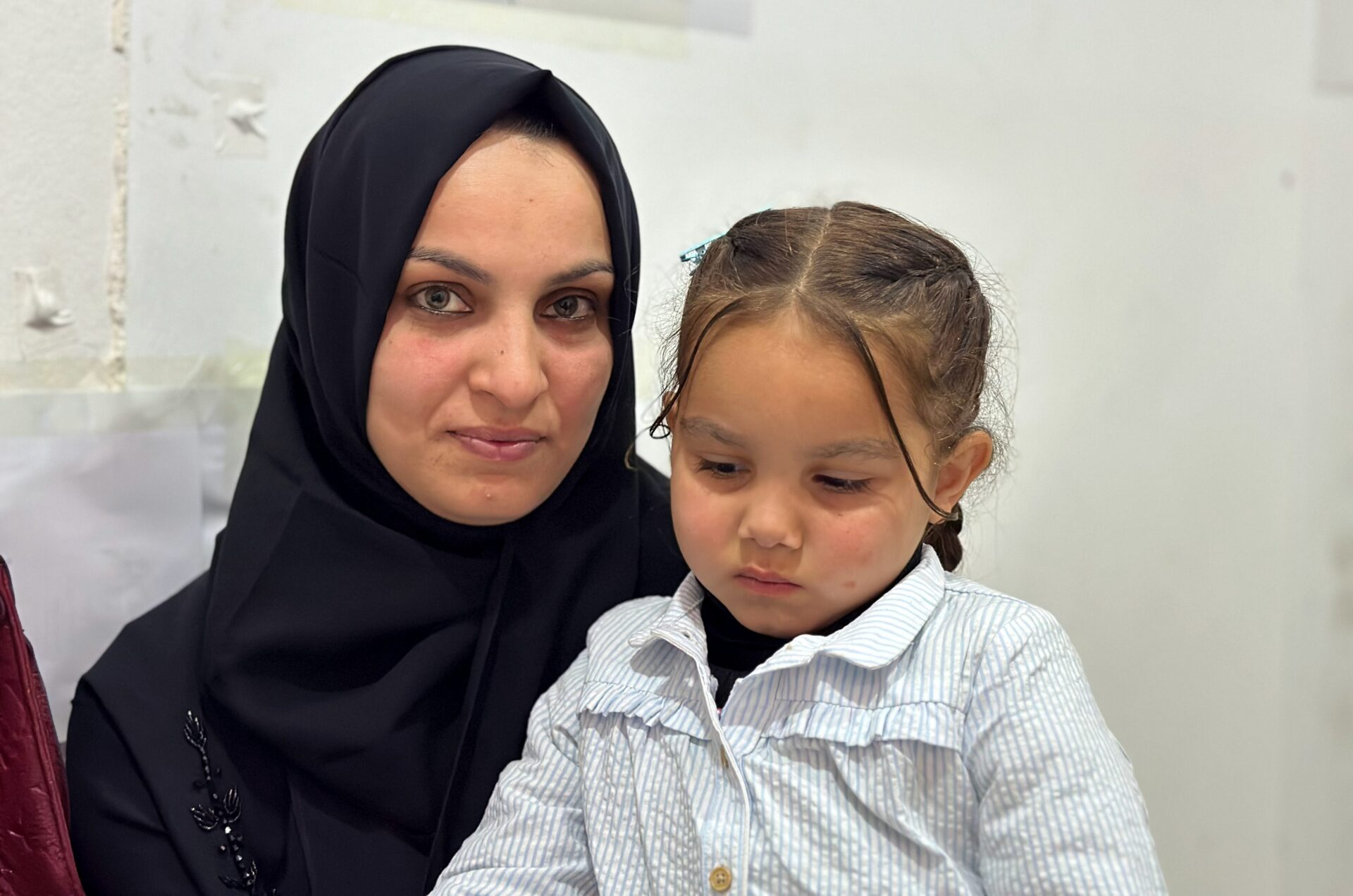

“Her body and her spirit were disappearing.”
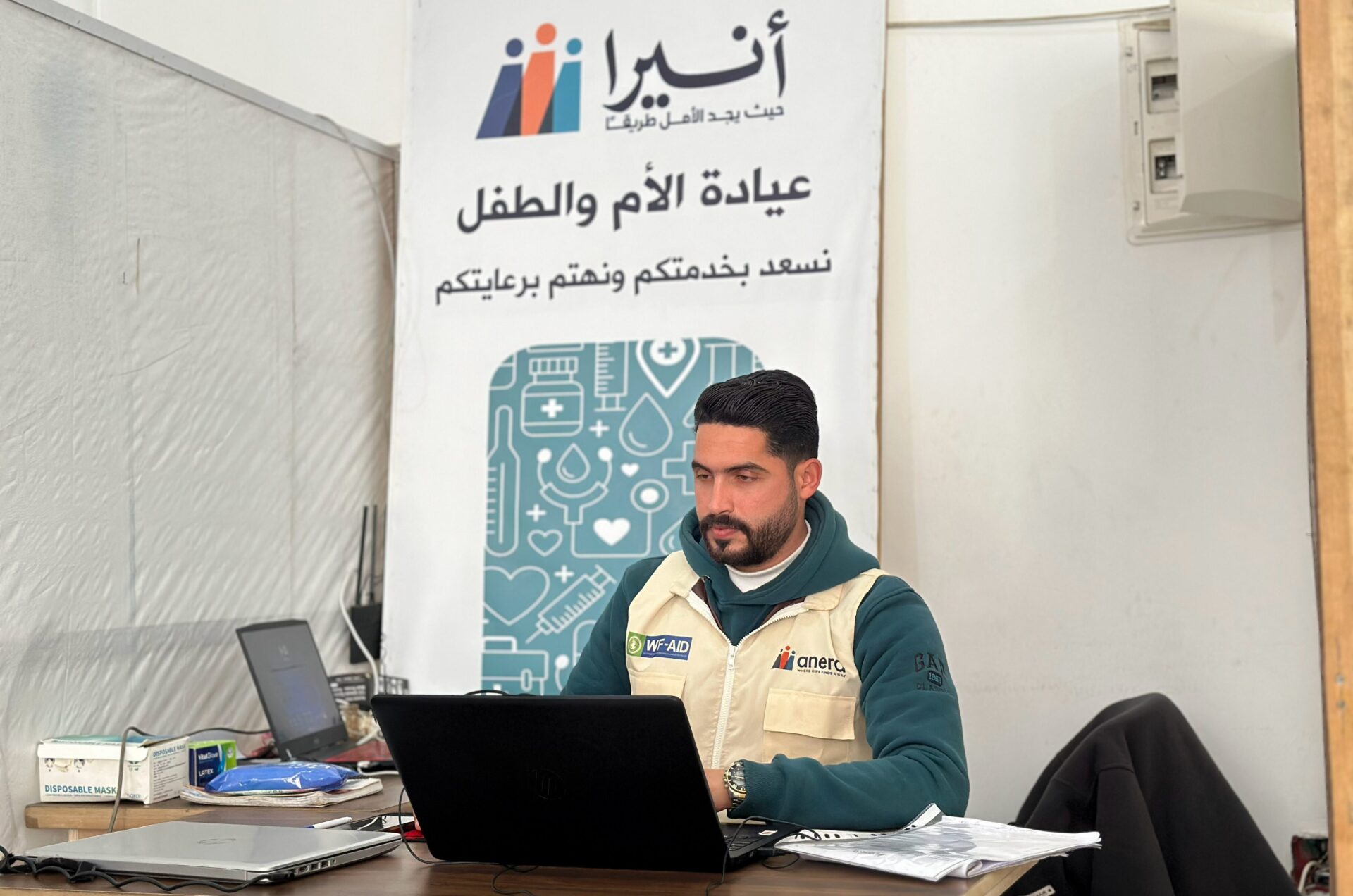
In February 2026, Joud, from Gaza City’s Tel Al Hawa neighborhood, brought Tila to Anera’s women and child clinic, supported by WF-AID. There, the team quickly identified that Tila was not only physically malnourished but also struggling with post-traumatic stress disorder (PTSD). The clinic began a coordinated plan to address both her physical and mental health needs.
The war continues to have a profoundly devastating effect on the mental health and psychosocial wellbeing of Palestinians in Gaza experiencing widespread loss, destruction and displacement. The collapse of health infrastructure and critical lack of medical resources threatens to continue worsening the problem if left unresolved.
“When they told me she had PTSD, I felt a mix of relief and worry,” Joud says. “Finally, we understood what was happening, but I didn’t know if she would recover.”
Untreated PTSD in children can cause lifelong effects on their physical health, emotional regulation and social development. Insuring medical facilities in Gaza have the capacity to intervene in PTSD cases like Tila’s is an incredibly important and life-saving measure.
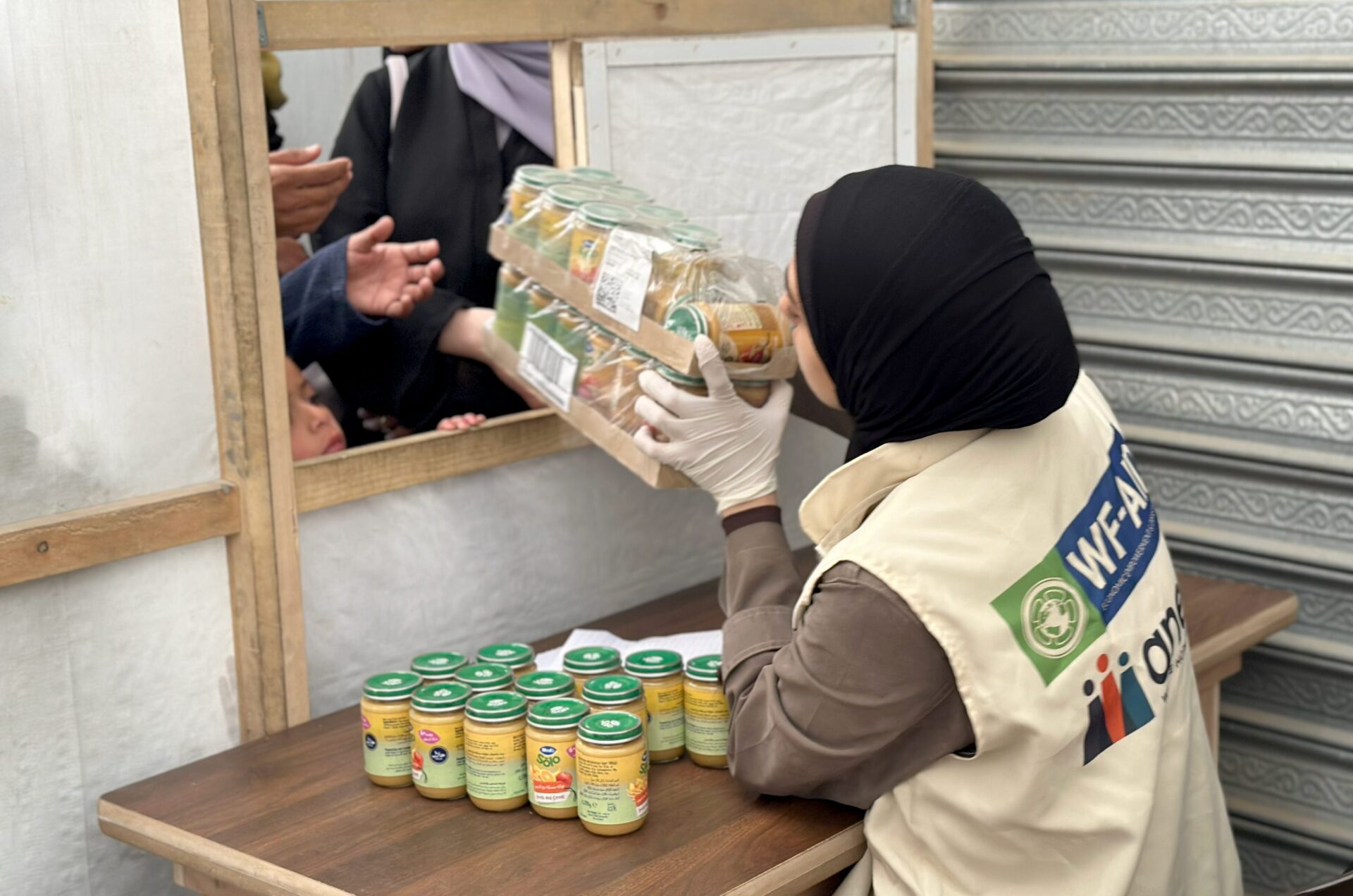
Tila’s treatment included weekly nutritional monitoring and supplements to restore her strength. At the same time, a psychologist worked with her on trauma recovery.
“The psychologist helped her talk again,” Joud says. “She loved the storytelling sessions the most. For the first time in months, she smiled.”
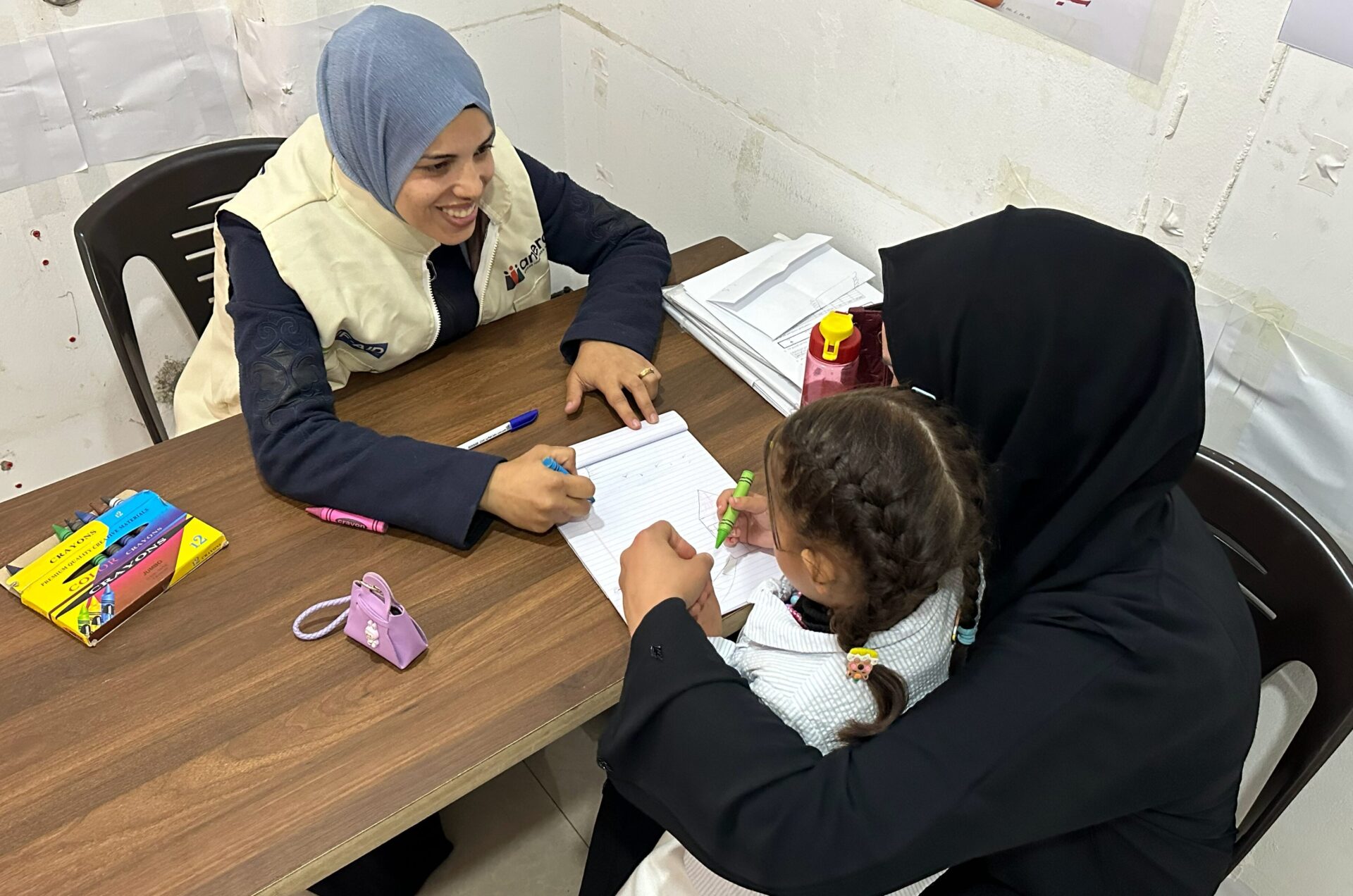
The combination of medical and psychological support had a visible impact. Slowly, Tila began speaking, playing, and interacting with her environment again. She laughed and sang along with songs in therapy, and even joined other children in playtime sessions.
“Seeing her play with her brother again was incredible,” Joud says. “She started engaging with other children and even talking to neighbors.”
When she first arrived, Tila weighed only 12 kilograms (26.5 pounds). After one month at the clinic, her weight increased nearly 30% to 15.5 kilograms. But the changes went far beyond numbers. Her renewed energy and curiosity were a clear sign of her recovery.
“She talks to people now. She plays with her brother," Joud says. "I feel like I have my daughter back.”
Gaza
Gaza City Governorate
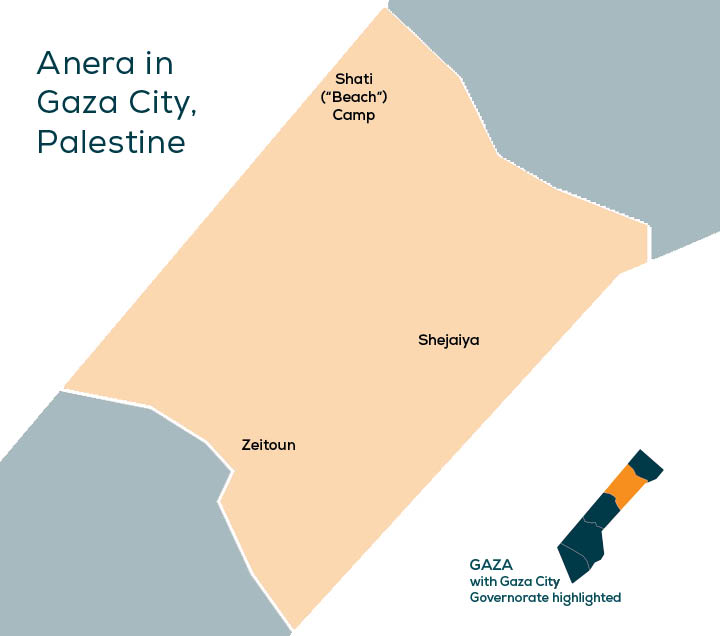
In 1984, Anera’s Gaza City office opened with three staff members. It is still at the same location today, but with 17 staff members. From that location, the team manages water and sanitation, education, healthcare, economic development, and humanitarian relief projects throughout Gaza.