
Role of International Aid Organizations: Anera at the GHRI Council of Presidents
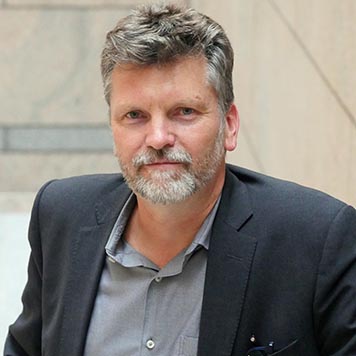 by Sean Carroll
Global Health & Relief Initiative (GHRI) – Council of Presidents Meeting
Anera Headquarters, Washington, DC | December 13, 2025
Anera was honored to convene and host the Global Health & Relief Initiative’s Meeting of the Council of Presidents in Washington, DC – a timely and forward-looking gathering of leaders committed to coordinated humanitarian action. In his remarks below, Anera President & CEO Sean Carroll reflected on the unprecedented scale of humanitarian and health needs across Gaza, the West Bank, Lebanon, Syria, Sudan, and beyond, and on the shared responsibility of international aid organizations to respond in principled, collaborative, and sustainable ways. (Read the press release on the event.)
While this initiative extends across multiple countries, Gaza and the West Bank remain at the epicenter of today’s humanitarian emergency.
In Gaza, health and human sustainability systems have been devastated. Primary healthcare has largely collapsed. Only a fraction of hospitals are partially functioning. Maternal and child health services have been severely disrupted. Overcrowding, mass displacement, a shattered water and sanitation system and critical shortages have driven an unprecedented surge in communicable diseases. In parts of Gaza, famine conditions underscore the urgent need for integrated nutrition and health programming to save lives and prevent irreversible harm.
In the West Bank, the pressures are different but deeply interconnected. Trauma cases are rising. Access to health facilities is increasingly restricted. Ambulances are attacked, movement is constrained and shortages delay care for both acute injuries and chronic diseases. Mental health needs, especially among children, are escalating at an alarming rate.
Beyond Palestine, the crisis reverberates across the region. In Lebanon, Syria and parts of Jordan – areas central to Anera’s work – health systems already weakened by economic collapse, prolonged displacement and under-resourced public sectors face mounting strain. These countries host some of the world’s largest refugee populations, often with limited capacity to absorb further shocks. Chronic disease burdens, malnutrition, shortages of health workers and deteriorating water and sanitation systems are common threads.
This is the shared landscape confronting the humanitarian community: layered health and nutrition emergencies driven by the effects of warfare and long-standing structural fragility. Meeting this moment requires not only immediate relief, but a sustained commitment to rebuilding stronger, more resilient systems.
The Role of International Aid Organizations
International aid organizations bring essential capabilities to multi-country, multi-crisis responses.
We bring reach: the ability to work directly with communities, often in places that are underserved or hard to access.
We bring agility: operational networks that can deliver primary care, mobile medical services, nutrition interventions, psychosocial support, and emergency assistance quickly and at scale.
We bring technical expertise across the continuum of care, from community health to rehabilitation and support for trauma-affected populations.
And perhaps most important, we bring continuity. We remain in communities before, during, and after crises, allowing us to connect emergency response with long-term system strengthening.
With these capabilities come clear responsibilities:
- To remain neutral, independent and principled, especially in politically sensitive environments.
- To uphold humanity, accountability and transparency in how assistance is delivered.
- To work as partners, not competitors, alongside UN agencies, public health authorities, national systems, and community-based organizations.
- To focus on areas of true comparative advantage, while deferring to others where more specialized expertise is required.
These principles sit at the heart of the Council of Presidents. No single organization can rebuild hospitals, restore community health, revitalize nutrition systems or strengthen the health workforce alone. But together, through complementarity and shared purpose, we can.
Anera’s Contribution to a Shared Humanitarian Vision
With almost 58 years of experience across Palestine, Lebanon and Jordan, and plans to expand into Syria, Anera brings an integrated dual mandate to this collective effort: immediate humanitarian response paired with long-term health-system strengthening.
Within a coordinated framework, Anera is well positioned to contribute in several key areas:
Strengthening Primary and Community Healthcare
Anera has deep roots in primary health care, including mobile medical teams, community health outreach, primary diagnostics, and integrated mental health support – services that are essential where hospitals are damaged, overwhelmed, or inaccessible.
Supporting Nutrition and Maternal–Child Health
We lead community-based screening and management of acute malnutrition, alongside maternal and infant nutrition programs, critical in Gaza today and equally vital in vulnerable communities across the region.
Delivering Essential Medicines and Supplies
Anera’s robust supply chain enables the procurement, storage and distribution of essential medicines, equipment and emergency supplies reliably and at scale.
Rehabilitation, Prosthetics and Disability Support
With thousands of injuries and amputations in Gaza and rising trauma needs elsewhere, Anera’s community-based rehabilitation and assistive-device programs help restore mobility, independence, and dignity.
Data and GIS Mapping for Coordinated Planning
Anera is conducting comprehensive GIS mapping of health facilities in Gaza – an asset that can support equitable resource allocation, coordinated planning and the rebuilding of health infrastructure.
Strengthening Local Health Actors
Across all contexts, Anera invests in local NGO partners, building their capacity to deliver high-quality, sustainable health services long after emergencies subside.
Equally important, Anera is clear about where our role ends. We defer tertiary care, advanced surgical services and national-level health governance to partners with specialized expertise.
Looking Ahead: Partnership as the Path Forward
The Council of Presidents represents a critical opportunity to build a durable framework for humanitarian cooperation – one that prioritizes communities over institutions, and long-term resilience over short-term visibility.
Success will depend on:
- shared guiding principles,
- clarity around roles and complementarities,
- strong thematic working groups, and
- a genuine commitment to collective – not individual – outcomes.
Anera stands ready to contribute to this shared vision across the Levant: rebuilding health infrastructure, expanding nutrition programs, supporting mental health and disability services, delivering medicines and supplies and strengthening frontline providers.
International aid organizations can and must help shape the next chapter of recovery and rebuilding. If we work together, guided by humanity, neutrality, independence, partnership, accountability and sustainability, we can help restore health, dignity and hope for millions who have endured far too much.
Thank you to GHRI and all participating organizations for advancing this vital collaborative effort.
 by
by