Jan, 2026
With support from WF‑Aid, families like Ahmed’s can access safe water for drinking, cooking, bathing and washing.
Ahmed is 40 years old, a father of six. Before the war, he lived in Al Tuffah neighborhood in Gaza City. The area now sits within the post-ceasefire “yellow line,” making it off limits. He worked in construction, earning a modest income that allowed him to support his family and care for his elderly mother, who has diabetes, high blood pressure and heart disease.
"Before the war, our life was stable," Ahmed says. "We didn’t realize it until it was taken from us."
"Everything we built was taken away," Ahmed says. His home was destroyed, he no longer works and over the course of the war, his family was forcibly displaced eight times. They now live in a tent by the sea, exposed to hunger, flooding and constant uncertainty.
“There were days during the famine when I wished it would all end,” Ahmed says.
At the peak of food shortages, the family was forced to eat animal feed to survive. "We had no choice," Ahmed says. "I would cook it, and my children would eat it, because it was the only thing we had. Remembering those days still haunts me."
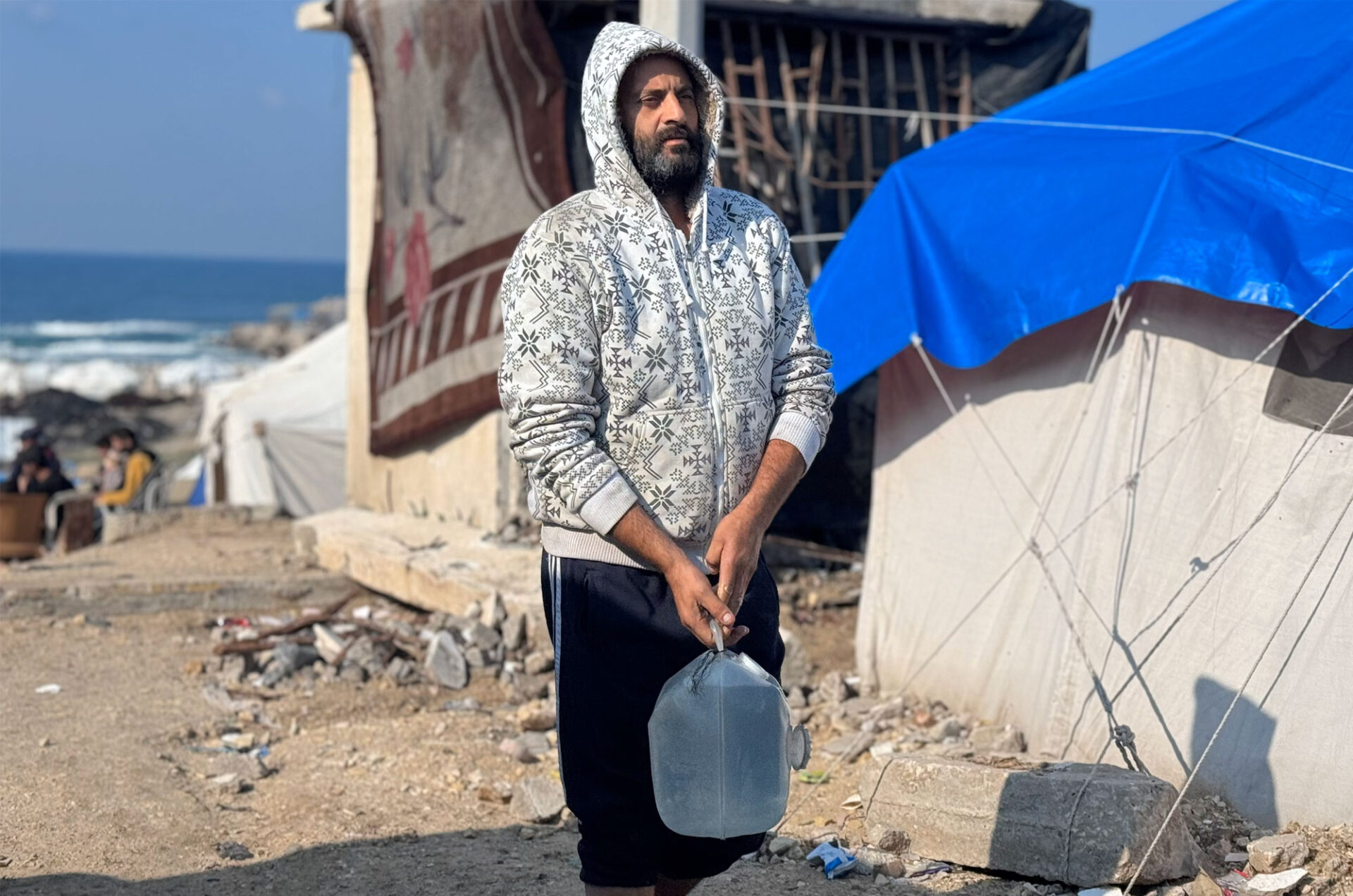

“There were days during the famine when I wished it would all end.”
Winter added another layer of hardship. Each storm flooded their tent. During the last severe storm, Ahmed and his children spent the night standing in the street. Their blankets were soaked and unusable. He wrapped his children in plastic sheets as rainwater collected under their feet and the cold reached their bodies.

"The wind tore at our tent, the cold at our bones," Ahmed recalls. "I wrapped my children close and waited for the night to end."
Access to water is a constant challenge. Ahmed’s family relies entirely on passing water trucks for drinking, bathing and washing clothes. When deliveries are delayed, they are forced to use untreated seawater, which damages clothing and causes painful skin rashes for the children.
"When I hear the sound of the water truck, it feels like Eid," Ahmed says. "I run with my children carrying the jerrycans. That sound means life."
Through support from WF‑Aid for Anera’s water trucking, Ahmed’s family can access safe water during some of the most critical moments. The assistance reduces health risks and helps manage basic needs under extreme conditions.

"When I hear the sound of the water truck, it feels like Eid."

"Water is the artery of life."
For a father who has endured repeated displacement and hunger, each delivery allows his family to maintain basic health. “Water is the artery of life,” Ahmed says. Every truck brings more than hydration, it restores a measure of control, and the vital reassurance that his family can survive another day.
Gaza
Gaza City Governorate
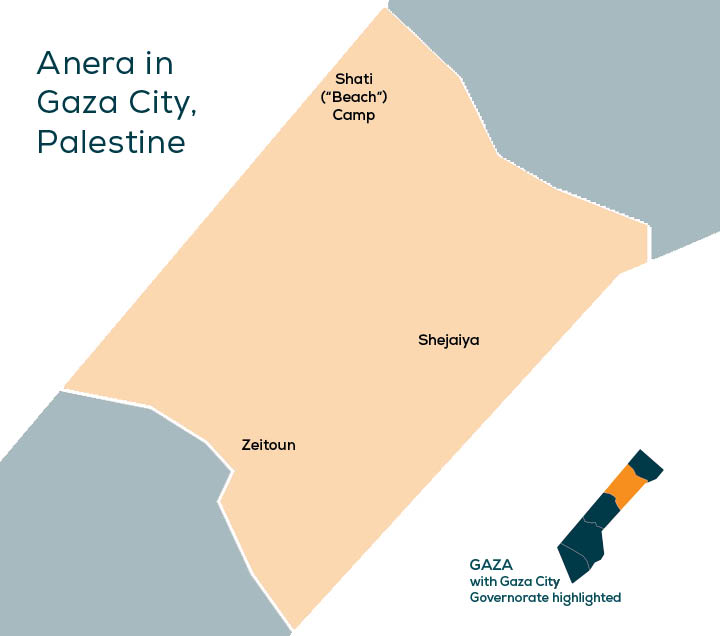
In 1984, Anera’s Gaza City office opened with three staff members. It is still at the same location today, but with 17 staff members. From that location, the team manages water and sanitation, education, healthcare, economic development, and humanitarian relief projects throughout Gaza.