Feb, 2026
Anera’s community kitchens are enabling families in Gaza like Mostafa’s to share a proper iftar meal together during the holy month of Ramadan

“Yazan, my eldest, is the only one of my three children who remembers Ramadan. Ghazi and Zayn don’t even know what it is.”
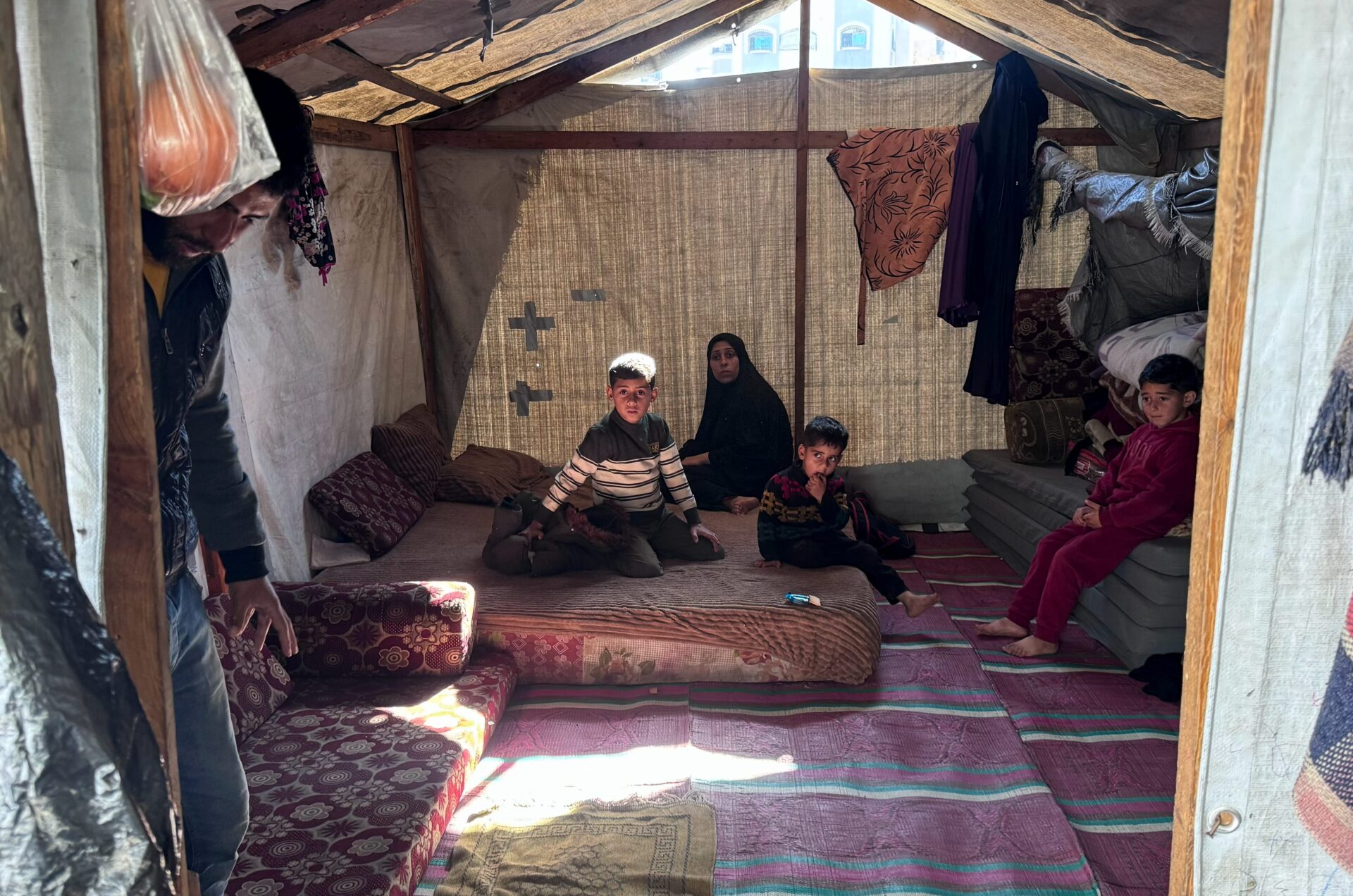
Mostafa is 34 years old, a father of three. He lives in a small tent with his wife and children after being displaced multiple times. He has lost his job and now depends entirely on aid to feed his family. The tent barely fits them, and daily life revolves around survival.
Before the war, Mostafa owned a carpentry workshop that provided for his family. He had poured years of effort and his life savings into it.
Together with his brothers, Mostafa also spent years building a five-floor house. Each brother would own a floor. The building was finally completed just two years before the war.
Then everything was destroyed.
The carpentry workshop and the house, all gone in a single strike. Years of work, planning, and his life savings disappeared in moments.
“We spent our lives building,” Mostafa says. “Everything we had went into it.”
Now, life is confined to a small tent and aid distributions. His parents are still nearby, but Mostafa can no longer host them or other family members. He struggles to provide even basic meals for his children, and there is no space, financially or physically, for celebrations or gatherings.
“I can barely feed my family, I can’t spare anything beyond feeding them.”

Ramadan, Mostafa’s favorite month, was once the highlight of the year. It was a time of gatherings, shared meals, and a house full of family and friends.
“We used to light the whole building,” Mostafa says.
“Strings of warm yellow lights, lanterns on every floor. Our Ramadan decorations used to be seen from far away. The house was beautiful. Every floor glowed, balconies were wrapped in lights, and lanterns hung in every corner.
"To me, decorating isn’t just about lights, it is about shaping a space that feels like your own, bringing warmth, and a sense of pride to everyone who lives there.”
This year, Ramadan comes inside a tent. There are no gatherings, no decorations, no lanterns, and barely any space. He cannot afford a single lantern for his children, and he cannot even make one from paper. Every resource goes to survival and school supplies.
“I’d rather buy them paper and a ruler for school,” he says. “I can’t waste anything.”
His eldest son, Yazan, age 9, still loves Ramadan because he remembers what it used to be like. But his younger children, Ghazi and Zayn, 4 and 7, have only ever known life during the war. They don’t remember the house, the lights, or the gatherings.
“They don’t know what Ramadan is,” Mostafa says. “They don’t know what a normal life looks like.”
What Yazan remembers, and what his younger children don’t, weighs heavily on him.
“Yazan remembers Ramadan. My other children don’t even know it, and it pains me.”
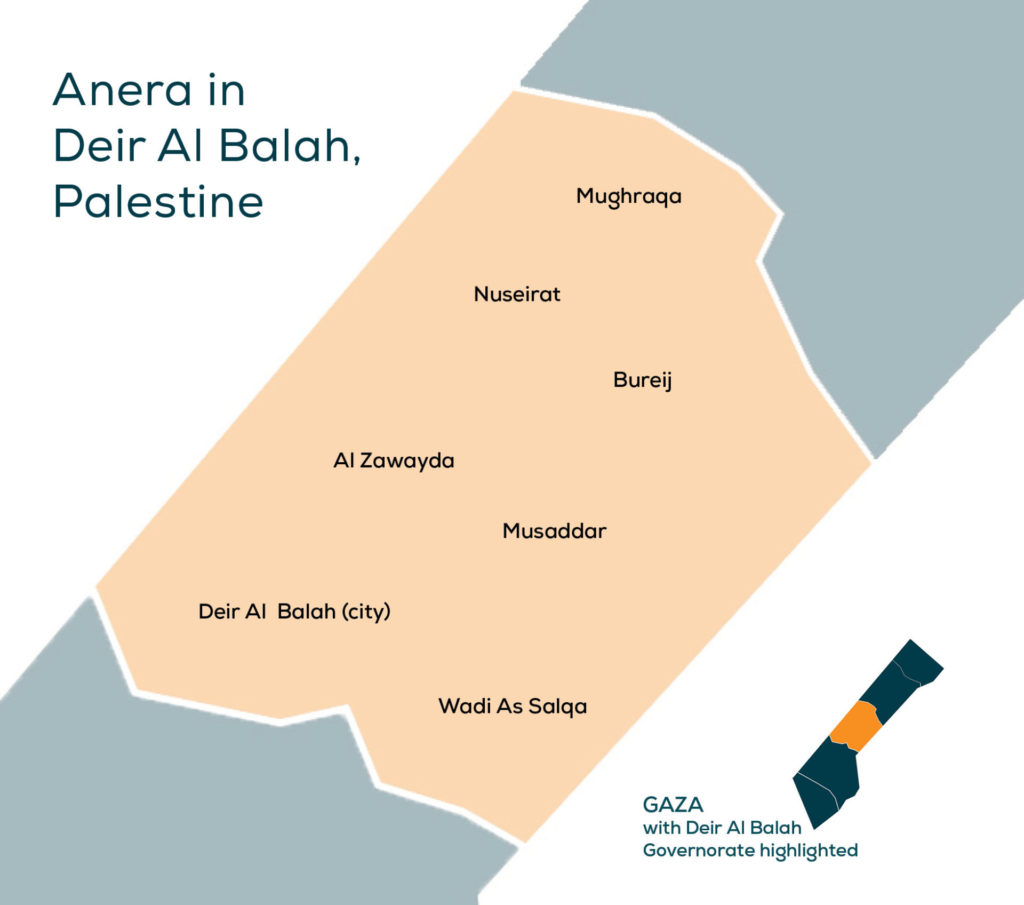
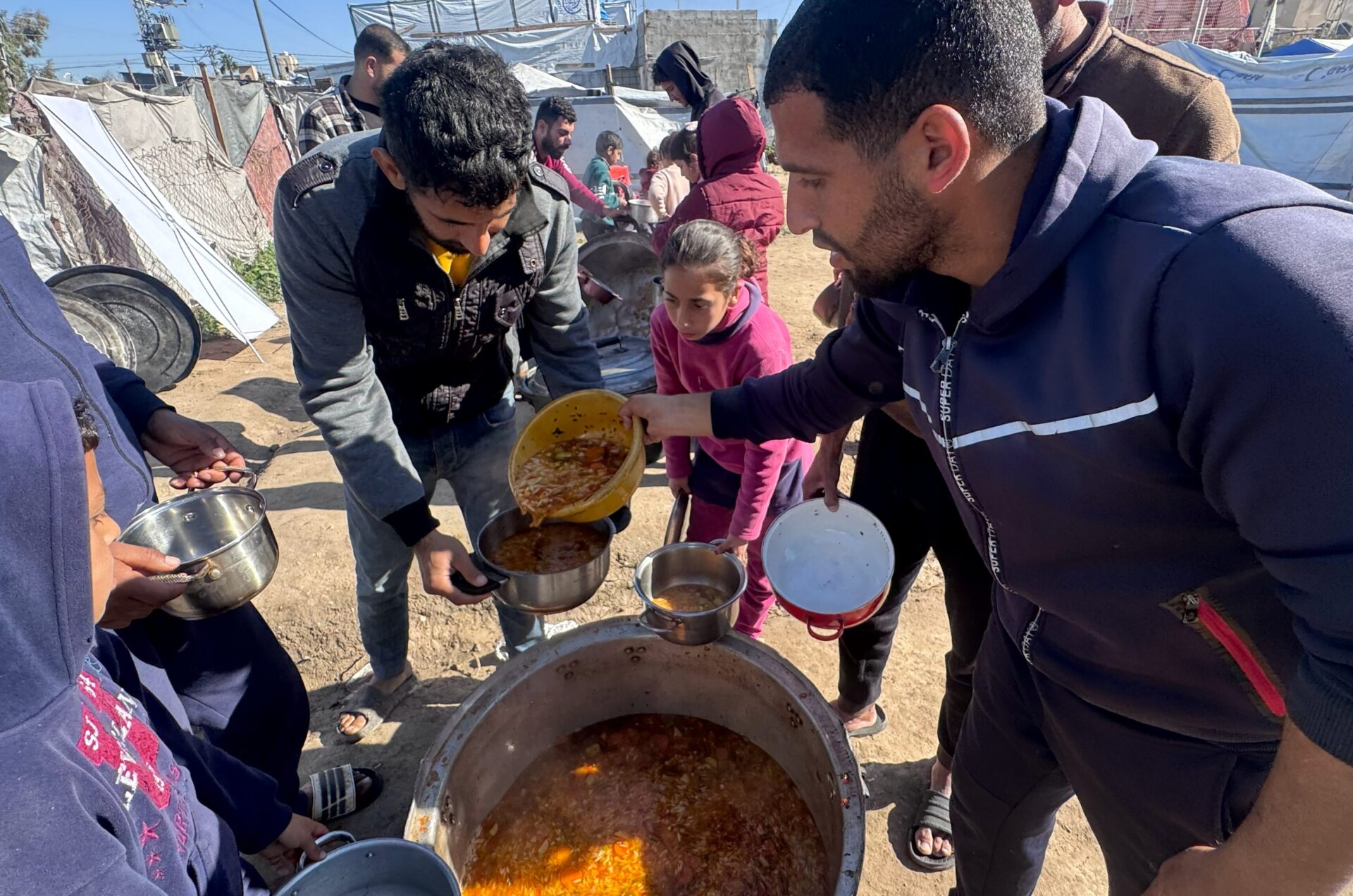
Through Anera’s community kitchen (or tekia) in Zawayda, Mostafa and his children were able to share a meal together. This simple act of a shared meal restored, for a moment, something the war had taken: the feeling of Ramadan. In a reality defined by loss and uncertainty, these meals ease some of the strain on parents, bring families brief relief from survival worries, and remind children that even now, moments of care, dignity and togetherness are still possible.

Your support can extend these moments of normalcy and relief to more families in Gaza and beyond.