
April 30 Update on Conditions & Response in Lebanon, Palestine & Jordan
 by Anera
Posted in: News
Lebanon Update
Although a ceasefire remains formally in place, conditions on the ground in Lebanon remain tense, volatile and increasingly dangerous. Over the past week, there has been a sharp rise in hostilities, with more than 130 airstrikes, 28 drone strikes and at least 62 tank shelling incidents recorded by international safety monitors. Civilian casualties continue to mount,, raising fears of a return to wartime conditions.
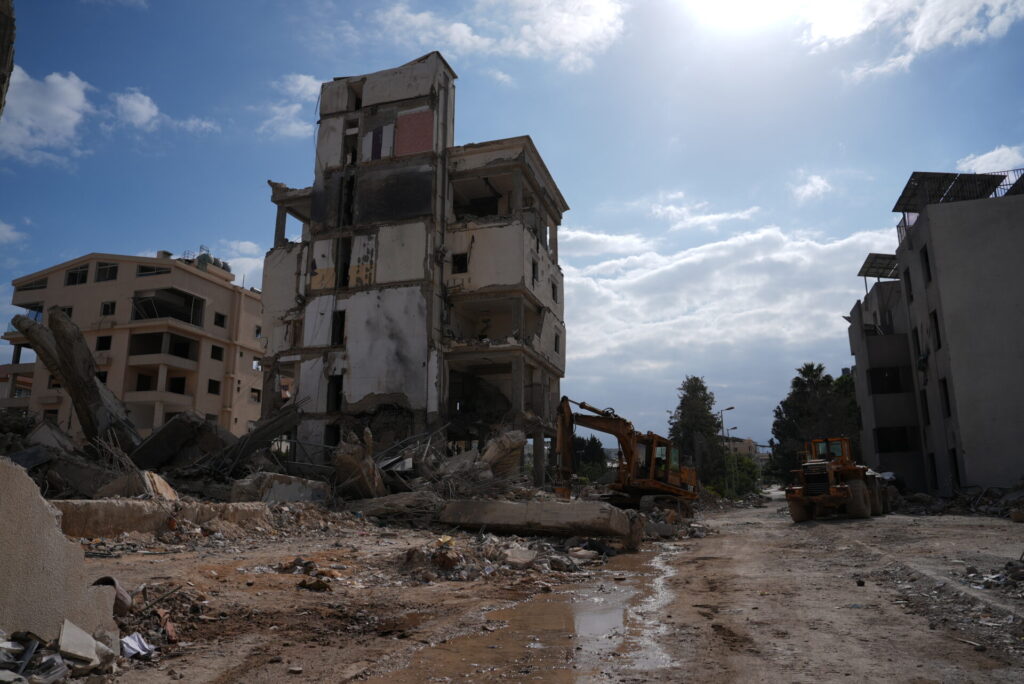
The conflict is also expanding geographically. While violence had largely been concentrated in southern Lebanon since the ceasefire began, recent strikes have reached the Bekaa area, fueling concerns that escalation could spread further north and east. At the same time, evacuation orders continue and are extending beyond previously designated zones, increasing the risk of prolonged displacement and preventing many families from returning home.
Inside Lebanon, anxiety is growing. Political tensions, pressure on host communities and fears of internal instability are compounding the insecurity created by the conflict. For humanitarian organizations like Anera, this is not yet a recovery phase. Our teams continue to plan and respond for a prolonged emergency marked by displacement, shifting access constraints and the real possibility of further escalation.
Anera’s Response
Anera’s response continues to expand across Lebanon – including the Bekaa, South Lebanon, North Lebanon and Jbeil governorates – combining immediate relief with dignity, service continuity, youth engagement and livelihood support.
Since the middle of March, youth involved through our vocational education schools have prepared and distributed more than 182,000 hot meals and 32,000 sandwiches, reaching 11 shelters. Bread, food parcels, bottled water and fresh vegetables have also reached thousands of displaced families in the Bekaa, North Lebanon, Akkar and Saida.
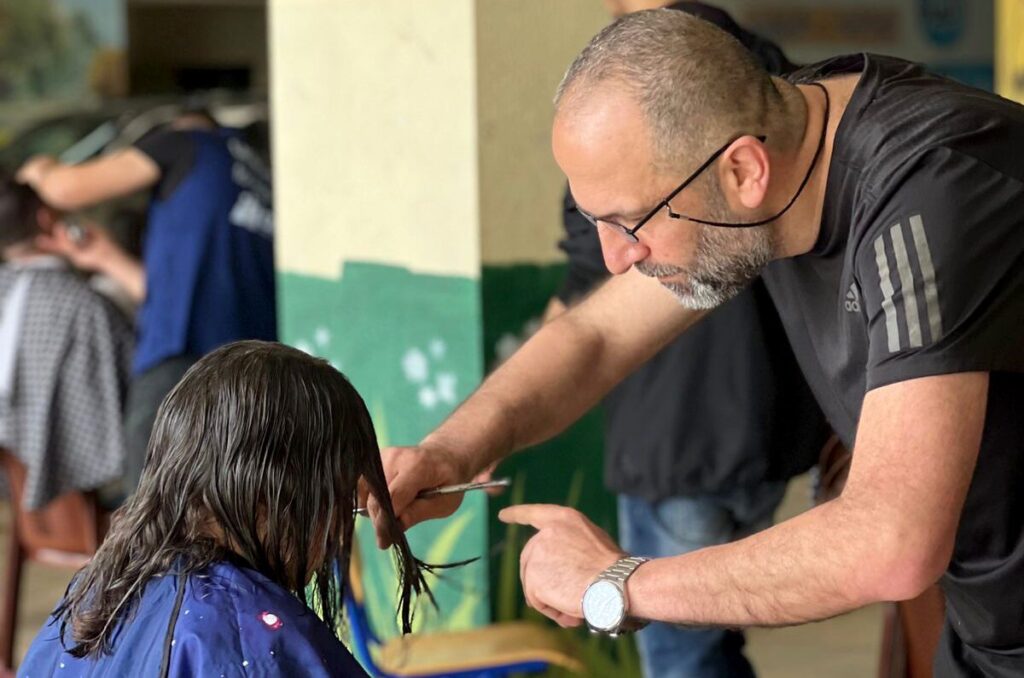
Relief item distributions have reached 36 shelters nationwide, with more than 7,400 items delivered, including blankets, sleeping bags, hygiene kits and seasonal support packages. Youth production teams continue to manufacture additional relief items, while barber services led by young volunteers are restoring dignity and hygiene in shelters. Nationally, 94 youth barbers have already provided 3,553 services, with thousands more expected by the end of May.
In health, Anera’s mobile primary care units in Saida and Jbeil are providing consultations, chronic disease follow-up, maternal care, wound treatment, psychosocial support and referrals, reaching more than 600 people so far. We have also delivered dialysis medication for 150 Palestinian refugee patients, while trauma and emergency medical supplies for hospitals are being procured.
Water, sanitation and infrastructure support is also growing. Water filters have been installed in shelters, while solar upgrades are planned for three public schools in the Bekaa currently sheltering displaced families. In agriculture and livelihoods, cash support is underway for livestock farmers, displaced farmers and host communities whose incomes have been disrupted by the conflict.
As conditions remain uncertain, Anera continues to adapt quickly—ready to shift geographically and sectorally as needs evolve.
Palestine Update
Across Palestine, conditions continue to deteriorate as insecurity, movement restrictions, supply shortages and economic pressure make daily life increasingly difficult. In Gaza, military activity has intensified since March, with renewed strikes and shelling disrupting already fragile survival systems and making humanitarian operations more dangerous. While ceasefire discussions continue, the reality on the ground remains one of instability, uncertainty and daily hardship.
Gaza
The movement of goods into Gaza remains severely constrained and unpredictable. Kerem Shalom has been the only relatively consistent crossing point, though it was closed for roughly 20% of the month. At the same time, the near-total closure of Zikim and other crossings for much of March and April created a day-to-day survival economy, with families and aid providers forced to cope with constant shortages. When Zikim briefly reopened in mid-April, incoming capacity increased by an estimated 50%, showing how even short openings can have an immediate humanitarian impact. Conversely, closures lasting just one or two days can quickly disrupt daily life. Humanitarian organizations continue to work on the ground, but relief efforts could reach far more people if crossings were opened consistently and supplies were allowed to enter at scale.
About 40% of health service points are partially functioning, while shortages of fuel, spare parts and essential supplies are limiting the operation of clinics, generators, vehicles and water systems. Bakeries and factories are also at risk of shutting down due to shortages of industrial oils and equipment, threatening food access and livelihoods.
A cash shortage has created a liquidity crisis, with transfer fees rising to as high as 11%. Because physical cash is scarce and hard to access, people are often forced to pay a percentage of their own money just to withdraw funds or receive transfers between accounts. And, in the meantime, costs keep going up. The cost for car tires, for instance, has gone up so high that to change a set of four would cost $10,000.
Protection concerns are worsening. More than 57,000 female-headed households face heightened risks of exploitation, while child marriage is increasingly being used as a coping mechanism amid economic hardship. Poor sanitation and shortages of hygiene supplies have also contributed to more than 23,000 reported skin infection cases.
Anera’s Gaza Response
Despite immense challenges, Anera’s response across Gaza remains active and adaptive. More than 220 million meals have been delivered since October 2023, which includes 126,000 hot meals since the beginning of 2026, alongside vegetable baskets for vulnerable families.
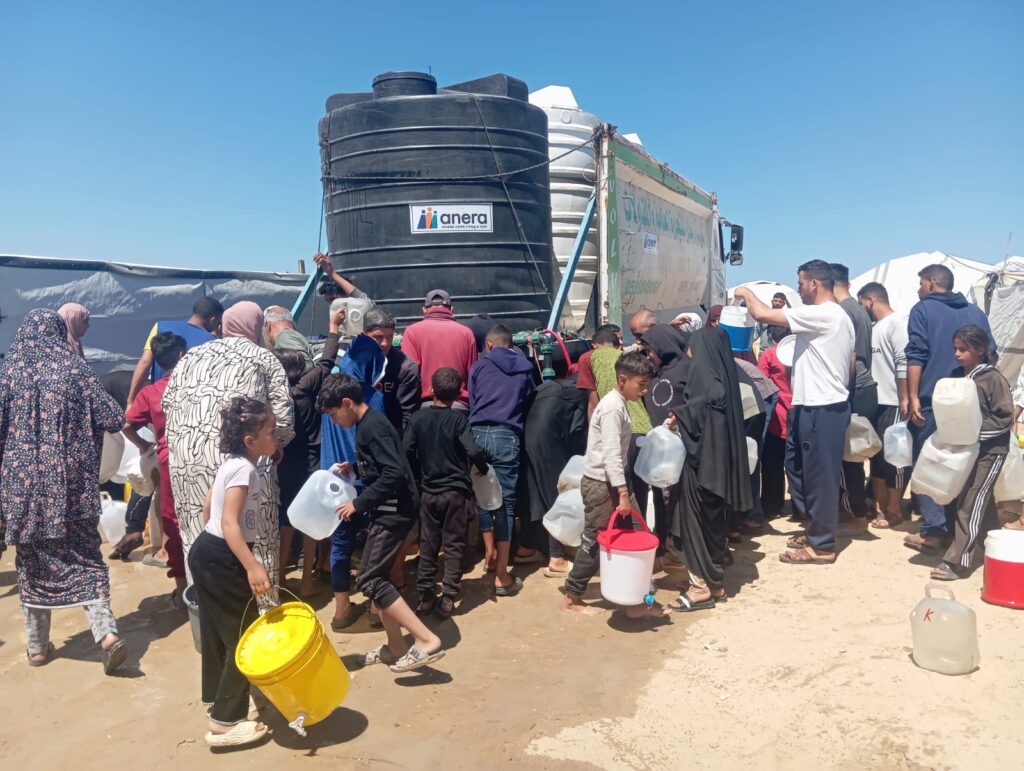
Anera has also delivered 1,320,860 gallons of water, expanded waste management services to additional camps, distributed nearly 6,000 shelter items, and provided cash or voucher assistance to 3,900 people with urgent needs.
Through six clinics and mobile teams, Anera is sustaining essential healthcare, providing an average of 7,000 consultations per week and 15,000 maternal and child health services. Mobile clinics in shelters have reached another 3,000 patients.
Education and psychosocial support continue for more than 1,200 children, while counseling and family resilience programs help children and parents cope with trauma.
At the same time, Anera is supporting recovery by helping 55 small businesses stay open, creating 216 temporary jobs, and providing cash-for-work opportunities and training for women – preserving livelihoods and strengthening resilience even in crisis.
West Bank
In the West Bank, military operations, settler violence and road closures continue to disrupt communities. Since the start of the year, more than 1,700 people have been displaced. On average, six settler attacks occur daily across the West Bank. Families face frequent movement restrictions, sudden checkpoint closures and attacks that interrupt work, healthcare and education. Children often wake up unsure whether schools will open, while universities regularly shift online due to access constraints.
Economic pressure is also worsening. Inflation continues to rise, purchasing power is declining, and many families are receiving only partial salaries—or none at all.
Anera’s West Bank Response
Anera is focused on moving from relief to recovery by supporting livelihood activities, such as gardens and greenhouses, despite market instability, inflation, and chain collapse. The team is proud of their ability to implement activities, even during the height of the war, and continues to provide food, health, wash, and shelter assistance in Gaza and the West Bank
Despite the obstacles, Anera continues to deliver across the West Bank:
- 10,748 people reached through health services in 23 northern communities.
- 1,300 patients served by mobile medical teams in Hebron governorate.
- 800 Gaza patients residing in the West Bank received cash assistance for medical and living needs.
- 142 people with disabilities received customized prosthetics.
- 14 small businesses accessed microloans, with zero missed repayments to date.
Anera’s teams continue to adapt daily to changing security conditions, movement restrictions and supply disruptions. While emergency aid remains essential, rebuilding local economic capacity and preserving basic services are critical to helping Palestinian families recover with dignity and resilience.
Jordan Update
In Jordan, the main humanitarian development this week is the resumption of medical evacuations for patients from Gaza. Anera has committed to supporting 27 patients, who are arriving in Jordan for urgent treatment.
All of the patients are children or adolescents requiring specialized surgeries, including war-related trauma cases and serious congenital conditions. Anera’s team in Jordan is prepared to receive them and coordinate immediate referrals to hospitals upon arrival.
 by
by